It is difficult to pinpoint where and when the first Phoenix palm (Phoenix canariensis) was planted in New Zealand. There is a good chance though that it was in Auckland, planted in the early 1900s. D. Hay and Sons’ Montpelier nursery catalogue for 1891 has the palm for sale, but following international trends of the time it was initially sold as an indoor plant[1]. However, by 1899 the same nursery’s catalogue described them as ‘hardy to grow in the open air’[2]. Taking Auckland as the case in point, there seems to have been a rapid uptake in such ‘open air’ planting. As we will see below, there is a remarkable concentration of Phoenix palms in downtown central Auckland. By describing this concentration, part of the legacy of Phoenix palms in the New Zealand cityscape can be appreciated.
Figure 1. Map of sites
Figure one shows a map of the central Auckland area, where the ten green stars are the sites of the Phoenix palm plantings to be described. Beginning at the Queen Street star (next to Aotea Square), we move clockwise from site to site, thus finishing at Myers Park. All sites have a minimum of two palms, with larger clusters the norm. Most of the palms are planted pre-1940. However, there are a few which are later; these are included here to show that the appeal of the palms lasted beyond the 1900 to 1940 period when planting was at its peak.[3]
Figure 2. Queen St and Albert Park
Panel 1 of Figure 2 shows the Sir George Grey memorial in central Queen Street, just in front of the Auckland Town Hall. Clearly visible are two Phoenix palms on either side of the memorial statue. From other historical photographs of the site, an estimated date of planting of about 1916 can be made. This is the only case of an early centre-road planting I am aware of, but as both the statue and the palms ‘increasingly [became] a traffic hazard’ the statue was moved to a new site in 1922[4]. It is not known what happened to the palms. However, the interesting thing is that the new site the statue was removed to – Albert Park – already had two phoenix palms growing. As Panel 3 shows, by 2023 the palms dwarf the statue, and at some point after 1923 a new planting of Phoenix reclinata closer to the statue was introduced. Given the size of the palms in Panel 2, and from an historical source, it is possible to date the planting of these palms as 1905 to 1906. The historical source is an article in the New Zealand Herald detailing ‘Alterations in Albert Park’[5], including the planting of palms in the area between Bowen Avenue and the flagstaff, which is right next to where the George Grey statue was relocated. This is to presume that the ‘proposed work’ was carried out, but given the palms are there to this day, it seems reasonable to see their planting as part of this work, overall making them amongst the oldest in New Zealand.
Figure 3. Bowen Avenue
The same conclusion about age can be reached with the next site visited: a group of phoenix palms in Bowen Ave, just 50 metres north of the Grey statue. Figure 3 shows two historical photographs looking up Bowen Ave, and the 2023 photograph looking down in the other direction. A row of six Phoenix palms can be seen to the left margin of the 1918 photograph. The 1921 photograph shows the palms have grown to about 3 metres tall, and additionally there is what seems to be a slightly younger palm in the foreground on the other side of the avenue. It seems reasonable, given the current size of these palms, to also date their planting to about 1905 to 1906.
Figure 4. Freyberg Place
The move to the next site – Freyberg Place – is also short, but this time involves a much more recent planting of Phoenix palms. The age of the four palms seen here is unknown, but going by their size somewhere between 50 to 60 years looks likely. As can be seen, the four palms provide a columnar frontage to the Metropolis Tower apartment building (developed in 1999). The interesting thing about this site is that it was redeveloped from 2015, and the plans from Isthmus Architects included the possibility of removing the palms.[6] This may well reflect the fact that beginning as early as 2004 the Auckland Regional Council moved to classify Phoenix palms as a pest plant, undoubtedly contributing to a devaluation of the palms.[7] Ultimately, the palms were not removed partly because they sit on private land owned by the Metropolis apartments.[8] What can also be seen in Figure 4 is a strong presence of nikau palms. In current landscape architecture circles these are clearly much preferred to the imported Phoenix palm. Nevertheless, the four Phoenix palms remain in Freyberg Place offering a larger ‘monumental’ effect than the smaller nikau palm (which have a different visual appeal).
Figure 5. Emily Place
The next site – Emily Place – is a mere 300 metres north-east from Freyberg Place, but is a much older reserve. As can be seen in Panel 1 of Figure 5, the original planting featured pohutukawa trees across the top and fan palms down the side of the triangular shaped reserve. Panel 2 shows a circa 1945 photograph showing two Phoenix palms have been added in the central area that was previously just lawn. Their size in this photograph suggests an estimated planting date of 1930 – the two 2023 photographs show the height that we would expect of a 90 year old palm. The example of Emily Place shows that over time both the planting and layout of a reserve can change significantly: the fan palms to the left were removed at some stage and replaced with gingko trees, and obviously the two Phoenix palms were also added, making good use of their framing quality when used as a pair. This addition is also of course at a time – the 1930s – when Phoenix palms were still very popular.
Figure 6. Mahuku Reserve and Quay Park Centre
Moving again about another 300 metres north-east we have a significant precinct of Phoenix palms, albeit in 3 separate sites. The first two – Mahuhu ki te Rangi reserve and Quay Park Centre – are shown together in Figure 6. The dates of planting are not known for these sites, but a good estimate would be the early 1960s. The Mahuhu ki te Rangi reserve was redesigned in 1996, with Panel 2 showing how well Phoenix palms go with a monument or other structure. The other thing to note, particularly from the Quay Park Centre palms, is that they are all very well maintained. The trunks have been trimmed of dead and old fronds, maintenance that does incur some cost. This would suggest that these palms, even given their ‘pest plant’ status, are still relatively highly valued.
Figure 7. te Taou Reserve
Just across the road from the Quay Park Centre we then come to te Taou Reserve, shown in Figure 7. This carefully laid out area was originally the frontage to the main Auckland railway station (the big building visible in Panel 2), with the Station Hotel across the road (see Panel 1). A close inspection of Panel 1 shows in the foreground the presence of a young Phoenix palm, suggesting a circa 1930 planting date, which is consistent with the current size of the six palms (see Panel 3 and 4). The very formal geometric layout of the reserve is no longer in fashion in contemporary amenity landscaping. However, it still has strong visual appeal with the combination of Phoenix palms and pencil cypresses working particularly well. The six Phoenix palms in te Taou Reserve are registered on the Auckland Schedule of Notable Trees.
Figure 8. Anzac Avenue
From te Taou Reserve, if we travel back towards Queen St taking Anzac Avenue, just where it becomes Symonds Street, we find the pair of large Phoenix palms seen in Figure 8. As can be seen, they now appear on the northern frontage of the University of Auckland, but originally the palms were amongst a mix of native, Australian and European trees planted in Anzac Avenue as a ‘war memorial avenue’.[9] These can be accurately dated as 105 years old, being planted by a group of schoolchildren in a tree-planting ceremony on September 19, 1918, with ‘a very careful selection of trees’ having been made by Thomas Pearson, the city parks superintendent.[10] The latter information is significant as it has an important link to the final site we visit – Myers Park, seen in Figure 9.
Figure 9. Myers Park
Myers Park is a relatively long and narrow park in a gully to the west of upper Queen St, opened in 1915 mainly due to the actions of Arthur Myer, mayor of Auckland between 1905-1909.[11] It has the largest cluster – 25 – of Phoenix palms in our visited sites, including a double row to the south of the park as seen in Panel 4 of Figure 9. Thomas Pearson, who was Auckland Parks Superintendent between 1908 to 1930, designed the planting, it being noted that ‘the great Phoenix Palms are almost regarded as his trademark.’ [12] The historical photographs included in Figure 9 would suggest that the palms were planted circa 1915.
There are many more Phoenix palms to be found in Auckland’s public and private gardens[13], and Thomas Pearson’s keenness for them may well explain other large clusters in Auckland, including Cornwall Park, Ellerslie Racecourse, the Auckland Domain, and Mount Roskill. But the concentration we have seen in the central downtown area is not repeated elsewhere in Auckland, nor in any other New Zealand city.[14] As noted, the Albert Park and Bowen Avenue groups are probably amongst the oldest in the country, and the Myers Park group are not far behind. Despite this significant presence, amongst these palms only the six in te Taou reserve are included in the Auckland Schedule of Notable Trees. This may reflect the vagaries of the process whereby trees are entered on the schedule, or it may partly reflect the Phoenix palm’s ‘pest plant’ classification. Nonetheless, it seems surprising. It is worth noting that the effect of the pest plant classification is that sooner or later Auckland’s Phoenix palm legacy will disappear. Currently, with the death or removal of a Phoenix palm in Auckland there can be no legitimate replanting. Hence, it could be that 100 years from now the visual record presented above will remain, whereas many of the palms will not. Luckily, however, other towns and centres in New Zealand have not followed the Auckland precedent, and it may be that the centre of the exotic appeal of the Phoenix palm moves further south. The good news is that there are already significant collections of the palms in Waihi, Gisborne, Whanganui, Palmerston North, Napier, Nelson, and as far south as Timaru. In the meantime, any visitor to central Auckland with an interest in garden history could follow the above ‘tour’ and take the chance to appreciate the Phoenix palms while they still grow.
Acknowledgments
Thanks to John Adam, Bill Mckay, and Jenny Larking for useful information.
References
[1] In the 1890s the Phoenix palms was the tenth most popular indoor plant in Europe. See Spennerman, D. (2018) ‘Canary Island Date Palms Palm (Phoenix canariensis) in Australia: Introduction and early dispersal. Palms, 62(4): 185-201.
[2] Thanks to Louise Beaumont for access to the catalogues.
[3] See Zona, S. (2008) The horticultural history of the Canary Island Date Palm (Phoenix canariensis), Garden History, 36: 301-308.
[4] ‘A familiar Auckland landmark removed to a new site: Sir George Grey’s statue’, Auckland Weekly News, 14 September, 1922, p. 39.
[5] ‘Alterations in Albert Park’, New Zealand Herald, 22 June, 1905, p. 6.
[6] ‘Bill McKay: New design for Freyberg Place misses the mark’, New Zealand Herald, 15 September, 2015.
[13] See Wilcox’s 2012 botanical survey showing that Phoenix palms were the fifth most abundant tree in a sample of 1561 home gardens, p. 81 in Wilcox, M. 2012, Auckland’s Remarkable Urban Forest, Auckland: Auckland Botanical Society.
[14] Napier might be the city that gets closest to such a concentration.
An Old Blush rose grows behind a picket fence at the Ongaonga Museum in Central Hawkes Bay. The interesting story of its arrival to the museum was faithfully recorded in history notebooks kept by my grandfather Mr Edward (Ted) Bibby, MBE (1896-1991).
Old Blush rose. Photo C. Bibby.
Ted was a founding member of the Ongaonga museum, which was established in 1966. One of the museum’s objectives was to collect, record and preserve material to the history of Ongaonga District.[1] This included collecting plants sourced from early settler farms for the museum garden. Ted writes of getting a weak graft set on an apple tree of an historic apple and a true primrose from a stockade.[2]
One day a rose came into his care. It didn’t have a name, so he called it the Pioneer Rose.[3] He recorded in his notebook that the rose was brought to him by Juliet Holden of nearby Forest Gate Station, in about 1966.[4]
Forest Gate 1901. Russell Duncan collection.
“It was a rose bush that had very little life in a collect of dead stems,” he wrote. “I understood her to say it came from the old garden of an old house at Forest Gate. I assume it would be the first home burnt down.”[5]
This was verified to me by Juliet Holden many years later, who said the rose had been growing in a paddock on the site of the original cottage.
The first Forest Gate homestead burned down on March 4th, 1874.[6]After the fire the homestead was rebuilt in 1875 with more than 20 rooms on a site nearby.[7] This suggests that the rose was likely planted at the original homestead by the first owners, the Duncan family, or by the Herrick family who were living on the property at the time of the fire.[8]
The original Forest Gate homestead 1860. Russell Duncan collection.
Forest Gate was established in 1853 by Richard J. Duncan, formerly of Forest Gate, Essex.[9] He settled his son, J. Russell Duncan, and wife Elizabeth on the property. During their tenure, the Station was enlarged to 13,000 acres.[10]
In time, the Duncan’s went into partnership with Jasper L. Herrick. In 1870 Mr Herrick married J. Russell Duncan’s sister Emily and took on full responsibility for Forest Gate.[11]
Mr Herrick was well-known in the province having served in the Armed Constabulary following the escape of Te Kooti from the Chatham Islands and as chair of the Waipawa County Council and having been elected to the Hawkes Bay Provincial Council. [12][13]
It would be nice to think that the rose was planted by the Herricks, as Mr Herrick had close association with the school, opening it in 1876.[14]Furthermore, when the Ongaonga school museum was established in 1966, the sword presented to him by Queen Victoria, was placed on display.[15]
The rose grew happily in its garden at the Ongaonga museum. Ted Bibby wrote “It was planted with the other old-fashioned plants and slowly recovered. Its flowers are much admired, and cuttings were propagated.”[16]
Ongaonga Museum, 2022. Photo C. Bibby.
It wasn’t until 1971 that the rose was identified. Ted received a letter from Pieter Bruggeman of Masterton, who had been visiting him and his wife on their Ongaonga farm.[17]
Mr Bruggeman wrote “After I left you, I went to Ongaonga and stopped at the little museum where I soon spotted the rose we talked about. I just couldn’t resist the temptation and after a quick look over my left and right shoulder, I picked three pieces with the flowers on.”
Mr Bruggeman sent his cuttings to Mrs Nancy Steen, in Auckland, author of The Charm of Old Roses (1966) “…and here is her reply,” Mr Bruggerman wrote. “…which I forward to you as I thought you might like to read it and the name of the rose is Old Blush China.”
Ted Bibby wrote in his notebook that it was a horticultural find “…one of the earliest roses brought to New Zealand.”[18]
He seemed confident that the rose had been planted by Mr Duncan. However, he provided no evidence to support this.[19]
Mr Herrick died in tragic circumstances at the age of 58. On 19 December 1890, he was with a party of friends and his daughter, on a picnic to his newly purchased Oporae property, thirty miles out of Dannevirke.[20]
The group made an excursion to the Waihi falls. Whilst his daughter Hetty was sketching and his friends, Mr and Mrs Giblin were collecting ferns, Mr Herrick climbed the waterfall, estimated to be 80 feet high. He took his boots off and was on a ledge below the top of the falls, when, to the horror of the onlookers, he slipped and fell 50 feet into the pool below. He fractured his skull on rock and was pulled out of the water, dying an hour and twenty minutes later. The men in the group went for help, walking through five miles of bush and five miles of cleared land to the road where they were able to get a message taken by horse and rider to Dannevirke. They returned in darkness, using candles to find their way through the bush. The next day the group somehow managed to carry Mr Herrick’s body miles out to a place where horses and traps met them. He was buried in St Peter’s Anglican Church Cemetery at Waipawa.[21]
Waihi Falls. Jasper Herrick fell from a ledge on the northeast side of the falls, below the top. This would appear to be the right side of the falls in this image. Photo C. Bibby.
In an interview in 2018, descendant Robert Herrick said that his great grandfather was collecting a flower for his daughter Hetty when he fell.[22]
After her husband’s death, Mrs Herrick stayed on at Forest Gate with trustees managing her property. In 1901, Forest Gate was compulsory acquired by the Government and subdivided under legislation breaking up the great estates for closer settlement.[23] The homestead block was bought by the Mackie family.[24] Since 1934 it has been owned by the Holden family, who farm there today.[25]The magnificent Forest Gate homestead still stands and in 2025, will be 150 years old. Along with the dairy safe shed, woolshed, stables and coach house, it is listed with Heritage New Zealand.[26]
The Holdens have an excellent collection of historic photographs of Forest Gate. These were taken by Russell Duncan during his time on the farm, and at the time of its acquisition in 1901. The photographs include specimen trees, the garden and roses. However, it is not possible to discern the actual Old Blush rose.
The descendant of the original Forest Gate Old Blush lives on at the Ongaonga Museum and in the Bibby family. Each of Ted Bibby’s daughters, both in their nineties, have a treasured bush in their Central Hawke’s Bay gardens. My grandfather gave me a bush he had potted up and its descendants grow in my cottage garden and at the historic Halfway House garden at Glenside, north of Wellington.
Forest Gate, 2022. Photo C. Bibby.
The pink rose flowers intermittently from spring to late summer. The semi-double loose petals have a bright sheen to their edges. The stems have few thorns and can be trained as a bush or as a semi-climber against a post or wall. The rose can also be used as a low hedge or grown as a small garden feature.
The Helpmefind website informs us that Old China Blush is included in the World Federation of Rose Societies Old Rose Hall of Fame, which recognizes roses of historical or genealogical importance and those roses which have enjoyed continued popularity over a great many years.[27]
Acknowledgements
An earlier version of this blog was published in the Heritage Roses New Zealand Inc. Journal, Volume 48, Issue 2, in February 2023.
[1] Bibby, E.S. (1966). 1966 Aims of Old School Committee. Local History Book 1. (p.60).
[2] Bibby, E.S. (1966). 1971 Chairmans Report to OSM Committee. Local History Book I. (pp 155-156).
[3] Bibby, E.S. (1981). Pioneer Rose. History Notes Book 2. (p.22).
[20] Details of the incident are sourced from the Waipawa Mail and Bush Advocate. Where there is a discrepancy, the testimony of the witnesses at the Inquest as reported in the Bush Advocate prevails.
by Ian Duggan, Te Aka Mātuatua – School of Science, The University of Waikato
New Zealand had the occasional famous visitor in the mid-1920s. For Anna Pavlova, the famed Russian ballerina and dessert inspiration, several hundred newspaper articles were devoted to her visit to this country in 1926. Adventure novelist Zane Grey also visited in 1926, and in 1927 there was a Royal Visit by the Duke and Duchess of York (the future King George VI and Elizabeth). In 1928, however, a huge number of column inches were reserved for Dr Arthur William Hill, the Director of the Royal Botanic Gardens, Kew.
Arthur William Hill, 1875–1942. From: Obituary. Transactions and Proceedings of the Royal Society of New Zealand 72: 36-37 (via Papers Past)
Hill had joined Kew as Assistant Director under Sir David Prain in 1907, and eventually succeeded him as Director in 1922. His New Zealand visit was initiated five years later, in 1927, when the Empire Marketing Board ear-marked £4OOO of its revenue a year over five years to permit the Director of Kew, or his assistants, to travel to co-operate in development work in the Empire.[i] Hill stated that the idea of such travel arose out of a conversation with the secretary of the Empire Marketing Board, who, at a luncheon, had asked him to suggest some means whereby the Board could assist botany in the Empire. Hill thus suggested help could be provided through the provision of funds sufficient to send a man—himself, for instance—on tour to whatever countries required assistance with their problems. He also suggested that the fund would need to include provision for the appointment of an assistant director, who would carry on ‘at home’ in his absence.[ii] The first country visited under the new scheme was British Guiana, while another man had been sent to the Malay States to study banana disease, and yet another curator had been sent to Java, Ceylon and Singapore to study tropical vegetations under natural conditions.”[iii] New Zealand’s Auckland Star newspaper described the purpose of the visit:
“If the Gold Coast wants a suitable cocoa plant, if Fiji wants to know what disease is affecting the banana crop, if Australia wants to grow cricket bats, or if New Zealand should wish to start the beet sugar industry, Kew undertakes to supply the plants and to answer questions about them”.[iv]
Then it was Hill’s turn to visit New Zealand, taking advantage of an existing invitation to visit Australia.[v]
Botanist Leonard Cockayne, one of New Zealand’s most influential scientists, played a major role in organising this visit, and with E. Phillips Turner, Secretary of Forestry, he accompanied Hill through his New Zealand tour.[vi] In letters to Cockayne prior to his visit, Hill suggested he would spend a fortnight in New Zealand, and asked for suggestions on where to visit: “All too short a time, I fear… there is nothing I should enjoy more than seeing the New Zealand botanists and something of the vegetation of the country”, Hill wrote. Cockayne concurred: “It was both exciting and most pleasant news to learn that you propose to visit this country next January. But a fortnight is far too short a time. Possibly in a well directed month you could see a good deal of New Zealand vegetation and also the economic botany (forestry, agriculture, horticulture)”. Among Cockayne’s major contributions to botany were in his theories of hybridisation[vii], and with an element of self-interest he responded: “Above all, I want you to see some of our hybrid swarms”.[viii]
Years later, Hill reflected on his experience of travelling with Cockayne, at a time when the New Zealand scientist was 73: “No matter whether we were in a crowded train or wedged in the back seat of a motor car, he would discuss abstruse botanical matters or bring forward knotty points as to hybrids, or what was meant by such and such a species. Then his son Alfred would join in with a totally opposite point of view and a fierce altercation, proving quite harmless, would ensue – an outsider might have thought blows would follow! – and all would end happily”.[ix]
Image from The Sun (Auckland), 31 January 1928, P8 (via Papers Past)
The New Zealand Tour
Before the tour even started, controversy arose. In early January 1928, the itinerary for his three-week visit to New Zealand was mapped out and announced. Hill was to make:
“Visits to the kauri forest, or Rangitoto Island, and the Domain, Auckland; to the forestry plantations and native forests at Rotorua; to Taupo and National Park; and to the flax swamps and pastoral lands of the Manawatu. While in Wellington Dr. Hill will hold consultations with the Department of Scientific and Industrial Research, visit Wainui-o-mata in company with the director of parks and reserves, and be the guest of honour at a reception to be tendered by the New Zealand Institute of Horticulture in the Concert Chamber of the Town Hall, where a special display of New Zealand flowers will be given. In the South Island Dr. Hill is to visit Christchurch, and will inspect the forest services at Hanmer and the plantations of the Hon. Sir R. Heaton Rhodes. Other visits include calls at Arthur’s Pass, Hokitika, and Nelson. A walk from Arthur’s Pass to Otira is contemplated”.
Ominously, reports on the itinerary ended with the note: “It is doubtful whether time will permit of a visit to Dunedin”.[x]
On 7 January, the Otago Daily Times – clearly stung by the snub of the city – ran a piece titled “No Time for Dunedin”. “And where,” it asked, “does Dunedin come in? It is a pertinent inquiry, and the answer is unfortunately discouraging. Apparently Dunedin is not to come in at all. In the words of the message from Wellington, in which Dr Hill’s movements in the Dominion between his arrival on January 20 and departure on February 13 are circumstantially indicated: “It is doubtful whether time will permit of a visit to Dunedin.” About the phrase there is a touch of ingenuousness. The manner of it is perhaps suggestive of a certain delicate concession to the susceptibilities of the South. There is an implication of official sympathy and of regret that we are to be disappointed. For what is perhaps to be interpreted as really quite a friendly gesture we should possibly be grateful. For, after all, upon this occasion there is at least definite recognition of the existence of Dunedin, and as often as not even that is entirely lacking in intimations of tours arranged for visitors to this country from overseas. The programmes are prepared in Wellington, and more often than not the South Island is apparently not regarded as of sufficient economic importance to warrant the recommendation on the part of officialdom that tourists or missioners from other countries should occupy any part of their time in visiting it. Consequently, to have mention made of Dunedin in connection with Dr Hill’s itinerary should perhaps be soothing to this community, though its effect in that way may be a little difficult to detect.”[xi]
Things escalated. Within days, a meeting of interested bodies was held to protest against the omission of Otago and Southland, chaired by Mr Thomas Sidey, Liberal M.P. for Dunedin South, and including members of their City Council, the local branch of New Zealand Institute of Horticulture, the Chamber of Commerce, the Expansion League, the Otago A&P Society, the Dunedin Horticultural Society, Nurserymen’s Association, and the Amenities and Town Planning Society. Among them was Kew-trained horticulturist David Tannock, and superintendent of Dunedin’s city reserves, who felt it “a conspiracy”. He believed that there was not the slightest doubt that Dr Hill would be asked by the Government to report on the desirability of a national botanic garden, and he considered that Dunedin was especially suited for such a purpose. “I consider that Dr Hill has been deliberately prevented from visiting Dunedin”, Tannock stated, “so that he cannot see what Is being done. Botanical work is negligible elsewhere—it is nil in Auckland and practically nothing in Wellington. There is a more complete collection of healthy plants in private gardens in Dunedin than anywhere else in New Zealand, and we have organised a system of collecting, establishing, and exchanging plants, and we have tried to maintain a system of exchange with other parts of the world”.
The group framed a resolution of protest. Among their arguments were “That the inclusion of Dunedin is especially important, seeing that it is the only city in the dominion that has in its botanical gardens, a very large and representative collection of New Zealand’s alpine vegetation and many plants from the Auckland, Campbell, Antipodes, and Chatham Islands”. “That the Dunedin Botanical Gardens are making a systematic effort to carry out the function of a true botanic garden—namely, by maintaining a system of exchange of plants and seeds with botanical gardens and cultivators in other parts of the world, and by establishing as complete a collection of the vegetation of all parts of the world as possible, and adopting a simple system of botanical and geographical classification by training young men and women in gardening and forestry.”[xii]
Ultimately, the protestations worked. Hill’s itinerary was revised, and it was announced he would spend one and a half days in Dunedin after leaving Christchurch.[xiii] Nevertheless, fate intervened in Dunedin’s favour regardless, when his steamer, Manuka, was diverted due to a sick fireman”. Hill had left Melbourne bound for Milford Sound and Wellington, intending to start his journey through New Zealand with an inspection of Nelson and Westland. With the steamer heading for Milford, one of the firemen became seriously ill. Luckily for the fireman, one of the passengers included a Dr Gordon, who operated surgically at 12 o’clock that night, and the vessel’s course was changed, being put at her fastest pace on the way to the Bluff. At Bluff some New Zealand friends of Dr Hill suggested that he should alter his itinerary and step ashore at Bluff. As such, his first night was spent in Invercargill, and he went to Dunedin by the express train the next morning”.[xiv]
Postcard of early Dunedin Botanic Garden. ICD collection.
Placating Dunedin, Hill had many nice things to say about the city, stating that he did not think there was a much more beautifully situated town, with its wealth of greenery, that it was splendidly laid out, and that the reserves in the heart of the city were quite unique. “The pioneers had shown a wonderful foresight in laying out the city, with its reserves and fine areas of native bush”. Dr Hill added that he had been very favourably impressed with the general tidiness and cleanliness of the city and its surroundings, showing that the citizens respected their property. This was especially apparent, as nobody knew he was to make a visit that morning, so that there could be no general tidying-up because he was visiting. He generally praised Dunedin’s gardens, where he thought there was a wonderful collection of native trees and shrubs, with the collection in some ways far more interesting than that seen in any gardens he had visited in the southern hemisphere. Dr Hill went on to refer to the great value of the native trees and shrubs, and said that the real object of botanical gardens was to educate the public – a point he commonly made clear during the trip. He did not think it likely that there was any collection of native trees in New Zealand to compare with those in the Dunedin Gardens. The only criticism was that he thought it was a pity that telegraph poles were allowed to remain in the gardens, being unsightly, and out of place in that setting. He was also surprised to see what Mr Tannock had accomplished with the small staff at his disposal, and he considered he should have a larger number of men, because he was developing gardens that were of very great importance to the Dominion.[xv]
Although Hill visited a number of other areas in the country, the remainder of this blog will concentrate on a single theme where friction was developed during, and following, the tour – the development of a National Botanic Garden. Needless to say, he was generally on a charm offensive as he travelled. For example, he declared Oamaru Gardens to be among the most beautiful he had seen on his overseas travels, where he was especially pleased with the Peter Pan statue and its setting.[xvi] On visiting Otari Reserve/Willton’s Bush, in Wellington, he stated he considered it an ideal place for an open-air plant museum.[xvii] More general praise followed: “To see the orderliness and tidiness of the people in New Zealand has been the greatest pleasure to me” he said, speaking at the Auckland University Hall. “Here in the City of Auckland I find gardens planted right to the edge of the footpath, with no fear of people taking anything. It will be very nice to hold you up as an object lesson to the people at home. Our public is not as well-behaved as the New Zealand public.”[xviii] He built on this elsewhere, stating: “What astonishes me is the neatness of everything. One wonders where all the old newspapers and orange peel go to. I shall certainly tell people about it when I get back to England.”[xix]
A National Botanic Garden
In Wellington, the first mention of a National Botanic Garden was mooted by Dr. James Allen Thomson, which became a theme throughout Hill’s tour. Thomson stated that he hoped that the establishment of such a garden would follow Dr Hill’s visit. However, Hill immediately noted that the word “National” raised some difficulties and would lead to potential jealousies, and likened it to a situation in South Africa where rival gardens had been established by two cities. Nevertheless, Hill proposed that a southern garden might be developed in Dunedin and a northern garden in Auckland, for in Dunedin things could be grown that would be impossible in Auckland, and vice versa. He felt there might be a scientific head or director linking the two together as a national institution, joined by two curators, one in each city.[xx] In doing so, local jealousies might be overcome.[xxi]
In Auckland, he even suggested a possible location for the northern garden: “Exactly where it should be established is a local matter, and not one in which I should interfere. I did, however, see a very nice place, this afternoon in Cornwall Park, where it should be possible to develop good botanic gardens”. Still aware of the local parochialism, he noted: “I will warn you on one point because I have heard mention of a ‘national’ botanic garden for Auckland. If you carry on with that idea you are not only likely to get into hot water with other centres in New Zealand but you will be taking a wrong course from a scientific point of view. It is impossible for you to grow here in the North some of the things that grow in the South, just as down there they cannot grow some of the plants that you grow here.” Again, he reiterated that if there was to be a National Botanic Garden, it would be best to divide it into two parts, one in the North and one in the South.[xxii]
Auckland newspaper The Sun quickly pointed out why Cornwall Park would not be a good option, however: “The public could not be allowed to picnic beneath valuable specimen trees, nor, small boys permitted to climb their leafy heights in search of birds’ nests. Therefore, though the visitor [Hill] saw in Cornwall Park an ideal location for the type of institution he recommends, his choice is hardly likely to be endorsed by the citizens of Auckland. Cornwall Park was presented to the city in 1901, by Sir John Logan Campbell, and its 230 acres form an unsurpassed area of park land. The donor’s specific stipulation set the land apart for the people of the city, and the establishment of a botanic reserve would therefore introduce inevitable conflict with the people’s rights.”[xxiii]
Postcard of John Logan Campbell statue, Cornwall Park. ICD collection.
Following Hill’s departure from the country, a summary report to government provided in April crystallised his thoughts. This provided some detail that contrasted with his public statements. In it he criticised New Zealand’s existing Botanic Gardens: “Botanic Gardens do not exist in New Zealand except in title and by Act of Parliament”, he stated. “The present gardens are really public pleasure gardens, with a good horticultural display, which is in no sense a botanical arrangement.” Here, he reiterated that New Zealand was in need of a National Botanic Garden, but owing to the differences with regard to climate between the North and the South Islands, there was not any one spot could be chosen adequately to represent the flora of New Zealand to full advantage. Further, he noted the difficulty in that each of the four main centres naturally regards its own botanic garden as a place of considerable importance, and he feared that, were any one of the botanic gardens now in existence chosen as the seat of the National Botanic Garden, considerable jealousy and friction might be aroused. Again he proposed a National Botanic Garden in two parts, with one centred in Dunedin, where the high Alpine plants could be grown, while he proposed the northern garden be situated in either Wellington or Auckland. Again he noted that the leaving out of any of the four main centres may lead to difficulties that would prevent what he regarded as an ideal scheme from being a workable proposition. With that being the case, he felt that it may be better to select Wellington as the headquarters of the Dominion Botanic Garden, and consider the gardens of Dunedin, Christchurch, and Auckland as branches of the Dominion garden.[xxiv]
The current gardens came under some criticism, being not what Hill considered to be ‘real’ botanic gardens: “The nearest approach to a botanic garden is the one at Dunedin, but that fulfils the proper functions of a botanic garden only to a small extent. At Wellington, Christchurch, and Dunedin there is a fairly representative display of the native flora, but the native plants are not displayed in any botanical or biological manner so as to be of real educational value, nor are they properly labelled. The present gardens are really public pleasure gardens, with a good horticultural display, which is in no sense a botanical arrangement. At Dunedin, some efforts have been made in the right direction, but labelling everywhere is poor. To be of real use, the scientific and English or Maori names of plants should be given as well as their natural families, and their country of origin”. His greatest criticisms were directed towards what he called “a sad waste of money” in some centres in the erection of costly structures called “winter gardens” – these “housing a very poor collection of plants of no botanical interest, and of very little horticultural value”. Nevertheless, he believed they might be made of interest under the care of a scientific man.”[xxv]
A full report of Hill’s visit was printed in booklet form by the Government in June, which led to widespread resentment and negative reaction. Christchurch’s The Star reported on the “Severe criticism of the Cuningham Winter Gardens in the Christchurch Botanic Gardens”, as well as those in Auckland, where Hill was “strongly critical of the winter gardens that have been erected in these cities”. “What I have said about the present gardens being really public pleasure gardens is well illustrated by the Christchurch Botanic Gardens and by the Domain Gardens at Auckland”. “In both there has been a sad waste of money in the erection of winter gardens—costly structures, housing a very poor collection of plants of no botanical interest and of very little horticultural value. The plants displayed could have been grown in any small greenhouse, as the ugly and large structures contain only a senseless repetition of a few comparatively uninteresting plants”. Hill’s criticisms were stated to be “strongly resented” by Mr James Young, Curator of the Christchurch Botanic Gardens, who stated that it was quite uncalled for and was absolutely unjustifiable from a man of Dr Hill’s standing. “I do not think Dr Hill was brought to New Zealand to indulge in that kind of criticism”, Mr Young added. “He was brought here, I understand, to report on matters of scientific interest, not to try and scandalise what is being done in Auckland and Christchurch… The Cuningham Winter Gardens have increased the popularity of the gardens fifty-fold, and, moreover, they are a gift to the city and have not cost the Domain Board a penny.” He continued, “I don’t happen to be a Kew-ite but I come from Edinburgh and Glasgow, which are just as good places. It is absolute nonsense to say that the plants in the Winter Gardens could be grown in any greenhouse. Winter gardens are generally two stories high, and the one in the Christchurch Gardens follows practically the same design as the Winter Gardens in Glasgow. It contains some slashing good stuff in spite of all Dr Hill has to say”. Mr G. Harper, chairman of the Domains Board, was also invited to comment on Dr Hill’s criticism. He said that the board looked at the matter from a different point of view from Dr Hill, regarding the Winter Gardens as the greatest attraction to the Gardens. “Dr Hill was a scientific man and he looked upon these matters from the scientific point of view.”[xxvi] Mr H. J. Duigan, Dominion president of the New Zealand Real Estate Institute, and a Fellow of the Royal Horticultural Society of England, felt that the criticism levelled by Dr Hill was wrong both in purpose and intent. He stated that while Dr Hill was a very eminent man, he had looked at the park from the point of view of its being a botanical or horticultural laboratory, and had overlooked the fact that it was laid out primarily with the object of giving pleasure to thousands of people.[xxvii]
Postcard of Christchurch Botanic Gardens, showing Cuningham House. ICD collection.
A month later, the negative responses to the reports continued. From a seemingly fiery meeting of the Association of Parks and Gardens Superintendents of New Zealand, members viewed with disfavour some of the statements contained in the report. “Dr. Hill had characterised as a sad waste of money the erection of costly winter gardens, both at Christchurch and Auckland”. The chairman, Mr D. Tannock of Dunedin, who had earlier been upset by Dunedin’s omission, believed that a garden devoted entirely to botanical species would be of little interest to the general public. “This report of Dr. Hill leads us nowhere”, said Mr McPherson, of Invercargill: “Dr. Hill has overlooked the fact that conditions in New Zealand are vastly different those prevailing in other countries. Our public gardens serve a dual purpose — although essentially gardens they are also recreation grounds. The public wants a bright display, and it is our duty to fulfil requirements in this respect; at the same time educating the public on the scientific side”. “The remarks of Dr. Hill in regard to the labelling of plants are a distinct reflection on the superintendents”, continued Mr McPherson. “I, for one, am anxious to do this, but where is the money to come from? Dr. Hill does not enlighten us in this connexion — he has taken too much for granted. As to Dr. Hill’s suggestion that the Botanic Gardens should be controlled from Wellington, I doubt very much whether such a scheme is feasible in New Zealand, where the gardens are controlled by the municipalities”. Mr J. Young of Christchurch, who had visited the gardens at Kew, Edinburgh, Glasgow, and Dublin, declared he thought that the gardens of New Zealand were equal to the best in the world, which was met by applause from the group. Further reported comments came from Mr J. E. Mackenzie, of Wellington, who stated “I’ve often wondered, why Dr. Hill ever came to New Zealand”, while Mr McPherson declared that Dr. Hill’s visit had been badly arranged from start to finish. MacPherson believed “It was a great pity that he was not given a better opportunity of meeting the men responsible for bringing the gardens of the Dominion to their present high standard of efficiency”. The chairman, Mr D. Tannock, concurred, stating: “That’s what he should have done instead of gadding over mountains and being taken about in motor-cars, wasting valuable time. Dr. Hill could have seen all the alpine plants in our Botanic Gardens.”[xxviii],[xxix]
Postcard of Auckland Winter Gardens. ICD Collection.
But was this reporting accurate? Soon after, MacKenzie, at least, was quickly backpedalling, blaming the newspaper for mis-representing the conference. To the Editor of the Evening Post, he wrote: “Your criticism in connection of the New Zealand Association of Gardens, Parks, and Reserves Superintendents in connection with the above proposal has been called to my attention. Your information, I presume, is based on a report… copied out in ‘The Post’, which gives quite a wrong impression of what was in the minds of the speakers at this conference.” “Your inference that the conference wished to disparage Dr. Hill is quite contrary to fact…”. “When the itinerary of Dr. Hill’s visit to this country was drawn up, the main feature was not to visit the Botanical Gardens, but to let the distinguished visitor see as much of the natural beauty of the country as possible. The main reason of the visit, I have been advised, was Dr. Hill’s desire to study the native hybrids of this country, and to meet Dr. L. Cockayne, F.R.S., whose research work in this connection is of world value and interest.”[xxx]
Nevertheless, the negative feedback reached Hill. On hearing this criticism, Hill responded at length in January 1929: “I am very sorry to learn that some parts of my report relating to ‘Botanic Gardens’ have been misunderstood and have thus given rise to a good deal of adverse criticism. I was very much impressed by the beauty of the gardens which I visited, and I saw those at Nelson and Palmerston North in addition to the six mentioned in my report. As I also visited some nurseries, experiment stations, the forestry plantations both in the North and South Islands, and the Cawthron Institute, I think it was hardly fair of one of the horticulturists, whom I had the pleasure of meeting, to say that I wasted my time in ‘gadding over’ mountains and being taken about in motor-cars. I doubt if any botanist has ever been given so splendid an opportunity of seeing the various aspects of the vegetation of New Zealand as I was, and of thus being put in a position to assist botanical enterprise in the Dominion whenever called upon to do so. With regard to my remarks about a National Botanic Garden, the garden superintendents have quite misunderstood the purpose of my remarks. I very much admired the various gardens I visited, but the point of my remarks about the establishment of a National Botanic Garden was, firstly, to consider the proposals for such a Botanic Garden which had already been made in the Dominion, and, secondly, to put forward my own suggestions how such a desirable project might be best brought about. I beg to submit that it was essential to discuss how far any of the existing gardens in the principal cities of the Dominion could be considered, either as fully ‘national’ or wholly ‘Botanic’ in their aims and functions. That a botanic garden should make a fine horticultural display is both very necessary and perfectly legitimate, but this should not be done at the expense of botanical functions. In order that a garden should be a real botanic garden, a large part of its area must be devoted to a collection of plants, systematically arranged and well labelled, so that it can be of the greatest educational value. With a flora of so much interest as is that of New Zealand, a fine collection of the native plants, together with related plants from adjacent countries is, I consider, a highly desirable object… My critics, who ought to know, seem to forget that the Royal Botanic Gardens at Kew and Edinburgh and the Glasnevin Gardens, Dublin, serve a dual purpose; since they are pleasure grounds for the enjoyment of the public as well as scientific institutions, and l was anxious to see more attention paid to the latter function in the New Zealand botanic gardens. As the chief critics of my remarks appear earnestly to desire to have a national botanic garden, established, I must confess, I rather fail to understand some of their adverse criticisms”.
Interestingly, he added a note that his report was never intended for widespread consumption: “In conclusion I should add that I was under the impression my report was in the nature of a private and confidential document, and therefore it was not written with a view to publication… I do not, however, feel on rereading my report that I have reflected unfavourably on any of the beautiful gardens in the Dominion when it is remembered that my reference throughout was to a botanic garden in the real meaning of the term”.[xxxi]
Ultimately, New Zealand never did get its National Botanic Gardens.
[i] Empire Marketing Board. Activities in Research. New Zealand Herald, 4 April 1927, P 7
[ii] The New Gardens. Waikato Times, 9 February 1928, P 5
[vi] A. D. Thomson (1980), Annotated summaries of letters to colleagues by the New Zealand botanist Leonard Cockayne. New Zealand Journal of Botany, 18: 405-432, DOI: 10.1080/0028825X.1980.10427256
[viii] Thomson A.D. (1980), Annotated summaries of letters to colleagues by the New Zealand botanist Leonard Cockayne. New Zealand Journal of Botany, 18: 405-432, DOI: 10.1080/0028825X.1980.10427256
[ix] Hill AW (1935), Leonard Cockayne 1855–1934. Obituary Notices of the Royal Society of London 4: 443–457.
[x] Economic Rotary [sic], Poverty Bay Herald, 7 January 1928, P 7
As described in a previous blog[1], Phoenix canariensis is well distributed in New Zealand, particularly in the North Island. Generally, the common name ‘Phoenix palm’ is used, perhaps because it is shorter than the alternative ‘Canary Island date palm’. Interestingly, ‘Monte Carlo palm’ is sometimes used, but usually only in the Nelson region. There are grounds to believe that this localised usage has much to do with one man – Percy Adams (1854-1930). It is well known that Adams donated Monte Carlo palms for planting in Nelson, but exactly why they were called such has gone uncommented. Luckily, there is an important resource that sheds some light on this question: Adams’ 52-page life memoir.[2] This tends to be impressionistic rather than chronologically specific, but there is enough detail to suggest that the Nelson-specific use of ‘Monte Carlo palms’ was strongly connected to Percy Adams. One reason for detailing this here is the sad twist of fate that befell the palms planted by Adams in his family home ‘Melrose House’.
Born in Marlborough, Percy Adams’ station-owning family moved to Nelson where his father established a legal practice. Percy did well at Nelson College (1867-1871) and in 1872 enrolled at Trinity College, Cambridge. After graduating he studied law in London, qualifying as a barrister in 1877, and upon his return to Nelson worked in his father’s law firm. His appetite for foreign travel remained strong, and after 1881 when he married Francis Watt they travelled extensively together. Francis had inherited Melrose House (built in 1879), and they had one son (Noel).[3] The Adams were a very wealthy family, and with substantial land at his disposal Percy soon gave attention to developing a garden, something in keeping with the tradition of wealthy Victorian gentlemen collecting plants and being interested in horticulture.[4] This continued after Francis’ early death aged 45 in 1905.
In his garden Percy displayed a liking for both ‘cabbage palms’ (i.e., Cordyline species) and a variety of true palms. Figure one shows this quite clearly (all photo credits in acknowledgments).
In the top panel, dated circa 1910, the two men are Percy (in cap), and his gardener Joseph Busch (the women are unknown, but at least two are likely to be servants). In the centre background, amongst the other trees and shrubs, is a young Phoenix canariensis. This shows that Percy was planting the palms in the Melrose House gardens in the early 1900s, which makes them amongst the earliest planting of the palms in New Zealand (it is most likely that the oldest Phoenix palms in New Zealand are in Auckland). The second photo shows Melrose House, possibly in the 1920s, with the garden featuring several ‘fan palms’, another palm he favoured (accounts have many mentions of ‘Japanese fan palms’, Livistona chinensis). Interestingly, the small plant in the forefront of the two smaller fan palms, may be a ‘cabbage palm’, or a very young Phoenix canariensis (see below).
Perhaps influenced by the still underdeveloped nature of New Zealand towns and cities, alongside establishing his own garden Percy donated many plants for the beautification of Nelson.[5] Most well-known is his gift of 20 Monte Carlo palms for planting in a reserve originally known as ‘Milton’s Acre’, renamed Anzac Park in 1915.[6] The palms are still there today, providing a good example of how spectacular an avenue of Phoenix palms can be. Figure two shows some early images of the park.
The top photo, probably taken about 1920, shows a young 2 metre high palm. The second, carried in the Auckland Weekly News, is captioned ‘IN A SOUTH ISLAND “GARDEN CITY”. Picturesque Monte Carlo palms and thick beds of flowers make a wonderful display in Anzac Park, Nelson’. Even though the photo is published in an Auckland newspaper where the palms are generally known as Phoenix palms, they are described via the Nelsonian usage, i.e., Monte Carlo palms. This usage can be found as early as 1903: in a long article titled ‘tree-planting and vandalism’, it is noted that, ‘It may not be generally known that a large number of the beautiful palms that grow about Monte Carlo have been brought here in seed and taken most kindly to the soil, showing considerable growth in a year… they are available to the city as a free gift if only they be permitted to remain when put in’.[7]
Whereas Percy was recorded as the donor of Monte Carlo palms, there is no explicit record of him having sourced these seeds himself. Nonetheless, it is reasonable to think this may be the case: first, Percy and his gardener were planting them at Melrose House from the early 1900s; second, very few Nelsonians would have sufficient wealth to travel to Monte Carlo. The latter is something Percy did indeed do, as recorded in his life memoir: ‘I have had three trips to Monte Carlo, with fairly good luck each time. It is a pretty place with beautiful gardens all around it, and which are at most times crowded with well-dressed men and women.’[8] Bayley[9]provides 1893 and 1902 as two dates for such trips to the ‘continent’, which would give time for any gathered seeds to be germinated and grown on. Moreover, elsewhere in his memoir Percy notes a visit to Algeria where, ‘I visited Biskra and stayed there some days. I walked through the much talked of “Count’s Garden” several times’[10]. The Ziban Gardens in Biskra feature multiple plantings of date palms (Phoenix dactylifera). Seeing these may have reinforced the effect of the Monte Carlo gardens, collectively leading to Percy’s desire to see group plantings of palms in Nelson, hence his various donations.
We have to think that if he were alive today he would be very proud of the avenue in Nelson’s Anzac Park (see Google street view for a visual tour through the park), but he would undoubtedly be perplexed as to what happened to other palms he planted. In Figure 1 we saw some of the young palms in the grounds of Melrose House, but if we consult Figure 3 we can note some interesting things.
First, we can see from the 1965 photo that all the ‘fan palms’ have disappeared. By 1965 Melrose House had been passed on by Noel Adams to the Women’s Division of Federated Farmers, who were using it as a holiday home for rural women.[11] Obviously for some reason the fan palms were removed. Note, however, that the photo is taken from beneath the fronds of a Monte Carlo palm. This is actually one of two: the 1980 photo shows a large Monte Carlo palm in the spot where either a very young ‘cabbage palm’ or a palm were visible in the ‘front lawn’ photo from circa 1920. It certainly looks at least 60 years old. The palm with fronds visible in the 1965 photo is out of frame in this 1980 photo. By 1980 the Women’s Division of Federated Farmers could no longer afford the maintenance on Melrose House and it was gifted to Nelson City. Over time it became used as a café and event centre, with Nelson City Council contracting garden maintenance to NELMAC, at an estimated annual cost of $50,000.[12] This substantial cost, and the desire to utilise the lawn for café seating, may explain what happened in the 1990s, as illustrated in Figure 4.
Both Monte Carlo palms, which are quite likely to have been planted by Percy Adams, are visible in the 1989 aerial view, but were thereafter removed as the other two photos show. Inquiries to Nelson City Council could not confirm the exact date of removal, though it was thought to be in the early 1990s.[13] The reason for removal is likely related to the cost of garden maintenance, with this concern not limited to the known upkeep that Monte Carlo palms require (e.g., trunk trimming, frond removal). For example, in an article titled ‘Melrose House needs council help’, one city councillor ‘questioned whether removing trees which screen Melrose House from public view might be a more expedient way to boost its profile’.[14]
The irony of this situation did not go unnoticed. Shortly after the councillor’s suggestion was recorded, another article commented that the ‘suggested removal of trees at Melrose House (Nelson Mail, Mach 2) is rather ironic given that Percy Bolland Adams worked tirelessly to promote the use of trees to beautify Nelson’.[15] Many large Monte Carlo palms still grow in Nelson, and it is clear that Percy Adams had a large part to play in establishing this arboreal legacy. In terms of legacy, however, it still seems to be the case that in New Zealand emphasis is mostly put on buildings, bridges, monuments, and other structures, sometimes to the detriment of trees (and palms). Where historic houses and gardens are gifted to the public, we should strongly assert that the living entities that make up the gardens deserve preservation as much as any building.
Acknowledgments
Thanks to Peter Grundy, Nelson City Council, for information, and Michael Brown for continued fruitful conversations.
Photo credits
(top =A, and so on):
Figure 1: A: Joe Bush and other at ‘Melrose’ Nelson: digital image; Adams, Noel Percy: collection (15-176). Masterton District Library; B: Melrose House. Nelson Provincial Museum, F N Jones Collection: 309743; used with permission of Nelson Provincial Museum.
Figure 2: A: Auckland Libraries Heritage Images Collection; Anzac Park. Nelson. F.G.R. 6467; B: Auckland Libraries Heritage Collection Online. In a South Island ‘Garden City’ Auckland Weekly News. Dudgeon E. 1935-04-03
Figure 3: A: With permission from Melrose House Facebook page; B: With permission from Nelson City Council
Figure 4: A, C: Supplied by Peter Grundy, Nelson City Council; B: With permission from Melrose House Facebook page
[4] Brassey, R. 1998, Mansion House Gardens, Kawau Island: A conservation plan and resource document, Department of Conservation, Auckland Conservancy, p. 10.
[5] Noted in his memoir (1925, p. 10) is a family visit to George Grey on Kawau Island; Grey was a noted plant donor, and the young Percy may have been influenced by Grey’s philanthropic example.
[7] ‘Tree-planting and vandalism’, Nelson Evening Mail, August 6, 1903, p. 2. Apparently it was not uncommon for gifted plants to be stolen or vandalised.
Most commonly found growing in bogs – that is, waterlogged wetlands with low nutrient concentrations – carnivorous plants differ from carnivorous animals in that they don’t obtain energy from their prey. Like any other plant, they still need to get that from the sun via photosynthesis. What carnivorous plants do need to obtain from their prey, however, is nutrients, which they acquire via the trapping and consumption of animals such as insects and other invertebrates.
New Zealand has its own native carnivorous plants. The sundews trap their prey with sticky hairs on their leaves, while the bladderworts – as the name suggests – have ‘bladder’ like traps. The most familiar carnivorous plant to most of us though is not a native, but the Venus fly trap (Dionaea muscipula), native to the bogs of North and South Carolina, U.S.A., which have likely been the most cultivated and kept carnivorous plants in New Zealand.
Various colourful descriptions of the Venus fly trap can be found in New Zealand newspapers going back to the 1850s[i]. In the Nelson Evening Mail in 1894, for example, it was noted that “when its peculiarities were described in a paper to a European scientific society it was considered a joke.”[ii] Various newspaper reports in the 1930s describe it as “a deadly little oddity… Shaped like a half-opened oyster, the free edges armed with teeth”.[iii] Some time later, in a 1943 Ashburton Guardian article, it was likened to “a vegetable reproduction of that horrible instrument of torture used by the Spanish Inquisition, the Iron Maiden”[iv]. It is hard to believe any reader could have accurately guessed what the plant looked like from these descriptions. The occasional image could be found, however. A drawing was included in New Zealand Graphic magazine in 1907[v], and in 1910 the same publication provided a photo of a plant under the hyperbolic title: “A man-eating Venus fly trap”[vi]. Pictures were few and far between, nevertheless.
Image from New Zealand Graphic Magazine, 1907
Advertisements for the plants began to appear regularly in Christchurch newspapers from the 1970s, and it is on these ads that I primarily focus here; Christchurch’s ‘The Press’ has its content featured in PapersPast well beyond the 1950s, when coverage of most of the rest of the country’s newspapers cease, so it is here we can most easily get our teeth into the advertising methods used for the plant. On what terms were the plants described by potential sellers?
An early advertisement, from 1970, starts simply and is to the point: “This amazing and incredible plant actually catches flies and eats them too! See these amazing fly catching, fly eating plants at Zenith’s Drive-in Nursery…”. Zenith’s noted that their plants were “Specially imported”, and that the “supplies [were] limited”, suggesting the plants were not readily available in New Zealand at this time. Despite this, they were obtainable for the low cost of $1.25 each.[vii]
Soon, the carnivorous nature of the plants was tied into popular culture, with advertisements from the 1980s making parallels with the 1975 Steven Spielberg film, ‘Jaws’. In that movie, a man-eating Great White Shark attacks beachgoers at the summer resort town of Amity Island. Cashmere Downs Nursery were early adopters of the man-eating vs fly-eating comparison, noting in 1982 that the Venus Fly trap was the “Jaws of the Plant World”.[viii]
These pop-culture comparisons were greatly expanded in 1984. Now it wasn’t only “the ‘Jaws’ of the plant world!!”, it was also described by Zenith’s as being “The most amazing plant in the world… like a piece of science fiction right in your own home!!”[ix]
This sci-fi comparisons continued, and I diverge here momentarily from the advertisements, with press for the musical ‘Little Shop of Horrors’, which was performed in Christchurch in late 1985 and early 1986. Initially a 1960 film, ‘Little Shop of Horrors’ had experienced a resurgence in the 1980s through the “horror comedy rock musical”, which premiered off-Broadway in 1982. A picture from the Press shows “Lorraine North, a promotions officer for the Court Theatre”, who, as described by The Press, “is gobbled up by Audrey II, the carnivorous Venus Fly Trap plant”[x]. The musical was further popularised when it was adapted into a film in 1986 by Frank Oz.
Other advertisements from Zenith’s through the 1970s focussed on the plant’s “Strange and Mysterious” nature.
Zenith’s advertisement, Press, 16 December 1972, P5
Zenith’s advertisement, Press, 12 March 1977, P3
Adding confusion to the advertisements, however, were the sale of a completely different “Venus Fly Trap”, “for [the] war on flies”. These new Venus Fly Traps, marketed by Arthur Yates and Company, Ltd, were not a natural, but an engineered solution to the fly problem: “Despairing housewives armed with rolled newspaper and fly spray are shooting down squadrons of black buzzing nuisances, only to be greeted an hour or two later by another airbourne invasion. However, this season some very effective fly traps have been developed”…. ”the flies enter the trap at the top and fly downward into the bait which is at the bottom of a large jar. When the jar is full, the top unscrews, and the flies can be disposed of”.[xi],[xii]
It will be interesting, when they come more readily available, to see how advertising differed in the other major centers. In the meantime, some further advertisements from Christchurch:
Press, 23 January 1988, P2
Press, 22 December 1983, P14
References
[i] Influence of Light and Warmth on Plants. Daily Southern Cross, 4 October 1853, P4
[ii] Marvels of Carnivorous Plants. Nelson Evening Mail, 12 January 1894, P4
[iii] An Armoury of odd facts. Evening Post, 7 August 1937, P27
The Botanical Result of James Cook’s three Voyages in the Pacific 1768 – 1780
Thursday, 14th September 2023, The Piwakawaka Room, Hamilton Gardens
Talk to begin at 6.30.
Abstract
The botanical results from James Cook’s three voyages to the Pacific remain among the least studied of all the materials and information that were taken back to Europe. Hundreds, if not thousands, of specimens, new to Europeans, were collected and illustrated. Descriptions of the existing flora of many locations were made using the new taxonomy recently developed by Linnaeus. Many of the plants that now adorn New Zealand Aotearoa gardens and bush were, therefore, first described and given scientific names during the visits by Cook and his colleagues.
John Robson – a short biography (as at July 2023)
John Robson was born at Stockton-on-Tees in County Durham, U.K. in 1949. He has had two lifelong interests – maps and Captain James Cook. They were combined in 2000 when his first book, Captain Cook’s world, was published. A second book, The Captain Cook Encyclopaedia, appeared in 2005.
Robson has travelled extensively in his career, first as a mining geologist and later as a librarian. He retired as the Map Librarian at the University of Waikato in Hamilton in July 2018. He is past-President of the international Captain Cook Society. His book, Captain Cook’s War and Peace about Cook’s early Royal Navy career was published in 2009. He contributed the maps to John Gascoigne’s award winning book, Encountering the Pacific, and has written chapters for two books about Cook in Alaska.
Robson moved to New Zealand in 1981 and now lives in Hamilton with his corgi, Cassie, and a house full of Cook books and Cookabilia. He has begun a second career as a cruise ship lecturer in recent years. Robson has lectured on cruise ships for Discovery, Celebrity, Royal Caribbean, Noble Caledonia and Seabourn as well as advising on and appearing in several television documentaries.
Recently I spent a week’s summer holiday in Taranaki, and after driving back to Wellington found myself thinking ‘there are so many big Phoenix palms in the North Island’. I’d seen quite old palms in Oakura, Opunake, Eltham, Palmerston North, Levin, Otaki, and Paraparaumu. Despite now being a sociologist, I was able to identify them1 from my earlier horticultural training. That training was in Christchurch, where the palms are much rarer, which no doubt contributed to my noticing of so many specimens in the lower North Island. Based on this observation, reinforced by my sociological and horticultural training, I resolved to begin a new investigation into Phoenix palms in New Zealand. There is an academic context to draw upon as environmental sociology has been around for at least 50 years, and more recently there has been much interest in so-called ‘plant studies’2. However, the aim here is not to engage in theorising. Instead, I wish to describe the way my research has begun by searching for Phoenix palms using Google Maps, which also leads to a broader point to do with scale of inquiry. There is a reasonable impression that sociology is an over-generalising discipline, so by presenting a case study I hope to show that a sociological approach to people-plant connections need not jump immediately to a generalising ‘wider’ scale. It is worth asking, ‘what qualifies as a wider level inquiry, for example, could consideration of plants within a two-kilometre radius qualify?’ My answer is yes, and how I arrived at this is communicated via a strong grounding in visual material. The case is about Foxton, which raises the first question ‘why Foxton?’
After discussing some preliminary research with a colleague, the idea arose that ‘Phoenix towns’ could be identified. For example, Levin has several large ‘solo’ palms, a main road with a significant group planting, an area of historic significance with another cluster3, and other large groups of the palms. These factors could qualify Levin as a ‘Phoenix town’. My colleague, Michael Brown, suggested moving the search further north by considering Foxton, Fielding and so on. I agreed this would be useful, but delayed a trip from Wellington, sticking with my initial procedure of using Google Maps: I opened Google Maps, located Foxton at a distant scale, and then began focusing down trying to locate any palms. Previous experience of this technique had shown that parks were a good place to begin, which proved to be the case with Foxton, as I quickly made a ‘hit’ at the Foxton Reservoir Park, as shown in Figure 1.
Figure 1. First Google search in Foxton
The plan view shows how easy it is to spot Phoenix palms from above. The ‘street view’ function is an essential supplement though, as it both confirms they are Phoenix palms and shows variation not visible from above: in the second screensnip we see a mature female and male palm (about 50 years old), and a smaller female to the left of the larger palms. Of course, Google Maps does not provide information on planting history, but from this we have at least located a notable trio of the palms, prompting a search slightly wider in Foxton. The results of a continued search are seen in Figure 2.
Figure 2. Big palms by the windmill
The location in the plan view is 700 metres from the Reservoir Park. We see next to the Foxton Pool the crown view of two palms, and then another pair in the tree border of Easton Park. This location is very close to Foxton’s well-known tourist attraction, the Dutch windmill. The street view shows that the large size of the palms gives them a visible presence in the skyline. In terms of New Zealand’s arboreal heritage, another tree that equally dominates the skyline is the Norfolk Island Pine, and in many coastal sites the two are often planted together for a strong exotic effect (e.g., Pilot Bay Beach, Mount Maunganui). A field visit to Foxton would fill out this observation about skyline presence. Nevertheless, by moving just slightly-wider on Google Maps, we can learn further interesting things. Consider Figure 3.
Figure 3. Changes at Union Street
Sixty-nine Union Street is 700 metres eastwards from the previous location. The Phoenix palms that were here were found on the map view (not shown), indicating large specimens. However, once I switched to streetview, as seen in the two screensnips taken just over two years apart, I realised that the palms had recently been removed – they are what could be called ‘Google ghosts’, visible until the next update of Google Maps is made. As can be seen from the view when the palms did exist, they also had significant skyline presence, partly due to the group planting on a raised section. Their removal emphasises a key point: the continued existence of any tree, despite what might seem to be obvious aesthetic appeal, is far from guaranteed. Cutting them down was a conscious choice, something about which Google Maps tells us nothing, clearly necessitating other types of research. In the meantime though we can learn something from one last look about in the close vicinity.
Figure 4. A Phoenix fan
Figure 4 shows 39 Purcell Street, just 600 metres from 69 Union Street. Here the plan view alerts us to the presence of a group of 10 Phoenix palms spread out on a larger property. In contrast to the homeowner of 69 Union Street, we can infer that the homeowner here was very keen on the landscape effect of a group of Phoenix palms. The bottom two screensnips cover a ten-year span, graphically showing the growth rate of the palm. This suggests that even 20 years provides sufficient time to develop a significant landscape effect from Phoenix palms, particularly when planted in a group.
There are more Phoenix palms to be found in Foxton, but our move slightly wider from the first sighting is sufficient to establish some key points. First, as the case of removal exemplifies, not everyone highly values Phoenix palms, despite their undoubted visual presence. Second, this suggests that abstractions like ‘Phoenix town’, whilst appealing, need careful thinking through. By classifying Foxton – or any other town – as such, we cannot thereby assume any individual plantings will be highly valued, safe from the threat of the chainsaw.4 Currently within New Zealand, particularly in the North Island, Phoenix palms are relatively common and many large specimens can be seen, but this does not assure their easy passage into middle age (at about 100 years old). My future research aims to detail the complexities of this situation. Google Maps is a great place to start, but other research techniques are needed to gain a good understanding of people-plant connections. A key focus of the ongoing inquiry is the contrast and connection between valuing and disvaluing the palms: I want to provide detail on instances where Phoenix palms are highly regarded, contrasted with cases where assent is given to their removal.5 Sadly, the number of cases of removal is growing. This is not fully surprising, for as Elkin powerfully states, ‘[Humans] plant trees to stimulate meaning, expression, and awareness, provoking poetry, art, and belief. We plant trees by necessity, to secure food, shelter, comfort, and fuel. But there is more to this. Humans also plant trees because we are very good at taking them down’.6 By travelling little more than a few kilometres, using the wonderful resource of Google Maps, we have glimpsed part of this ongoing process.
Acknowledgment
Many thanks to Michael Brown for fruitful conversations, and accompaniment on bike trips spotting Phoenix palms.
References
1Phoenix canariensis is the botanical name. Identification is relatively easy, partly because there are very few other species of the Phoenix genus, including the true date palm – Phoenix dactlylifera – in the country.
2 See for example Ergas, C. & York, R. (2023) ‘A plant by any other name: … Foundations for materialist sociological plant studies’, Journal of Sociology, 59(1): 3-19.
3 Actually just south of Levin in the old ‘Kimberley Centre’. See Lloyd, M. (2023) MWR/G1887 New Zealand Tree Register entry for Speldhurst Country Estate, available at: https://register.notabletrees.org.nz/tree/view/1887
4 This accords with Steve Braunias’ impression from Auckland in his recent article, ‘The rise and fall of the Phoenix palm’, New Zealand Herald, 15 April, 2023.
5 Beginning work from early 2023, I have built a record of removals of well-established Phoenix palms (pairs and larger clusters) which includes cases in: Matamata, Hamilton, Mount Maunganui township, Wairoa, Patea School, Taradale School, Dannevirke School, Hawera RSA, Waikanae, and Blenheim riverside. There are bound to be more examples, and readers are invited to contact me to help update my records (email: mike.lloyd@vuw.ac.nz).
6 Elkin, R.S. (2022) Plant Life: The Entangled Politics of Afforestation. Minneapolis: University of Minnesota Press, p. 1.
Associate Professor James Beattie, Victoria University of Wellington; Research Associate, Environmental Research Institute, University of Waikato/Te Whare Wānanga o Waikato
Date: 14 June
Time: 6.00 p.m.
Venue: Chartwell Room, Hamilton Gardens
Entry: $5
“Our King at Kew & the Emperor of China at Jehol solace themselves under the shade of the same trees & admire the elegance of many of the same flowers in their respective gardens.”
Joseph Banks to Sir George Staunton, Letter, January 1796[1]
Both the British Empire and the Chinese Empire were as much empires of plants as they were empires of conquest. For Joseph Banks, planting-hunting and empire-making were closely interlinked objectives which he eagerly promoted. In light of Banks’ activities and statement above about the availability of Chinese plants in Britain, this talk examines some of the manner in which imperial connections between China, India, Britain, Australia and New Zealand reveal lesser known histories of plant introductions from Asia—and particularly China—into New Zealand from the 1830s. I will focus on two groups of people who introduced Asian plants into New Zealand: the first, typified by former East India Company trader Thomas McDonnell, who settled in the Hokianga in 1830, and—the second group—comprising Cantonese migrants and gardeners, such as Dunedin flower-lover Wong Koo, who came to New Zealand from the mid-1860s.
Keywords: empire, botany, trade, Cantonese migrants, East India Company, imperialism, plant hunting
[1] Ray Desmond, Kew: The History of the Royal Botanic Gardens, London, 1995, p. 98.
Here’s a bit of background history into these early Invercargill public gardens. Once again, we can be thankful to the planners of the early cities and towns of New Zealand who had the forethought to set aside land for parks and reserves. As early as 1857 John Turnbull Thompson, the chief surveyor for Invercargill, laid out the new town and had the foresight to set aside 200 acres of land that would later become Invercargill’s parks and reserves. In fact, Turnbull’s original idea had been that there should be green belts set aside on each side of the town. Very quickly, the council of the time appropriated the west side green belt for railway purposes, then gas works, followed by tramway sheds and a power house. Part of the north and west belt was set aside for the provincial hospital. Part of the eastern belt was taken for the water works, and the original fire engine house and bell tower were also sited on parks and reserves land. When by November of 1874 part of the Queens Park reserve was appropriated in order to build a school, 110 ratepayers signed a petition to protest the taking of yet more parks and reserves land. It did no good and the school was still built. Evidently the council’s interpretation of what parks and reserves meant was confused with what plans for town amenities might mean, a common complaint to this day.
Invercargill Public Gardens and Otepuni Stream, c. 1916. Image courtesy of Invercargill City Council Archives A0637_S27880018.
In 1863, the area now known as Queens Park was still covered in indigenous podocarp swamp forest. A Mr Thomas Waugh had by 1872 been appointed as the first borough gardener of Invercargill. Some of the oldest trees in Queens Park date from this time and are thought to have been grown by Thomas Waugh from seed provided by the Wellington Botanic Gardens. Many of these trees where Pinus radiata (Monterey pine) and Cupressus macrocarpa (Monterey cypress, or as we call it in New Zealand – ‘Macrocarpa’). Apart from the shelterbelt to replace the native podocarp forest, there seems to have been little done to plant ornamental trees or to beautify the area until 1911. In fact, prior to this time the park was leased in 10 acre lots to graze cattle. What Māori thought of the settlers felling all the original trees and grazing their cattle on land that had been considered of spiritual significance and which they referred to as Taurakitewaru, I shudder to think.
Up until 1911 the Otepuni gardens were the principal town garden in Invercargill and all the horticultural beautification activities focused in this more central area. As such, Mr Waugh seems to have been required to focus on this area. That said, he was also very much involved with the efforts to stabilize the sand blowing in from Sandy Point causing problems with silting up of the river harbour. He conducted trials to see which grasses could help with stabilization of the sand dunes and it seems by utilizing marram grasses he did have some success. Judging by the many notices in Papers Past, it seems one of his principal activities at the Queens Gardens area was, apart from the planting of shelter belts, that of the Borough Pound Keeper, dealing with stray animals in the area!
Waugh passed away on the 11th April 1896. On this occasion an article in the local paper of the time gave the Borough Council a very back handed compliment for their helping his widow. The reason for this becomes clearer when reading what happened immediately following Mr Waugh’s funeral, which will be covered soon. If there is one thing digging for the historical truth has shown up, it has become apparent how important it is to use as many independent sources of information as possible.
Gardens, Invercargill, N.Z. and the Otepuni Stream, c. 1910. Image courtesy of Invercargill City Council Archives A0637_S27880014.
Mr Thomas Waugh was a true early settler, hardworking, community-minded, and a devout Presbyterian. Judging by the numbers of letters he wrote for “The Southland Times,” giving a full account of the works being done on the various reserves and parks under his stewardship, and in corresponding with a wide range of people in his quest to source plants for the parks and reserves he was in charge of, he must have been well informed, well-read, and much respected by many, including prominent botanists and curators of botanic gardens far and wide, and far from just a borough gardener
According to the New Zealand Botanical Society newsletter from March 1993 and the Southland Times for April 1896:
He came from a long-established farming family in Roxburghshire, Scotland born in 1832. At the age of 26 he married Emily Jane Salisbury at Lowick, Northumberland (One of many such areas affected by the industrial revolution in England and Scotland and suffering from the knock-on effects of the land Enclosure Acts of 1845-1860s). An article from The Southland Times reported; “Mr Waugh, was appointed to the office of curator.” The appointment lasted from 1872 to 1896 and Mr Waugh was variously called the Town Gardener, Borough Gardener, or Corporation Gardener. He “wonderfully improved the southern portion of the town” by straightening the Puni Creek, and he planted conifers for shelter, followed by eucalypts, his favourite genus. At the nursery grounds of the Corporation of Invercargill he built up a fine collection of native Veronicas (Hebe’s).
Thomas Waugh was in contact with Sir George Grey, asking for his advice, plus a number of plant collectors, including William Smith Hamilton, who had discovered the Gunnera hamiltonii, and Thomas Kirk, with whom Mr Waugh had accompanied on plant hunting expeditions in the Southland area. In fact, Mr Kirk wrote on one occasion “it affords me great pleasure to express my thanks to Mr Waugh, Curator of the public gardens Invercargill, for his kindness in forwarding fruiting specimens of several species found in the plantations under his care”.
Gardens and boys in a canoe on the Otepuni Stream, Invercargill, c. 1910. Photo by William Nees. Image courtesy of Invercargill City Council Archives A0637_S27880010.
More than any other source of information that has come to light is the Obituary of Mr Waugh which tells us something of his values and character:
Obituary of Thomas Waugh, 13 April 1896, Southland Times
We have to-day to record the decease of a townsman one of the best known and most generally esteemed among us. Thomas Waugh for a long series of years was the conservator of our public gardens and indeed the originator of the system of tree planting which has transformed the desolate looking flat country into a picture of beauty in the words of the architect of St Pauls “Si momentum requiris circumspice”, or, in English “for his monument look around.” There is no corner about the city in which the handy work of Mr Waugh is not in evidence. As a practical forester he was beyond compare the best in the colony. Mr Waugh, who had been born and breed to agricultural pursuits – his family having been Roxburghshire farmers for a century or two past – his family landed here in the year 1859. For some time, he and his young wife, engaged in pastural pursuits. They were indeed pioneers in the now well know Mavora, Lake country. Afterward Mr Waugh entered into business in the suburb now known as Richmond Grove, where for some years he made good progress. At this time the town of Invercargill became possessed of the proceeds of the sale of the Tay Street frontage from the BNZ eastwards to Nith Street, which had to be expended in the utilization and beautification of its recreational reserves. Mr Waugh, whose qualifications were well known, was at once appointed to the office of curator. This position he entered upon with enthusiasm. The first work undertaken was the straightening of Puni creek, which at that time followed a serpentine course through several of the blocks of the town. When completed this work wonderfully improved the southern portion of the town. Mr Waugh’s particular hobby – for so we may be permitted to call it – was the cultivation of the Eucalypti, he regarded that species as of first importance after the conifeæ, which he considered merely shelter trees. Our public gardens to-day are in evidence as to the wisdom of his method of forestry. Collaterally he took a strong interest in the indigenous plants of the colony. There is probably no finer collection of veronicas to be found in the world than that which he leaves in the nursery grounds of the Corporation of Invercargill.
Mr Waugh’s untimely decease is traceable to the excessive strain placed upon him during the early part of last year in connection with the unemployment difficulty. He took upon himself the work of two men, planning, directing, and supervising the work of several gangs [By this, it may mean prison gangs or unemployed men doing heavy unskilled work in return for a small allowance or a combination of both]. All this time his health was indifferent, but the natural energy of the man carried him through. The end came two or three weeks ago when he had to submit to the inevitable and take a rest. It is due to the Corperation to say that every consideration was accorded him, a resolution being passed to the effect that he be relieved from his duty during his illness without his position being affected. The last hours of the man, whose loss we deplore were soothed by every attention possible given by his friends, among them the Rev. George Lindsay, whose ministration were a source of comfort, not only to the departing one, but also to his family as well.
Yesterday, in the course of the forenoon service, Mr Lindsey referred very touchingly to the deceased. He said truly that he was a man of deep strong nature ; one who was not lavish of his friendship, and who’s best mental, moral and religious qualities were only disclosed to those who’s friendship had been of some standing and evident sincerity. He was a reserved man ; naturally self-suppressive and retiring, but full of strong desires for the welfare of his fellow man. In closing the service with Hymn 250, Mr Lindsey said he had selected it because it was one that Mr Waugh had a great liking for, and one which was indicative of his attitude towards God. The two last lines of the sixth verse were among the last— if not the very last— words he uttered :
” Now to lie thine, yea, thine alone, O Lamb of God, 1 come.”
If ever there was a gardeners hymn then this would have to be it and it tells us a little of the driving force behind the man.
Hymn Of Promise
In the bulb there is a flower; in the seed, an apple tree; in cocoons, a hidden promise; butterflies will soon be free! In the cold and snow of winter there’s a spring that waits to be, unrevealed until its season, something God alone can see. There’s a song in every silence, seeking word and melody; there’s a dawn in every darkness, bringing hope to you and me. From the past will come the future; what it holds a mystery, unrevealed until its season, something God alone can see. In our end is our beginning, in our time, infinity; in our doubt there is believing; in our life, eternity. In our death, a resurrection; at the last a victory, unrevealed until its season, something God alone can see.
Post script
According to information pieced together from Papers Past, in the immediate aftermath of the funeral, Mrs Waugh was petitioning the council that she and/or her son of 23 be allowed to stay on in the council cottage provided for the Keeper of the pound for stray animals and continue to work as the keeper of the pound. Her alternative at that time, as it was for so many widows, would have been to immediately vacate the council cottage and with no funds due to her, just get on with it. Three of the councilors appear to have favoured this cold attitude as a normal and acceptable outcome for a widow. Fortunately for Mrs Waugh, the vote on the matter was taken when one of the men was out of the room and thus the vote was carried and she was awarded a small widow’s allowance. But not the cottage; she was obliged to move out. It was small recompense for her, whose husband almost certainly had been worked to the point of collapse.
Much time has passed since the birth and eventual demise of John Cooper’s Topiary Garden. Today, I wonder what influences may have motivated John Cooper to create such a garden. Did he take up topiary by chance or design, and who was John Cooper anyway?
I, and fifty or so Cooper descendants, have pieced together a picture of the man. As to what may have influenced and motivated John Cooper, I would like to say I have the definitive answer, but I don’t. I can only offer some speculation derived from researching the time frame in which he lived and laboured. So we begin.
John Cooper was born in 1863, the sixth child of nine to William and Eliza Cooper. John’s parents had emigrated from the Island of St Helena. His father, William Cooper, was a private in the 65th Irish regiment, and his mother Eliza Cooper nee Russell, born on St Helena, was the daughter of an African slave. When his regiment disbanded, the soldiers were given the choice of returning to England or take a passage to one of the English Colonies. William chose New Zealand. The family arrived in Wellington in or around the years 1856-1860. They initially took up residence at the Wellington Army Barracks, with William involved in the New Zealand Land wars as a Colour Sergeant. At the cessation of hostilities, he became a Sawyer, eventually farming on lessee land Makara South, Wellington.
Newman, two miles north of Eketahuna on State Highway 2, was one of several failed early Wairarapa settlements. By the late 1920s, only a few houses, a school and a hall were still standing. The surrounding area was farmland; upon it, the bones of a great primordial forest littered every hill and dale. Thousands of tree stumps and logs, bleached white by the sun, were a testament to man’s folly.
Here we find; John Cooper (1863-1942): Soldier; Sawyer; Mill hand; Farmer; Community Stalwart; Sunday School Teacher; School and Dairy board member; and Topiary Sculptor. John Cooper’s house overlooked State Highway 2 at the southern end of the ‘Hamua Straight’. The year was 1928 when Newman awoke to the creative sound of John’s hedge clippers. By 1930, the topiary was beginning to take shape and be noticed by passers-by.
Prior to this, sometime in the early 1890s, John Cooper found himself following several of his siblings into the Wairarapa district of Newman and Nireaha. It was in Newman where John bought some farmland. By day John was a Sawyer/Mill hand. At night John could be found with Charlotte (his future wife), who would be holding a lantern, while he cleared a section of the land, where in 1892 he would build their house. A basic build, additions were added later on as his family grew. In 1893 he married Charlotte Dowsett, the daughter of the Newman Postmaster. It wasn’t long before he established himself as a dairy farmer and immersed himself into all aspects of community life, as was the ‘times’ want. He and Charlotte had six children, two girls and four boys. Charlotte died at the age of 60yrs in 1931. John died in 1942 at the age of 79yrs while a patient in the Pahiatua Hospital. His granddaughter, June Brown, born Cooper, described John as a “darling of a man”.
Early Days
What influences were at play in the creation of John Cooper’s Topiary Garden?
We must first look at John’s parents’ previous life on the island of St Helena. The island could be described as a ‘Plant Bank’ because botanists, aboard the many ships that visited, left behind plants of many species. They did this for two reasons; some were planted in gardens (The Botanical Garden in the capital Jamestown, Castle Gardens and Maldiva Garden) as an experiment to see how well they fared in a land, not of their own; others were planted to rejuvenate them after long sea voyages, to be then dug up to continue their voyage to England. Most of these plants ended their voyages at Kew Gardens.
Any soldier who had a charge proven against him was given a choice of a number of lashes, or a period of work in the gardens, so naturally, talk of plants and gardens would have evolved among the soldiers.
Formal English Gardens surrounded many an Englishman’s house on the island. Architectural Topiary from the Yew tree, low Boxwood (Buxus) Hedges and single small shrubs shaped in various geometric shapes would have been in use, and these would not have gone unnoticed by John’s parents, one would suspect. There may well have been many a family conversation about life on St Helena which could have included these gardens.
In the 18th century, Topiary was gone from stately home Gardens in England, except for Levens Hall, Kendal, Lake District, the world’s oldest Topiary garden. Cottagers’ gardens (a preponderance of many species of flowers) still featured Topiaries, although on a far smaller scale, in geometric form, a ball, cones, trees with separated layers clipped to perfection, some with a topiary peacock perched on top.
In the 1850s, the grounds of Elvaston Castle in Derbyshire opened to public viewing, creating a sensation through its enclosed garden ‘rooms’ and Gothic style. Within a few years, architectural Topiary was again back in fashion and springing up throughout the country, followed by sculptural Topiary in the 1870s. Popular gardening writer James Shirley Hibberd helped re-kindle England’s enthusiasm for Topiary during the 1870s by describing a plant sculpture as an expression of our ingenuity. English cottage-style gardens continued to be popular in the late 19th century, with the revival of Topiaries among roses and mixed herbaceous borders. Great Dixter house in Sussex is regarded as the epitome of English plantsmanship, sporting this stylised mix of Topiary and ‘cottagey’ plantings. By 1930, Silchester Topiary Garden in Hereford was also well known1.
Another possible influence may have been John’s son, Cecil Cooper. Cecil fought in WWI and lost a leg. Wounded, he was probably shipped to the New Zealand Hospital at Brockenhurst outside London. However, he probably spent some time at the Queen Mary Hospital Roehampton to have a prosthetic leg fitted and to convalesce. Before the war, this Hospital was a Stately Home and did have a small Formal Garden, but more importantly, there were many parks and gardens nearby, including Kew Gardens. Day trips were embarked upon to bolster the spirits of the convalescing soldiers, and these trips could have included any of these parks and gardens, from either hospital. Soldiers were not apt to talk about the hardship of war, and for Cecil, it would have been far easier to tell of his convalescence and his sightseeing on the day trips.
All pioneering families and their children owned large, healthy vegetable gardens as a matter of survival. As time passed, the love of flower gardens gained a large sway throughout the towns and cities. Home gardens were planned and grown with great pride. This was evident in the Agricultural and Pastoral provincial shows, as well as small local district shows, where competitions were held, for the best home-grown produce. Many types of vegetables, fruits, flowers, and assorted by-products were displayed and competed against. Charlotte’s mother, an avid gardener, who lived 1.5 kilometres away from John and Charlotte, had seeds sent from all over the world which she planted in her garden. Charlotte’s father had a glasshouse in which he grew tomatoes, and he also cultivated grapes on his property. It would be fair to say the people in the district had an extensive knowledge of plants and shrubs. Talk of Topiary was more than possible, particularly among new immigrants from England. The Eketahuna library held 4000 or more books. It could have housed the popular English book Topiary: Garden Craftsmanship in Yew and Box by Nathaniel Lloyd (1867–1933), or someone in the district may have had a copy.
An article posted in the Wairarapa Daily Times on the 7th of October 1930, could not of had escaped John Cooper’s attention. He could have easily read the article or heard about it.
To talk of Topiary, I must mention Pareidolia, a human predisposition to ‘seeing shapes in random things’. The enormous Macrocarpa Hedge on both sides of John’s homestead was trimmed using hand-held clippers; likewise, any shrubs growing in the garden. When a person has a job that is tedious and seemingly never-ending, then a person’s mind and imagination tend to wander in many directions. Perhaps tedium fostered imagined Topiary, which was then acted upon to turn a mundane job into a thing of purpose.
I have read that John Cooper retired in 1920, which would have made him 57 years old. The retirement age for superannuation at that day was 65 years old, which for John would have been in 1928, and I believe that was when he retired. I can not see that he would forgo any income for eight years. A prudent person would wait until they are eligible for superannuation. I know of no health reason, apart from the odd attack of sciatica, for him to retire early. My proof resides in two photographs; one photo taken in the late 1920s and the other in 1930. The late 1920s photograph shows no Topiary evidence, while in the 1930 photograph, there is emerging Topiary. So, after 1928, John had the time to begin his garden.
If we examine the early garden with no Topiary, it becomes apparent that a symmetry existed within it. Why has he utilised Mirror Symmetry? This symmetry (in the main) he adhered to well into the years of his creative period. Topiary is a challenge at the best of times, but here we see a greater challenge, mirrored Topiary. It would appear John needed this new task to be as difficult as possible to retain his interest in the Topiary endeavour.
No Topiary apparent, sometime mid-1920s. Note the symmetry.
The Beginning of the Topiary, a couch and an animal are to be seen.
Early Days
Gladys Cooper beside a young topiary couch.
John Cooper was probably like most men of his era; he worked long hard hours to support his family, and in so doing, allowed a strong work ethic to invade his psyche. Now with his sons working on their combined farms, John Cooper needed something to do. In 1931 his wife Charlotte died. Around this time, Len Cooper (John’s youngest son and family) moved into his home. John now had more time to himself. The Topiary became more important to him, judging by the number and quality of the sculptures. His Topiary sculpting was by no means perfect because, on the whole, he was employing conifers as his medium, and not the accepted Boxwood shrubs, nor, Yew trees found in England. John did have a rudimentary understanding of form, which allowed him to create bulky sculptures that were not restricted too much by the conifers. One wonders what he might have achieved given the right trees and shrubs. Some artistic talent of John’s was showcased in the human and animal faces he carved out of pumice to highlight and complete particular pieces of Topiary
Lesley Cooper and a Topiary man.
As time passed, John’s Topiary Garden attracted passers-by. People stopped their cars to look and wonder at the sight, and not before long people were invited in to walk around the garden to chat with John. The garden became so popular, it was decided to allow the hedge out the front to grow higher to restrict the view from the road. Then a small entry fee was charged, and a kiosk was built to serve tea and scones. Lesley Cooper (a grandchild of John’s), who lived next door to the garden, ran the kiosk at the weekends. A convenience was also built on the section next door to the right, accessed through a tunnel in the hedge.
It would appear there were stock photographs of the garden sold to members of the public and family. Most relatives have at least one of these photographs. Milton Ranger (adopted into John’s brother’s family) appears to have been responsible for many of these photographs. There were also many other photographs taken of the visitors, either sitting on topiary chairs upon a sheet of plywood, or feeding a topiary hen. One particular photograph in the garden had as its subject, John Cooper accompanied by Lady Bledisloe, wife of the Governor-General.
John Cooper and Lady BledisloeCecil, Glen, Lesley and Dorothy Cooper
In 1938 it was decided to move the Topiary to Malfroy Rd, Rotorua. It was reasoned; while they were hosting a steady stream of interested visitors to the Topiary in the Wairarapa backwater, they were likely to gain many more visitors if they shifted everything to the tourism centre of Rotorua. So the Topiary was dug up, with roots and earth, bound in large sacks, and sent to Rotorua via truck, then rail.
The journey did not go smoothly. There was a hold-up for many days at the Palmerston North Railway Station, and all the Topiary died from lack of water. Undeterred, John and his son Len, who had accompanied him to Rotorua, bought some fast-growing Japanese plants (Retinispora) and wire netting, to then sculpt many pieces. It wasn’t long before the Second World War broke out, however. Realising that tourist numbers would diminish because of the war, coupled with the fact that Len Cooper needed to get back to running the farm, they packed up and returned to Newman. The only Topiary left at Newman was the right-hand set of topiary chairs and couch, plus a sculpted juicer. No new Topiary was created. John Cooper passed away while he was in the Pahiatua Hospital in 1942 at the age of 79. Len Cooper and his family took over the farm, he also maintained what little topiary was left in the garden. The house and farm were sold in 1960. If there is a legacy to be realised here, well then it has to be the invasion of the Coopers into all of Eketahuna’s pioneer families over the years, and the Pahiatua districts as a whole.
Rotorua Topiary
John Cooper was a remarkable person among remarkable people in the Eketahuna district of the time. He added a little more spice to the district than the others did. I imagine he would have been surprised by the attention his Topiary garnered. John’s Topiary Garden was the only one of its size in New Zealand at the time.
Lady playing a piano
In John Cooper’s early life, there is nothing to indicate his later life would revolve around Topiary. He may have been influenced by any of the reasons I have listed earlier in this article, and it is safe to assume he knew about Topiary. What motivated him is more of a problem. Here, speculation, while helpful, is very easy to get lost within. So I shall keep it simple for fear of being wrong.
John owned a horse, described as a Hack, named Tommy Dodd (cockney rhyming slang for ‘odd’). The horse won some competitions at an Eketahuna Horticultural and Industrial Show in 1904. This may have been the horse that John liked and crafted a memorial to in his garden, after it died around 1928 (horses can live up to and beyond 36 years).
At that time in his garden, either side of the path, was a flower bed containing what appears to be a type of ground cover. Maybe the shape of it reminded John of a resting horse (Pareidolia as discussed above). By 1930 the shape of the horse was distinct, the head having been raised as well, and with its mirror image on the other side of the path. Here is where I believe John Cooper’s Topiary motivation began. Then, coupled with the tedium of edge trimming, some Pareidolia, and a need to be busy and active in his winter years, the Topiary began, and indeed it took off.
All I can do is applaud John Cooper’s creation and tell him that all his descendants are proud he is part of our family.
Acknowledgements
June Brown, Tony Cooper, Cooper’s FaceBook Group, Digital NZ, Ian Duggan

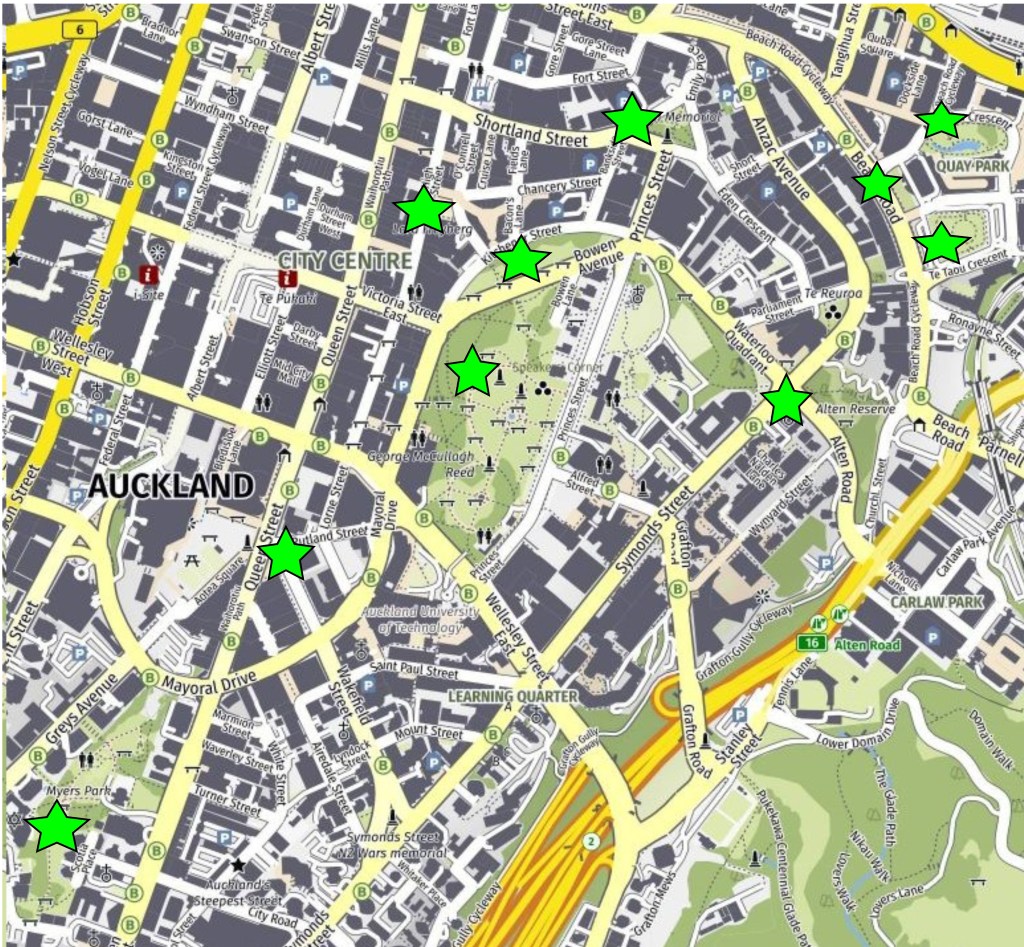
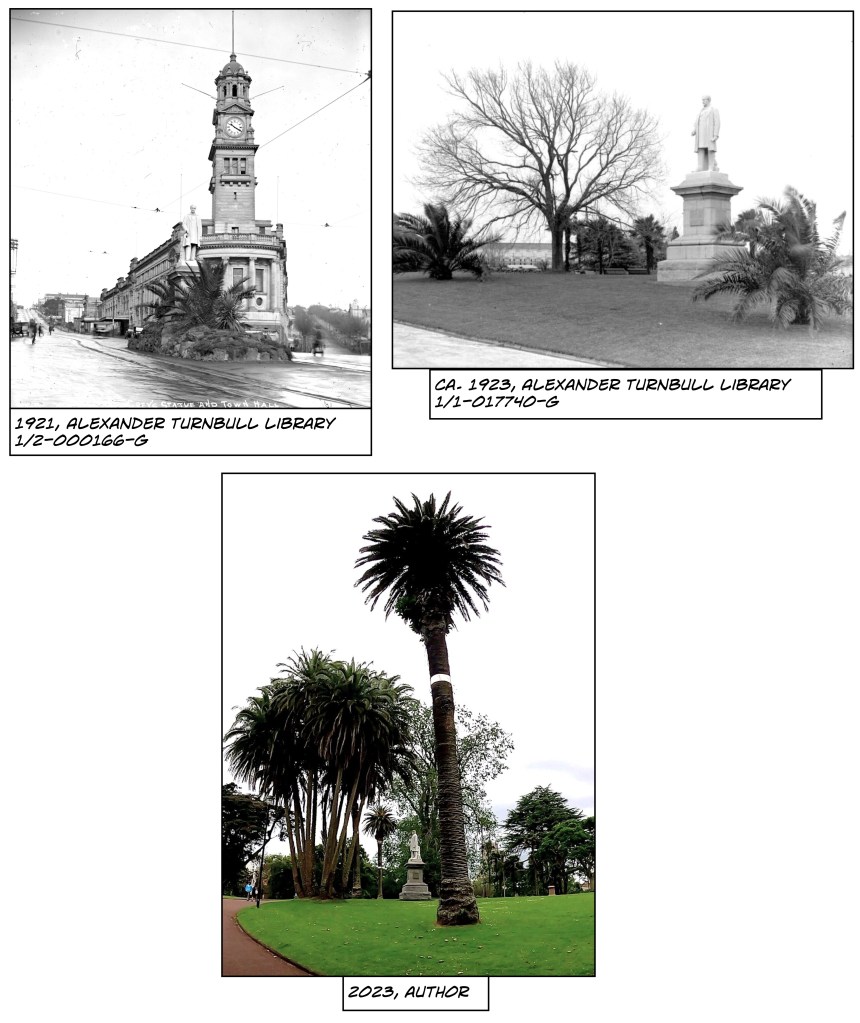

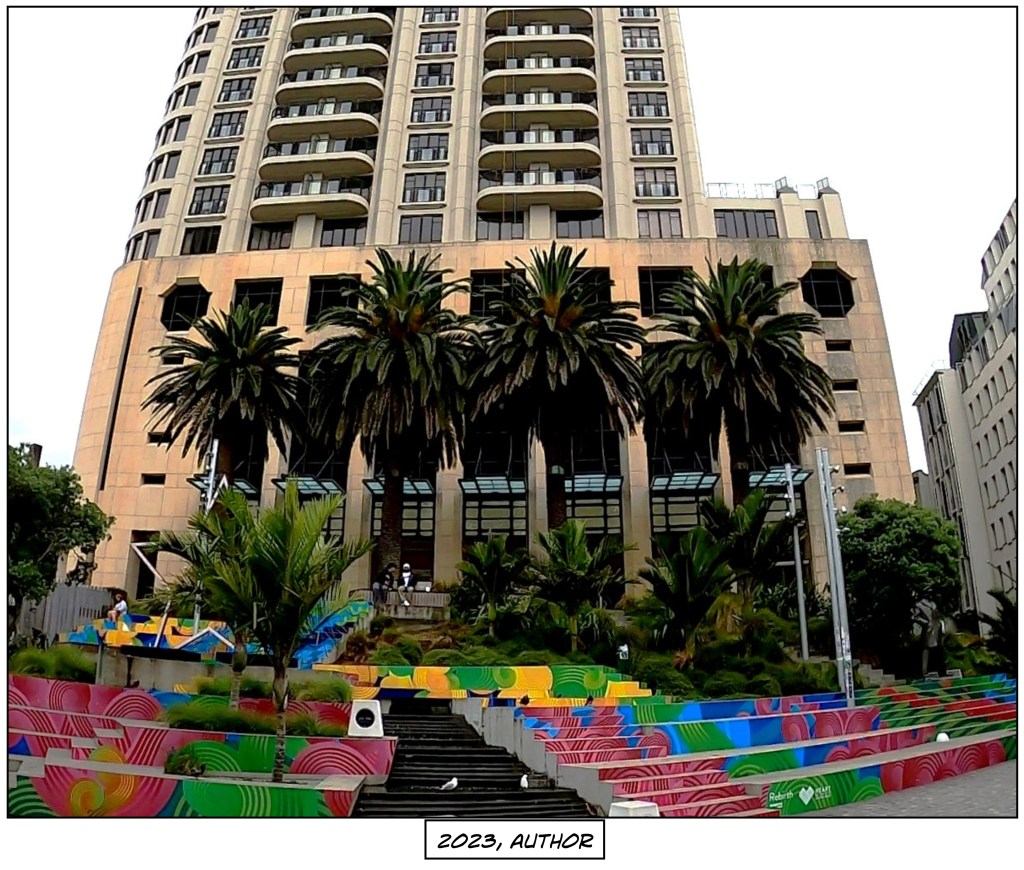

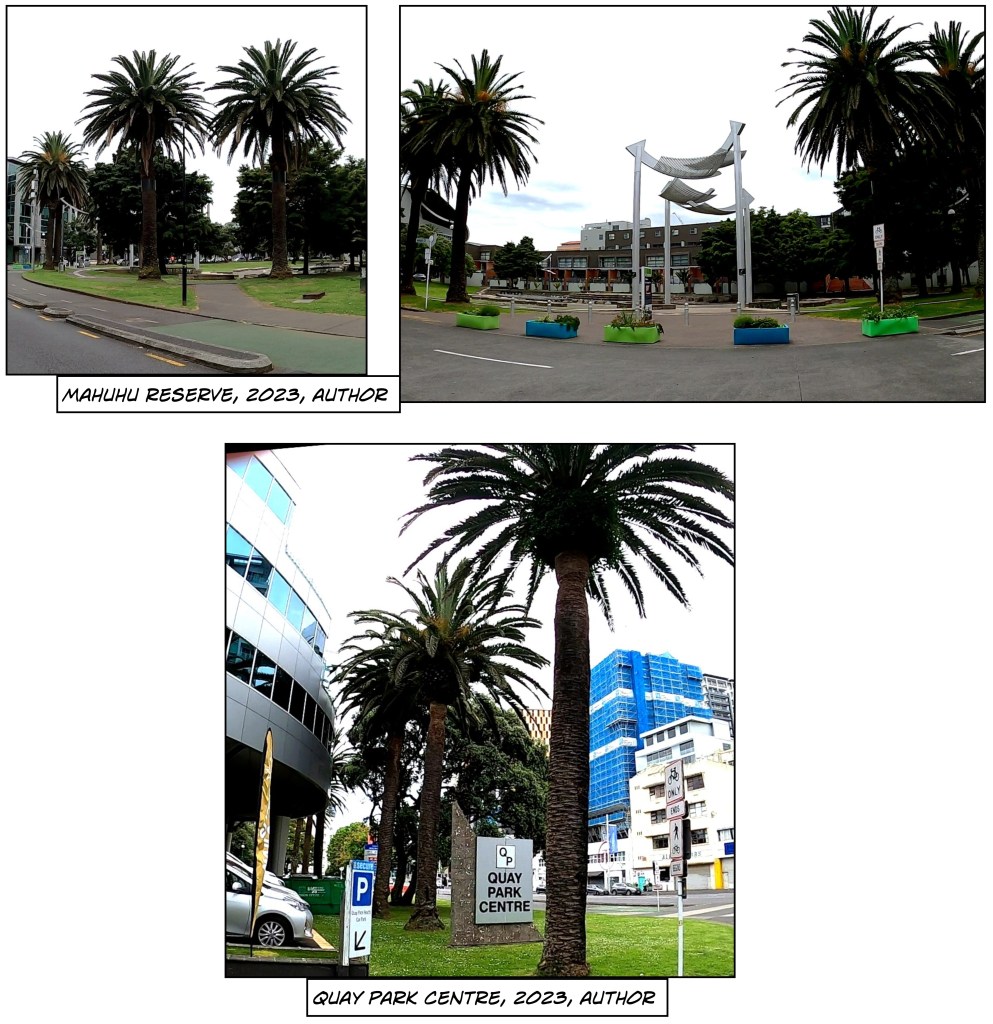
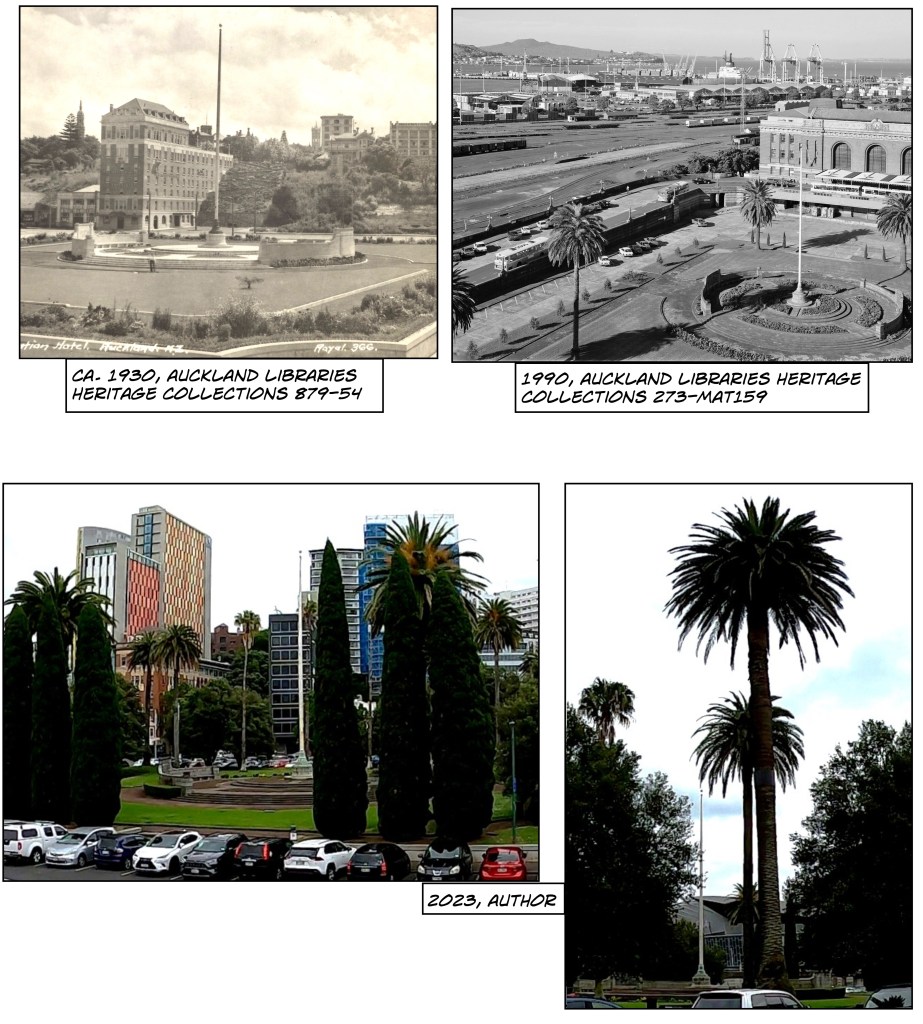


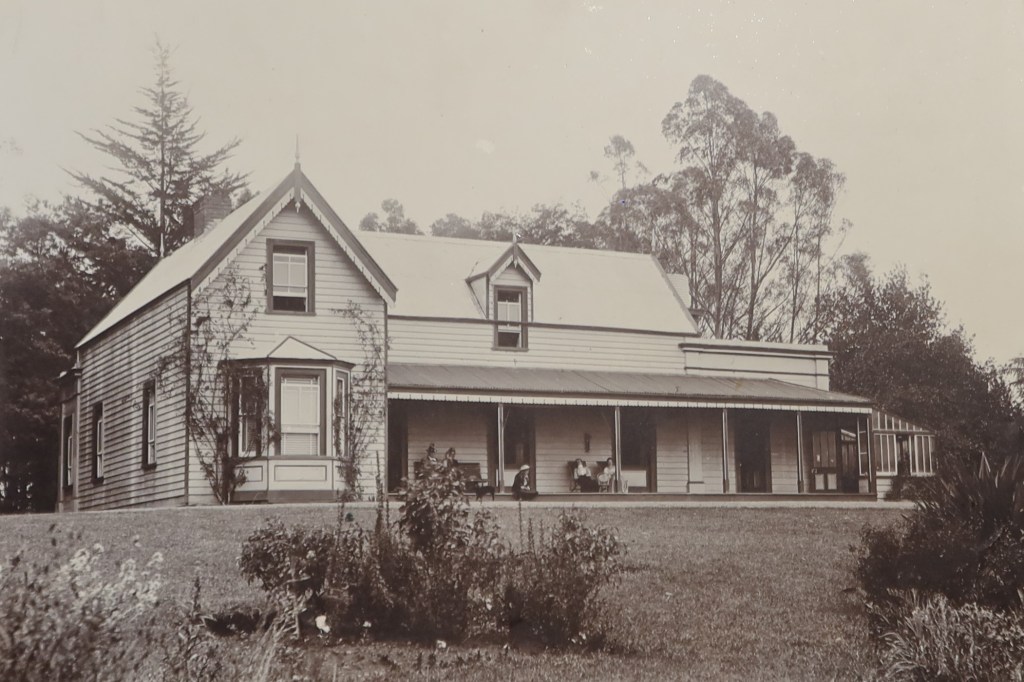
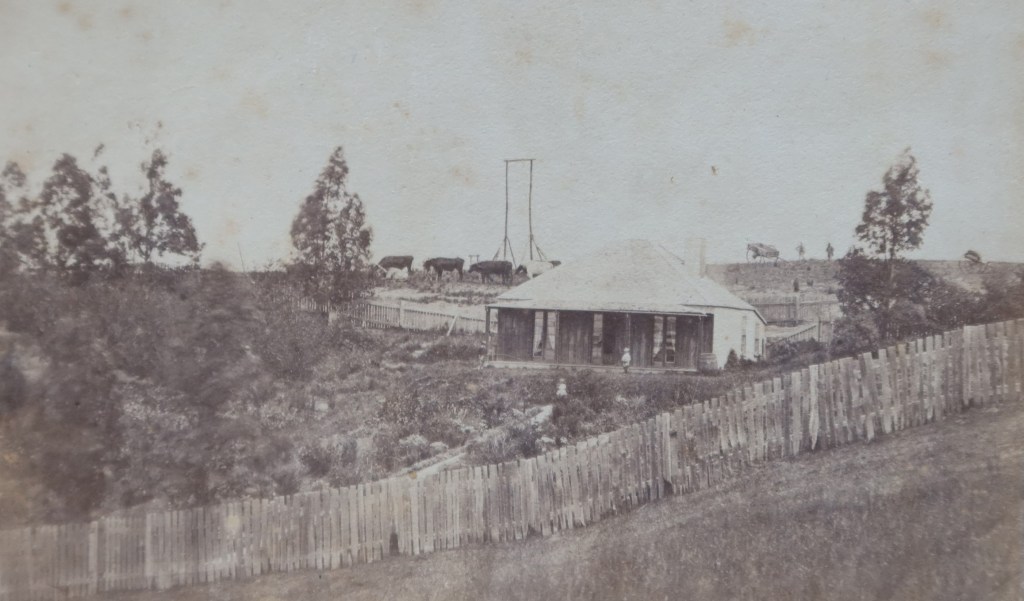
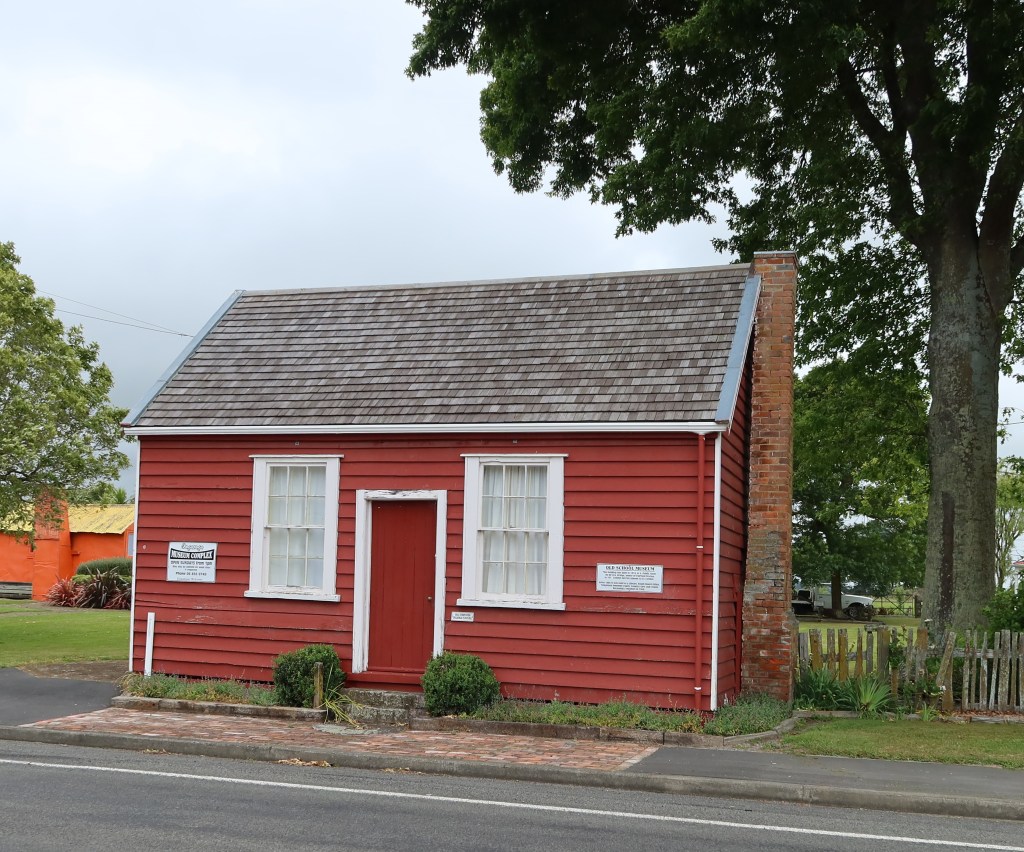



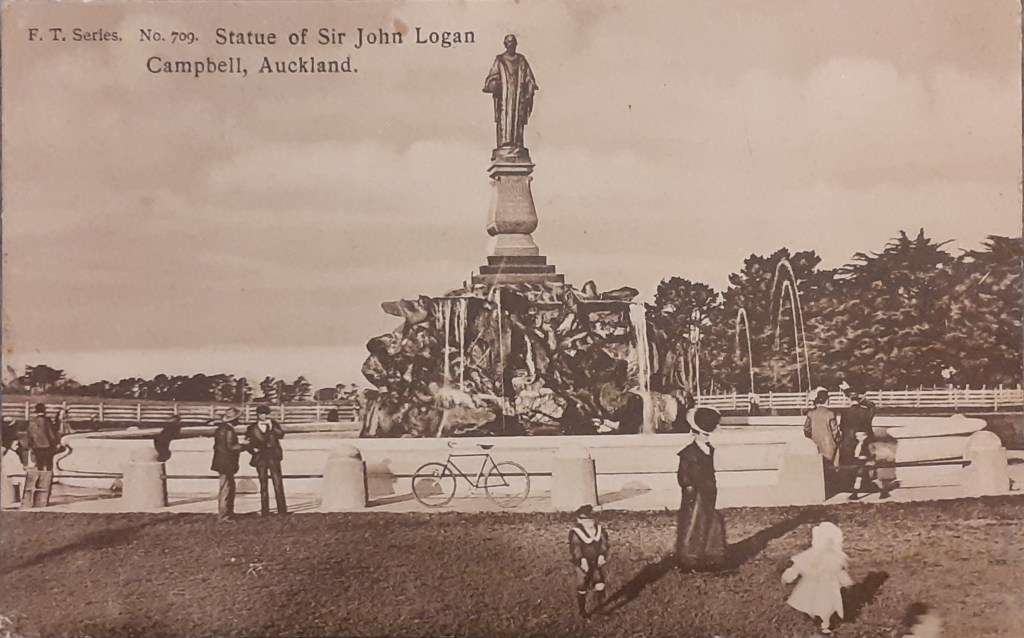


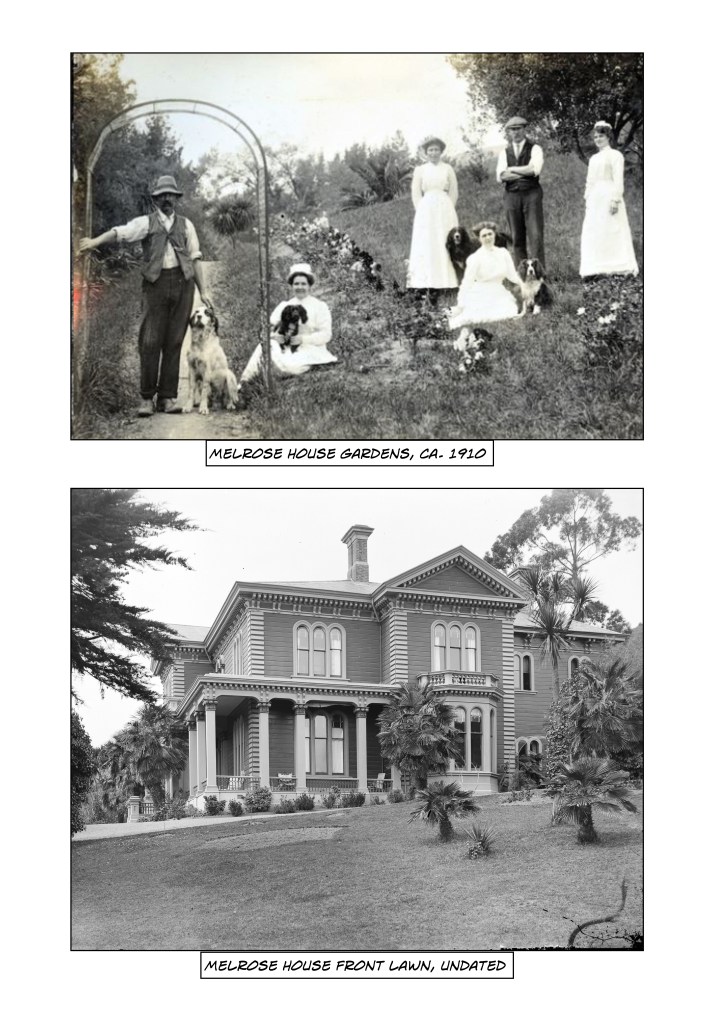

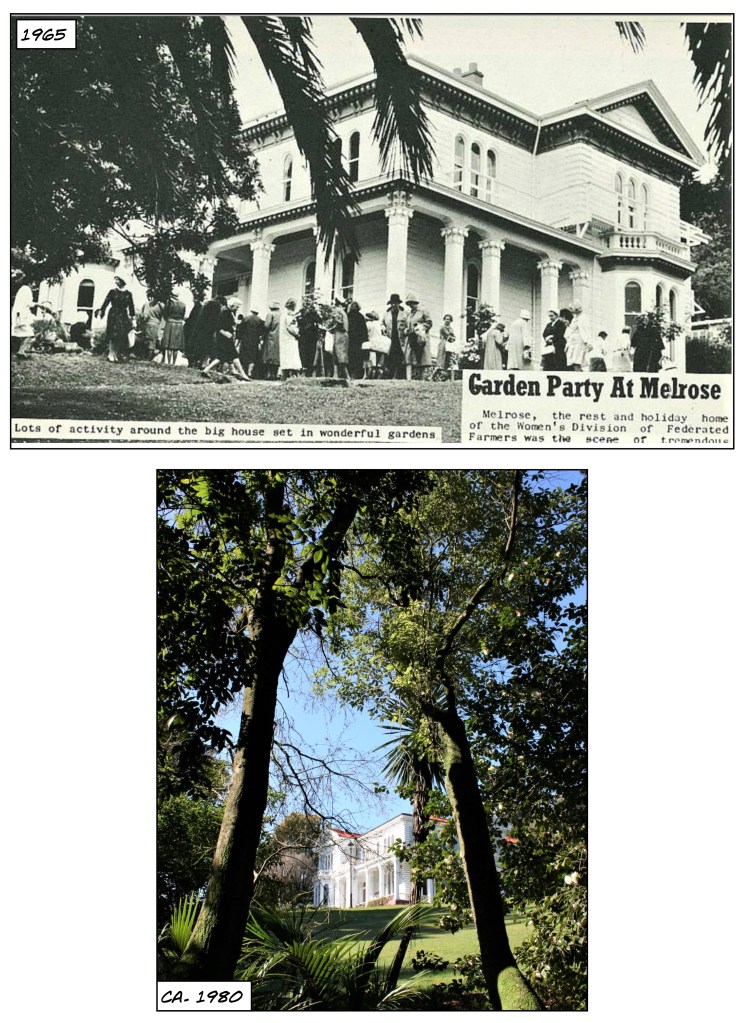
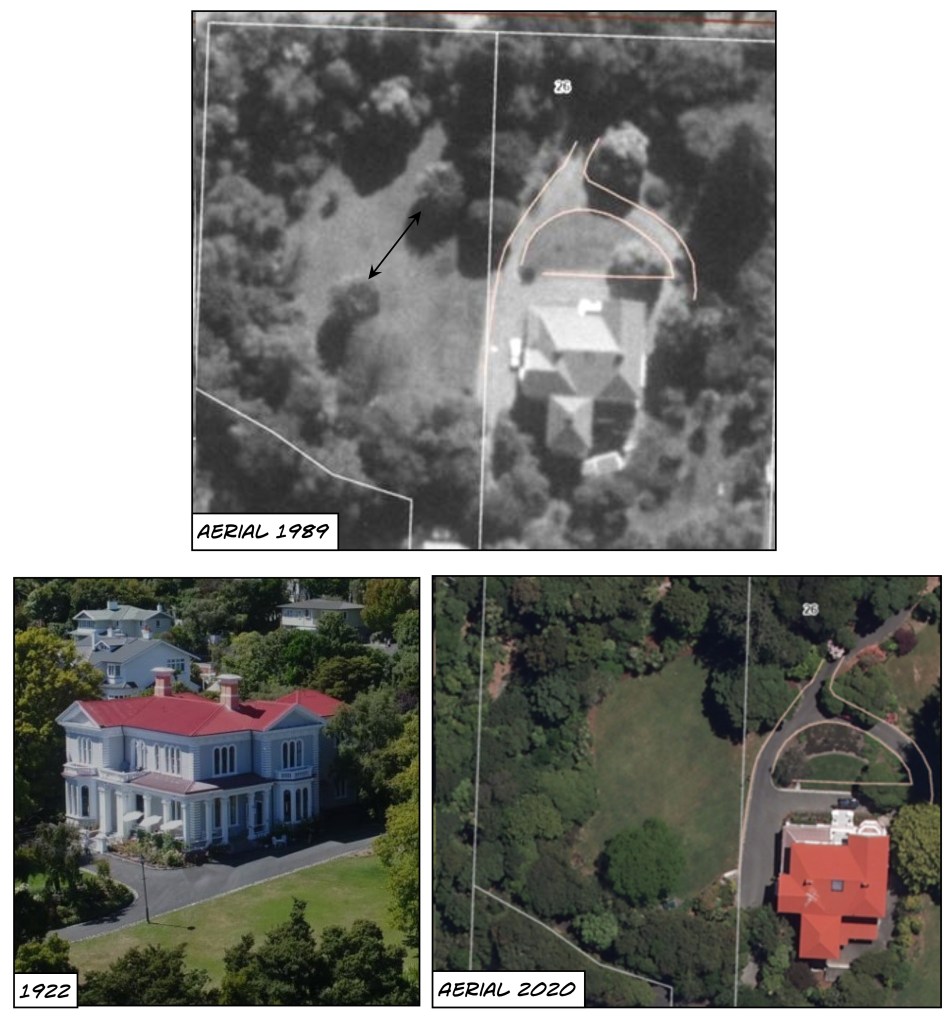
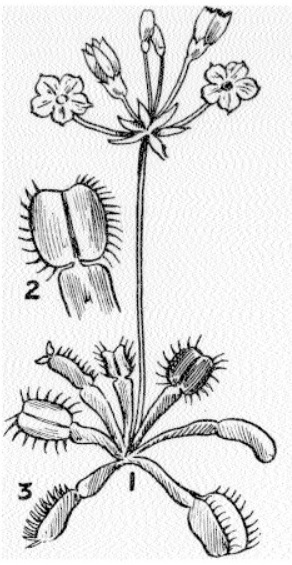


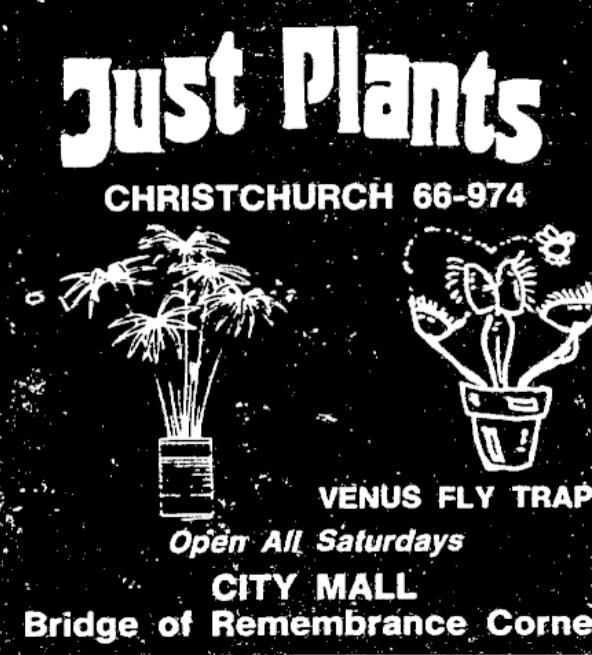


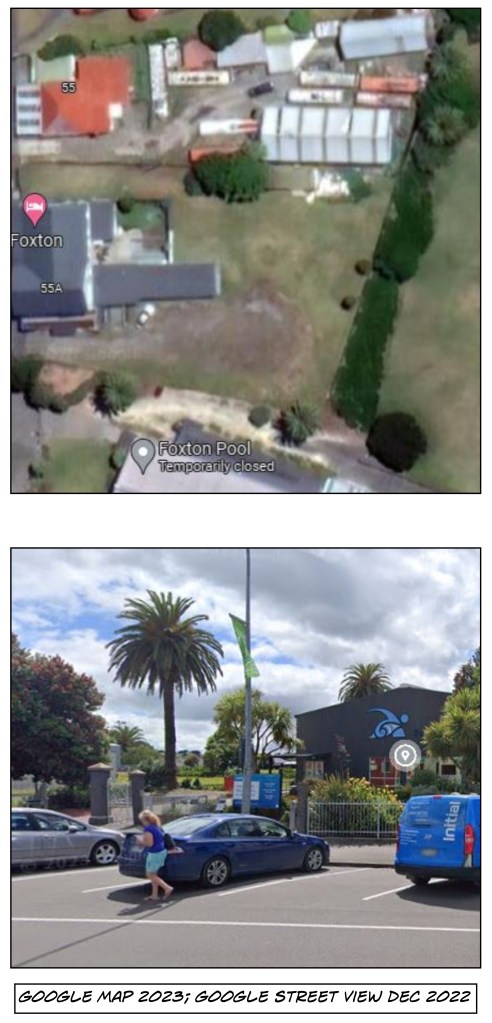
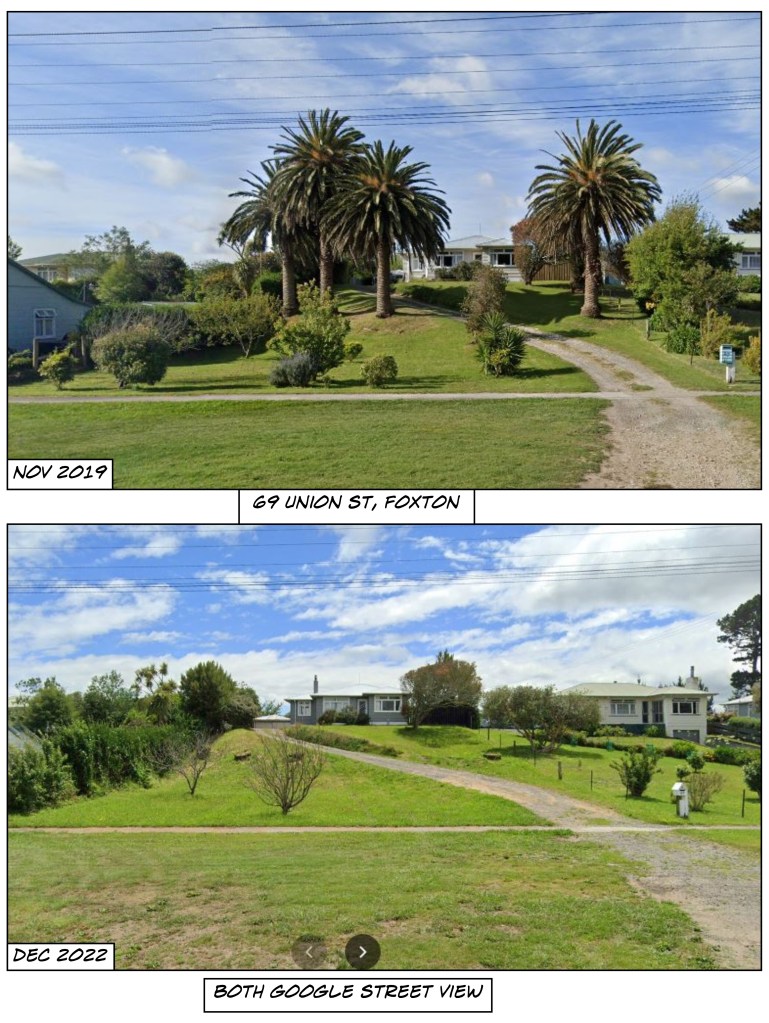


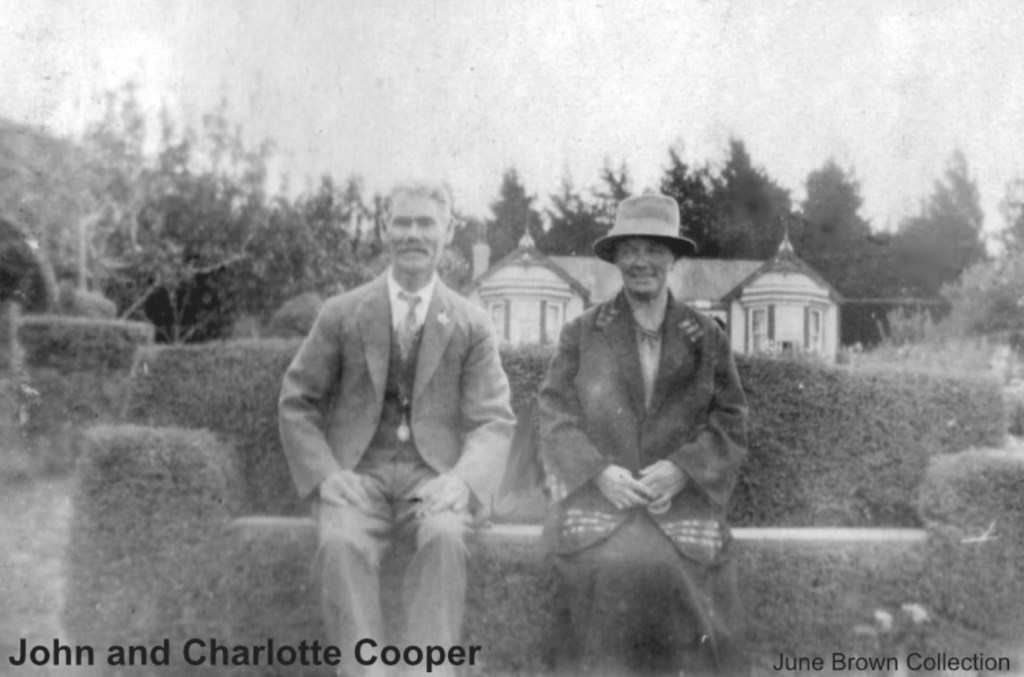
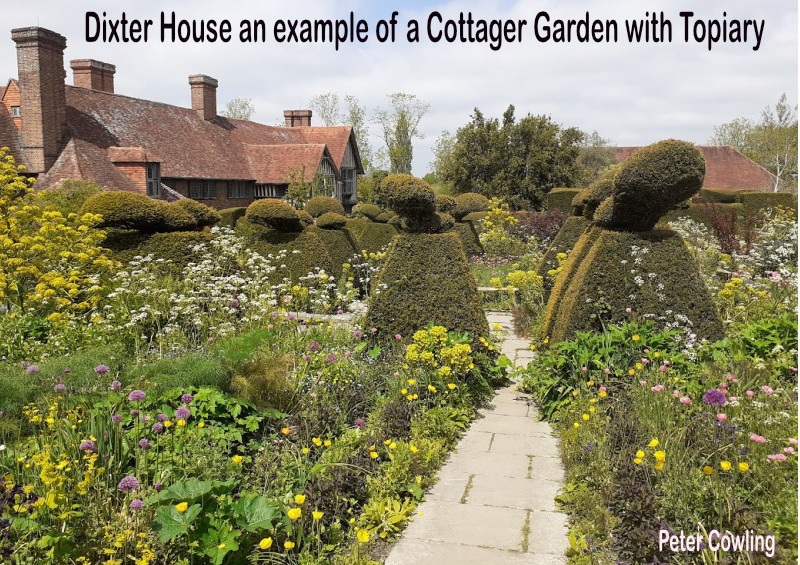
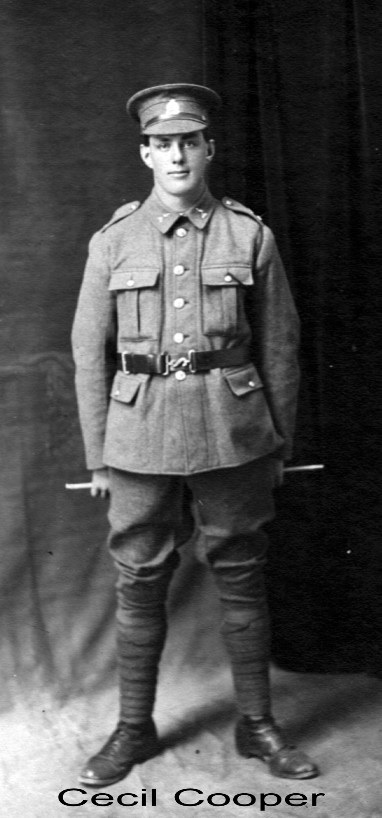


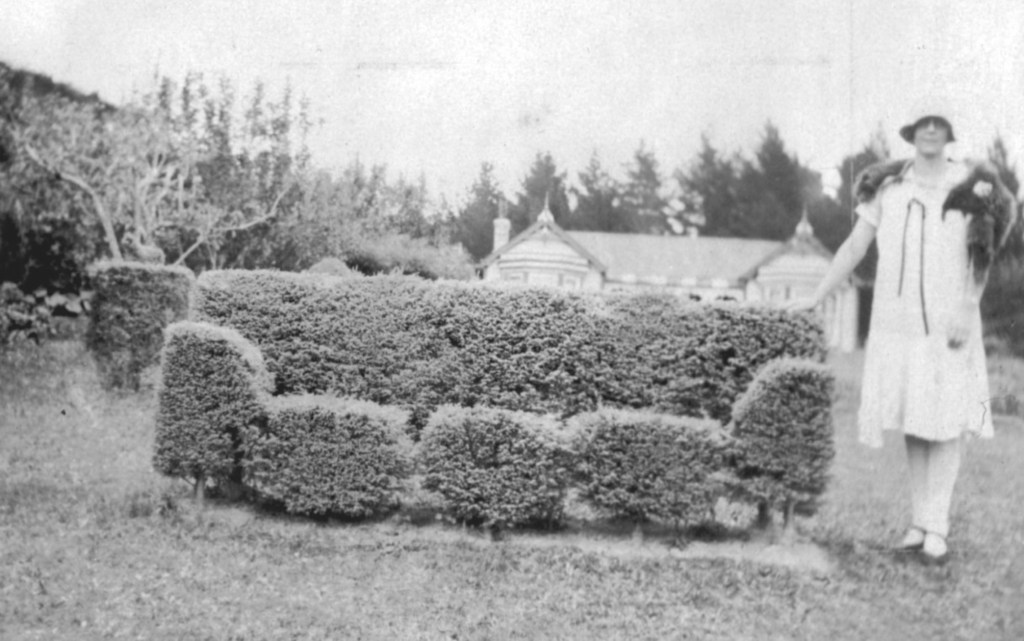


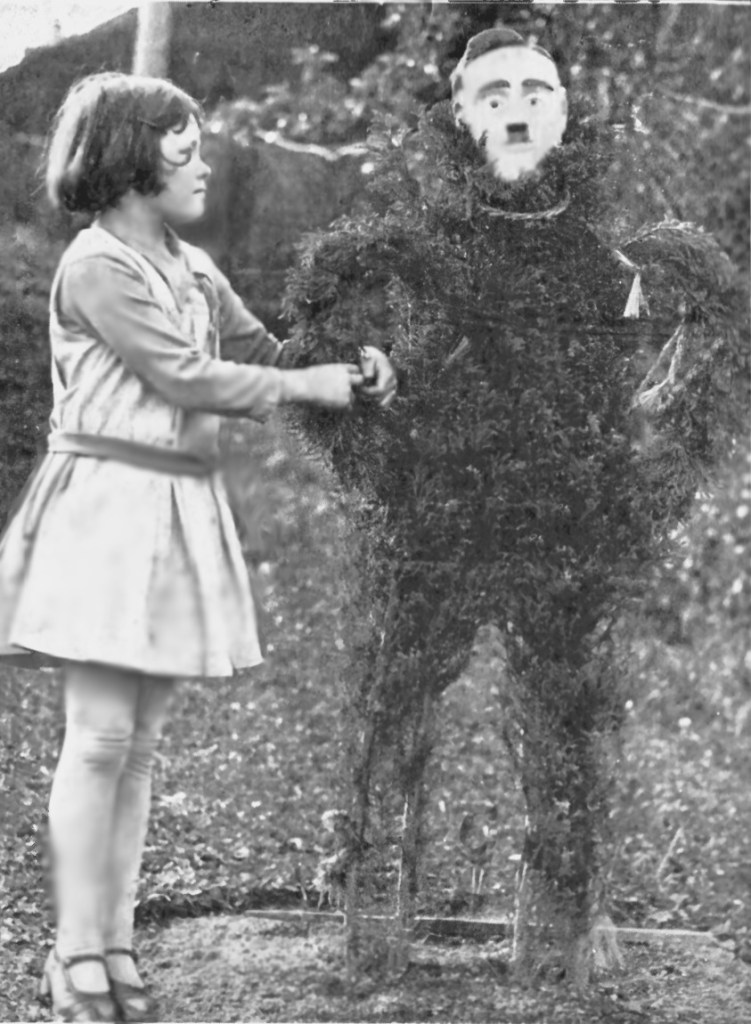
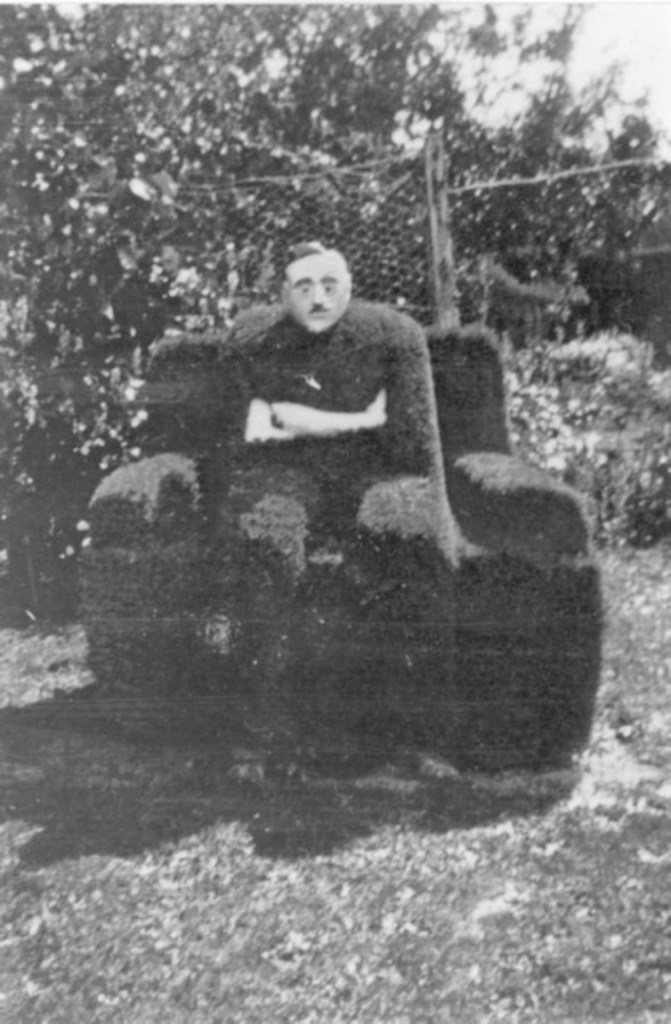


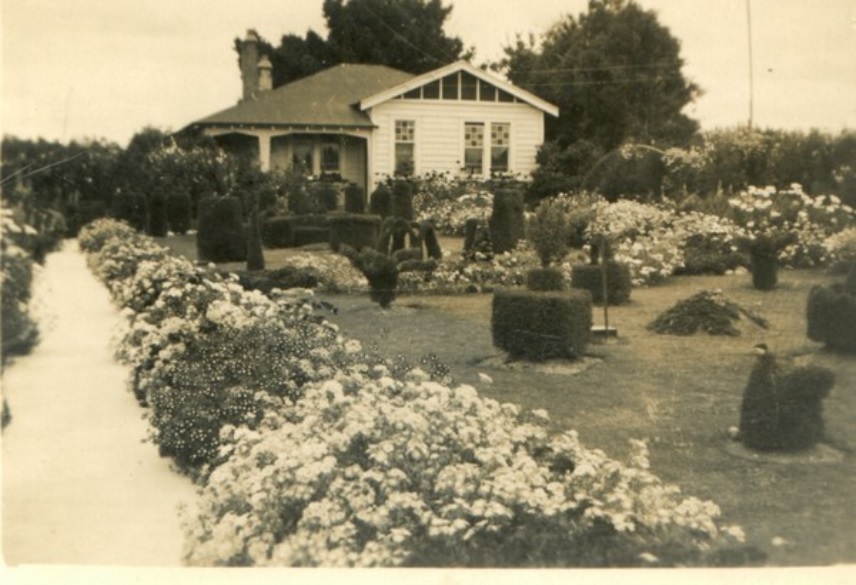
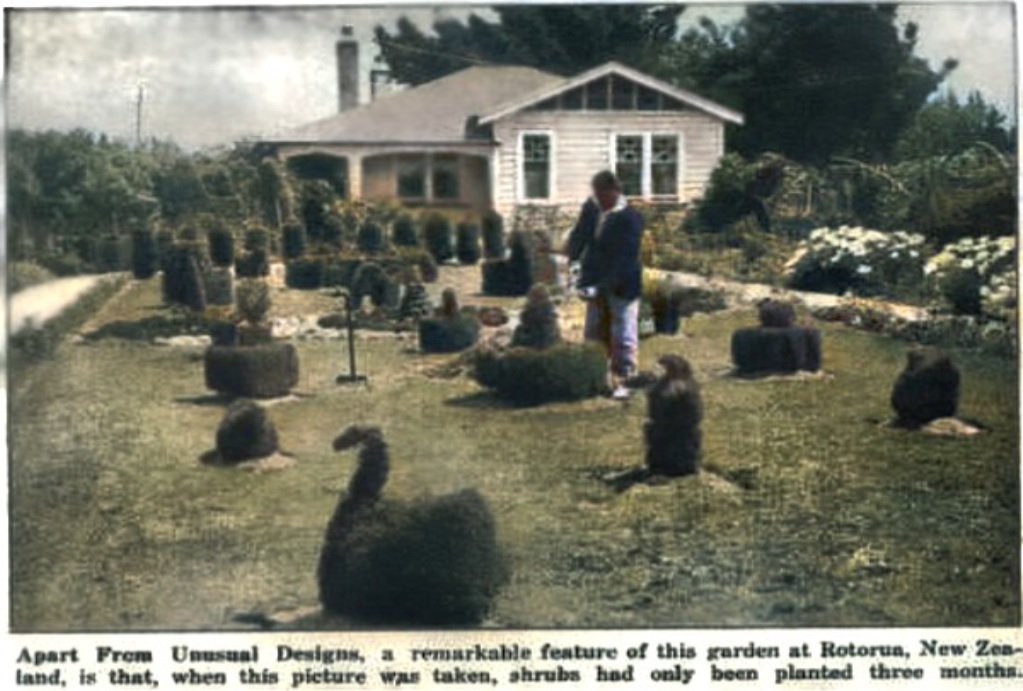
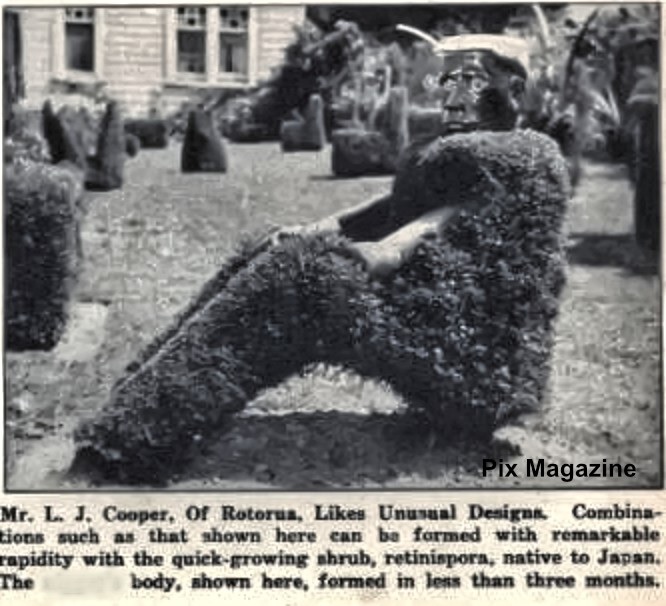
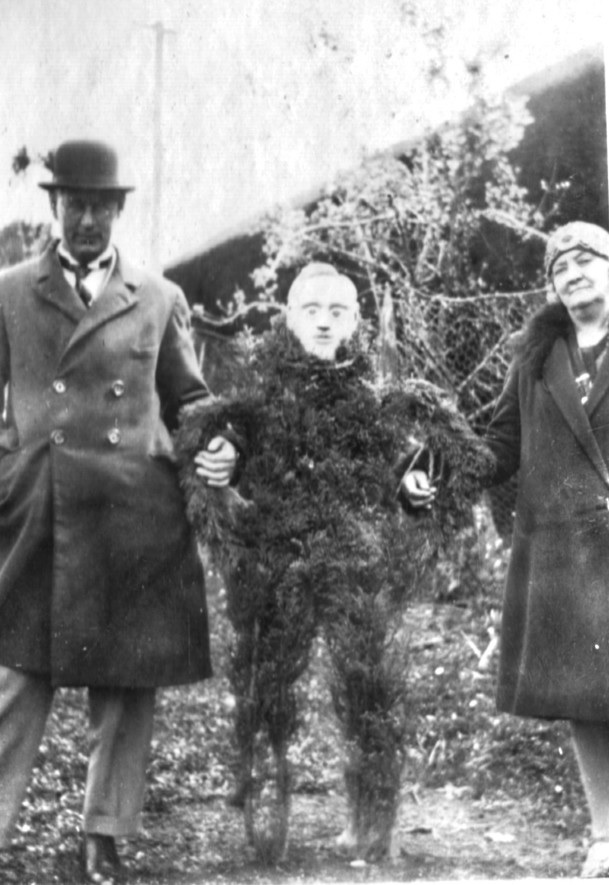
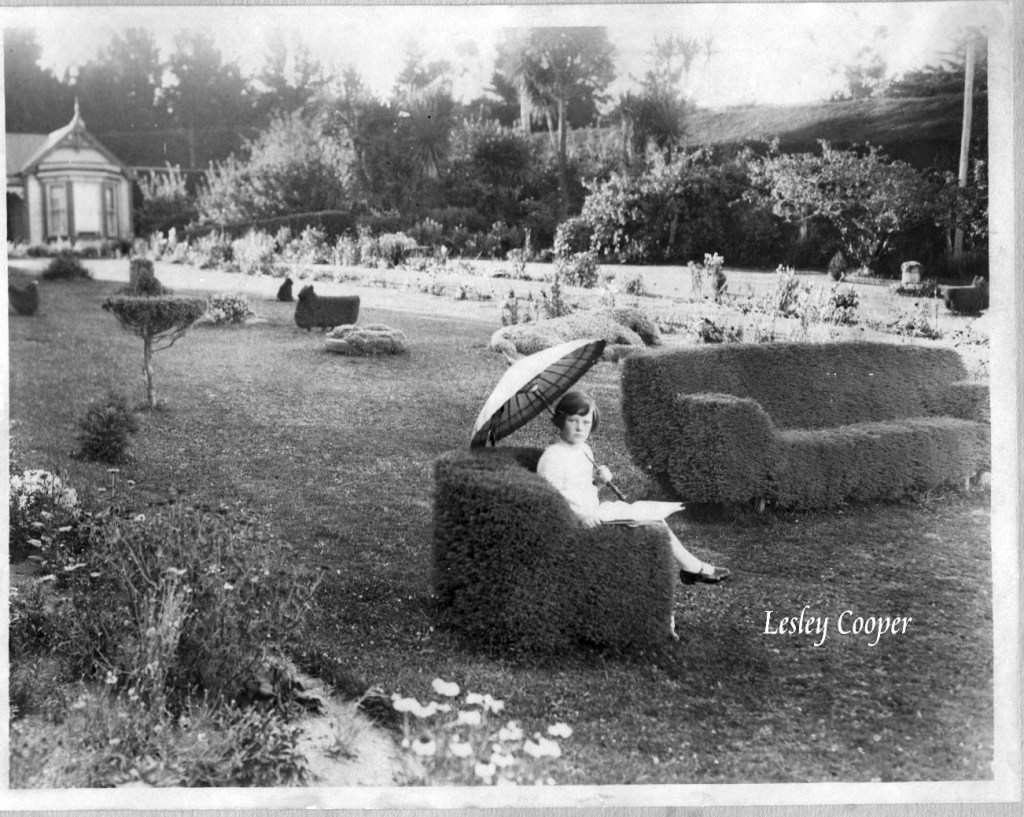
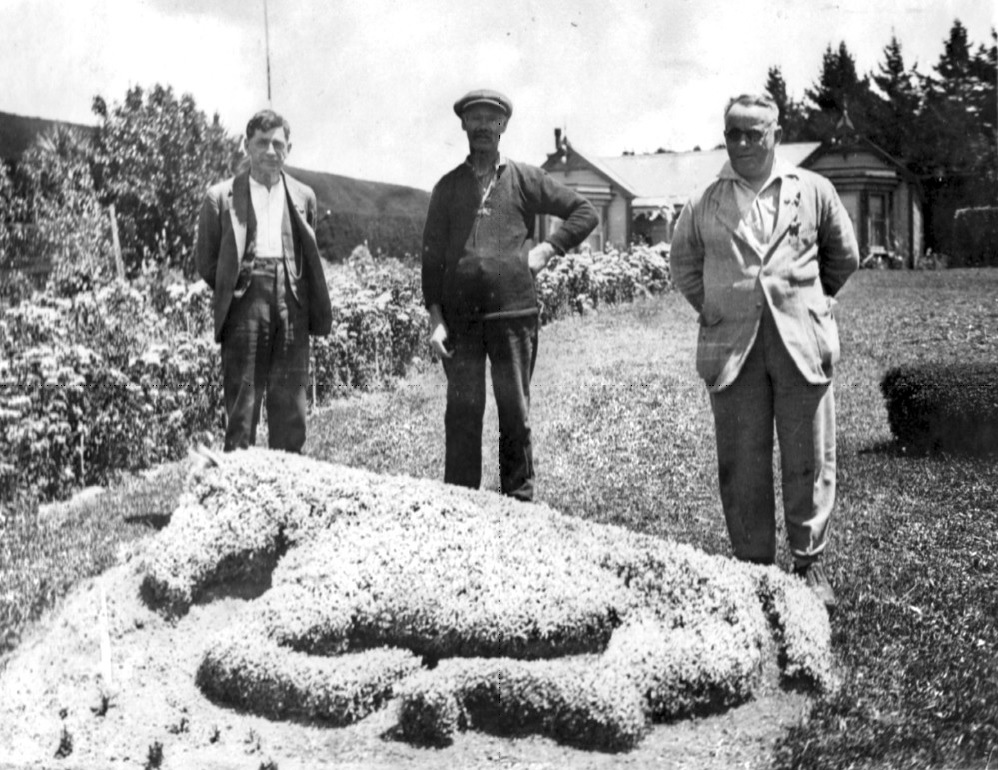


 The Garden History Research Foundation