The first issue of ‘The Gardener’s Journal’ – a New Zealand based periodical publication focussed on a diverse array of garden-related topics, from design, history and gardeners to travel experiences – was published in February 2008. Initiated and edited by Margaret Long, the motivation for starting a journal was, based on conversations with a variety of people, a feeling that there was a gap in the New Zealand market for in-depth articles on gardening-related subjects not normally found in other publications. Margaret attracted an impressive variety of expert contributors from the outset, largely from a network of individuals that she had established through the development of her own gardens – Frensham – situated just out of Christchurch, and through garden tours she had led through the U.K. and Europe. For example, the lead article in the very first issue was by eminent English gardener and garden writer Beth Chatto O.B.E., known as the creator of the Beth Chatto Gardens near Colchester, U.K. – a garden that Margaret had visited several times – who had gained repute in attaining ten gold medals at the Chelsea Flower Show between 1977 and 1987 for her “Unusual Plants” exhibits. This initial issue quickly gained attention, being described by garden journalist Mary Lovell-Smith in Christchurch newspaper ‘The Press’ as a “compact, classy, cultivated affair’, and a “serious and often erudite publication”[i]. Despite being New Zealand based, the journal aimed for broad geographical spread, both throughout New Zealand, and including overseas articles.
Cover of Issue 2 of The Gardener’s Journal, May 2008
In its initial incarnation, the publication lasted eight issues, four in 2008, followed by four more in 2009. At the end of 2009, however, publication ceased due to Long’s growing commitments; she was experiencing increasing numbers of visitors to Frensham, and she was leading annual garden tours to Europe. The business, her own, involved leading trips that lasted generally three to four weeks each. With planning tours included, a lot of time was spent away, while home commitments were increasing.
Cover of Issue 8 of The Gardener’s Journal, November 2009; the final issue in its first incarnation
‘Frensham’ was named after her father’s favourite rose, a dark red Floribunda rose developed in the U.K. in the 1940s. Starting development in 1992, Frensham emerged from what were bare paddocks. At the time, Long had little gardening experience, no formal horticultural training, and no vision or plan for the site. As such, Frensham was made through trial-and-error, with a lot of learning throughout the process. Long published a book in 2019 on her garden; ‘Frensham: A New Zealand Garden’, written by herself with images by photographer Juliet Nicholas, and published by Quentin Wilson Publishing.
While the journal had gone into an extended hiatus – one that Long didn’t actually know would ever end – it was resurrected in 2021. Following publication of the book, the urge to start the journal had again blossomed, and her books’ publisher Quentin Wilson offered to come on board to undertake the design and layout on the relaunched journal. The focus, she says, is much the same for the journal now as it was initially, with only one exception; the deliberate avoidance of any information that can be downloaded off the internet, though she admits that a little of this is sometimes unavoidable. The rate of publication has also been pulled back, now offered as three issues per year.
The new look The Gardener’s Journal, Issue 10
Articles in the resurrected journal have been diverse, and have included those with an interest in garden history. These include: ‘The Cottage Garden: A Potted History’ by Claire Masset of the National Trust (U.K.), and author of the book ‘Cottage Gardens’; ‘Three Men and a Glasshouse: The making of Dunedin’s Winter Garden’ by garden and music historian Clare Gleeson; and ‘The Wars for the Roses: the battle to save the New Zealand collection of heritage roses’ by Murray Radka, known as “one of this country’s leading rosarians”.[ii]
The Gardener’s Journal, Issue 12
The Gardener’s Journal is available as an A5 sized soft-backed journal, printed on high quality paper, by emailing Margaret (margaretlong@xtra.co.nz), or from selected stores. Subscription for a year (including postage) is NZ$75, or individual copies can be bought for NZ$25. The website for Frensham can be found here: https://frensham.co.nz/
Most people’s understanding of Hamilton Gardens doesn’t stretch beyond the fact that there are gardens from different countries and different periods in history. However, Hamilton Gardens has a unique concept that reflects a wider trend for museums and gardens. Many modern museums, like the new Smithsonian Museums in the U.S., are specialising and focus on a particular story. A local example will be the museum Tainui are planning that will tell the story of Tainui’s culture and history. Hopefully it will be as engaging as the Smithsonian museums. (1) There are still artefacts in these modern museums, but they’re presented in the context of a story. There are also some major new gardens following this trend: rather than just having the usual range of plant collections, they have a theme and their plant collections are used to support that. (2)
Hamilton Gardens – Medieval Garden (under development). Credit: Hamilton Gardens
It is probably easier to see Hamilton Gardens as a specialist museum or gallery of gardens whose meaning, function and form can tell us a lot about different cultures and our past. A number of notable writers and thinkers, like Proust, Bergson, Dilthey, Nietsche, Santayana, Gadamer and Pinker, have explained that some knowledge of history is how we understand ourselves and human society. As one of the writers put it, ‘History doesn’t follow a clearly defined path, but it can help to get some idea of where you’re heading, if you know where you’ve been.’ (3)
In the early 1990s someone installed a plaque in the Cloud Court at Hamilton Gardens with Paul Gauguin’s famous questions in French, “Where do we come from? What are we? Where are we going?” Gardens might be able to provide some of the answers because they have always been shaped by religious, economic, social, scientific, philosophical, political and cultural developments. Those different forms of garden are an enduring shadow or reflection, cast by cultures that have faded into history. Contemporary gardens can also provide a reflection of our own time, best understood in the context of the longer story.
It’s also essential to understand the historic and cultural context to gain a basic understanding of each particular garden in the Hamilton Gardens collection. (4) As a visitor you can just enjoy the aesthetics of different forms of garden that you might otherwise need to travel the world — or even back in time — to see. But over the years there has been regular feedback from visitors who read something or went on a guided tour and found that even a little knowledge substantially increases the enjoyment of their visits.
Each new form of garden evolved from changing attitudes and new societal thinking, and each of those changes played a key role in the evolution of civilisation. With research, the story writes itself, but it’s been broken down here into the six ‘ages of man’, plus an emerging future. There are different ways of dividing history into eras and ages, but the most suitable base to work from in this context seemed to be a British academic model. (5) Each age or era has distinct characteristics reflected in its gardens, so within each of these ages, the four or five most significant developments have been selected. These aren’t sudden changes or events, but rather underlying, transformational and permanent societal changes that characterised the age. Each change was reflected in a different form of garden, and the intention has been to eventually represent each of those garden types at Hamilton Gardens.
The Stone, Bronze and Iron Age have been combined in the collection of five Gardens of theAncient World. This period saw modern humans spread out around the world, adapting to new environments and creating new tools. While life was often dominated by spiritual beliefs, there were also emerging forms of literacy and numeracy. Most ancient societies appear to have had a belief in an afterlife, and one of those belief systems defined the form and almost every detail in the new Ancient Egyptian Temple Garden. The great Vedic empire is often overlooked but amongst other things, it was renowned for its gardens and invented modern mathematics, with the first innovation reflected in the proposed Vedic Garden. The Chinese seem to have had the most advanced cultures of the ancient world, represented by the proposed Mayhana Sanctuary Garden. This form of garden reflected ancient mystical beliefs and an enduring relationship with mountain landscapes that still influences the traditional arts of Asia. The greatest explorers of the ancient world spread across the Pacific establishing gardens, with aspects of these displayed in the proposed Pasifika Garden. In the process they quickly adapted to unfamiliar environments using the clever techniques now shown in the existing Te Parapara Garden.
Hamilton Gardens – Ancient Egyptian Temple Garden (under development). Credit: Hamilton Gardens
The most advanced societies in ancient times were those that had regular contact with other cultures, sharing new ideas and sometimes driven by competition with their neighbours. The creation of larger empires facilitated the development of a civil service and public facilities, while the development of trading networks led to the spread of new religions, all reflected in the five Gardens of the Silk Roads collection. The first is the proposed Persian Garden. The great trading empire of Persia was at the heart of the Silk Road networks and its famous gardens inspired many other cultures along those trading routes from Spain to the edge of China. The Roman Empire was the first to develop a wide range of public facilities, often including a garden court similar to the proposed Roman Peristyle Garden. The first enduring civil service were the scholar administrators of China’s Han, Song and Ming Dynasties. They developed highly refined gardens that reflected many aspects of their arts and culture, partially reflected in the existing Chinese Scholar’s Garden. Buddhism spread from India along the Silk Roads, substantially influencing Asian cultures, including those, like Japan, that lay beyond the main trading routes. The existing Japanese Garden of Contemplation reflects the dominating influence of Buddhism and the other Asian belief systems. Islam also spread along the trading networks, profoundly influencing many cultures. With interpretation, the existing Indian Char Bagh Garden reflects a traditional Muslim view of the world.
Hamilton Gardens – Japanese Garden. Credit: Hamilton Gardens
Christianity dominated the culture and politics of the Medieval period and the Gardens of the Renaissance in Europe. The proposed Medieval Garden has two courtyards that reflect the two fundamental tenets of the early Christian church. The existing Italian Renaissance Garden provides clues to several aspects of the Humanist movement that helped Western Europe catch up with Silk Road civilisations. The proposed French Parterre Garden reflects aspects of the development of a modern state’s financial administration, and shadows of the Reformation can clearly be seen in the existing Tudor Garden.
Hamilton Gardens – Tudor Garden. Credit: Hamilton Gardens
The Enlightenment from the mid-17th century to the 18th century was one of the most remarkable periods in the story of human civilisation. The four Gardens of the Age of Enlightenment reflect four key changes that gradually transformed Europe into the dominant centre of world power. The proposed Baroque Garden reflects the emergence of new and improved technologies, such as improvements in printing and ballistics, notably canon technology. The proposed Hortus Botanicus garden reflects the development of science and the capitalist economy, while the proposed English Landscape Garden was always closely associated with the growth of liberal democracies. The Counter-Enlightenment, inspired by Rousseau, was a reaction to enlightenment thinking, and the existing Picturesque Garden is a reflection of that moderating movement.
Hamilton Gardens – Baroque Garden (under development). Credit: Hamilton Gardens
The transformation undertaken in the Enlightenment allowed Europe to colonise and control large areas the world. The four Gardens of the Age of Empires reflect four of the major changes that were taking place. European colonisation followed a very similar pattern and some characteristics of that can be seen in the existing Mansfield Garden. At the same time Europeans became fascinated by other cultures, particularly those of Asia. Driven by new fashions and limited knowledge, they adapted all manner of Asian arts, shown in part in the existing Chinoiserie Garden. Exploitation of resources and people in the colonies generated immense wealth in countries like Britain, allowing a completely new form of garden to evolve, which will be recreated in the proposed Victorian Flower Garden. Perhaps the greatest advance of the age was one we now take for granted in the West; a value placed on the welfare of the individual, not just the important individuals. That led to several Humanitarian movements and reforms designed to protect the lives of the poor and led to the abolition of slavery. You can see the direct results of some of those institutional reforms and social movements reflected in the existing Park Cemetery.
Hamilton Gardens – Mansfield Garden. Credit: Hamilton Gardens
History will probably associate our current age with petroleum products, but the four Gardens of the Modern Age represent four positive developments. Recognising local heritage doesn’t sound like a major step, until for example, you consider the importance now given to local Māori culture. The earlier support for local culture can be more clearly seen in the existing English Arts and Crafts Garden, which was a conscious reaction to the dehumanising aspects of the industrial world. The growth of consumer society was closely associated with the spread of American culture and Modernist design, reflected in the existing Modernist Garden. The growth and influence of environmental movements will be referenced in the proposed extension of Echo Bank Bush, and the multiple influences of modern art partially addressed in the existing Concept Garden.
Hamilton Gardens – Modernist Garden. Credit: Hamilton Gardens
Niels Bohr famously said that ‘it’s hard to make predictions, especially about the future’, but the two existing and two proposed gardens in the collection that make up the four Gardens of a new age, are reflections of some relatively safe assumptions. The capacity of computers will increase, particularly artificial intelligence along with our increasing dependence on computerised systems. The growth of megacities and intense urban development is another trend, as are major developments in genetic engineering and mankind’s ingenuity in adapting to climate change. (6)
The results of the thirty developments in civilisation briefly listed above, have led to results we now take for granted. Each has added a layer that collectively created the modern world. (8) Each of those developments or layers was reflected in a different form of garden. However, more information and explanation is obviously required to appreciate the direct link between each development and associated type of garden, which is why the Garden History Research Foundation is supporting some form of publication to explain the context, meaning and history of gardens, along with the history of Hamilton Gardens itself. It is important to fit all the pieces of the puzzle together. Hopefully as more gardens are developed, with good interpretation, more people won’t just see Hamilton Gardens as a pleasant place to stroll. They’ll be able to appreciate it is also a unique museum that can tell a powerful and compelling story about civilisation and evolving human behaviour.
Footnotes
The newest Smithsonian museums tell stories about: the American Indian, African American History and Culture and the Jewish Holocaust.
For example: The Eden Project tells the story about the importance of plans and Cranbourne has the theme of water.
Marcel Proust, Pleasures and Days, Alma Classics, 2014 (translated from the 1913 original), p. 286 ; Marcel Proust, The Past Recaptured, Fishpond, 2009, Translated from the 1927 original) p. 139 ; Henri Bergson, Matter and Memory, Zone Books, 1990, (translated from the 1896 original), p.101; Walter Kaufmann (translator), The Portable Nietzsche, 1954, p.250; Niall Ferguson, Civilisation, Penguin, 2011; HansGeorg Gadamer, Truth and Method, 1960, p. 56; Stephen Pinker, The Better Angels of Our Nature, Penguin, 2012, p.XIX
The Operative 2020 Management Plan for Hamilton Gardens was prepared under the requirements of the Reserves Act 1977. It includes a long term plan for the Gardens based on the concept outlined in this blog.
Bloomsbury Academic are producing a series of books and on-line collections with sections written by leading academics. These cover the cultural history of at least 33 subjects including ‘gardens’. Each is broken down into the: Ancient World, Medieval, Renaissance, Age of Enlightenment, Age of Empires and Modern Age. These are consciously Eurocentric so we’ve added another ‘Silk Roads’ section.
The existing Sustainable Backyard Garden and existing Surrealist Garden and the proposed Structural Garden and proposed Bee Meadow.
It will always be subjective what the 30 most important steps in the development of civilisation are, but these are the 30 steps that were chosen, partially influenced by which steps were reflected in a different form of garden. The spread of modern humans around the world, adaption to new unfamiliar environments, developing complex belief systems, mystical relationships with the landscape, invention of mathematics and writing, establishment of trading networks, larger stable settlements with public facilities, civil administration, the spread of Buddhism, spread of Islam, spread of Christianity, the Humanist movement, development of state administration systems, the Reformation and Counter-Reformation, emergence of new technologies particularly improvements in printing and canon, development of science and the capitalist economy, growth of liberal democracies, the Counter-Reformation, European colonisation of the world, influence of other cultures, accumulation of surplus wealth, a new value placed on each individual, value placed on local heritage, the growth of conservation movements, development of the consumer society, development of modern art, growth of mega cities, impact of computerised systems on modern society, the development of artificial intelligence, advances in genetic engineering and adaption to climate change.
Seen from the air, Dunedin’s Town Belt appears as a green swathe circling the central and northern parts of the city, a fragment of a once great forest that thrived in Ōtepoti/Dunedin. The Town Belt is one of the oldest in the world. Purchased from Kāi Tahu in 1844, its origins date back to the earliest years of the Otago Settlement and originally comprised some 120 hectares.[1]
Now encompassing 202 hectares, this public land, while highly modified, is today a haven for many birds and invertebrates, including kererū, tūī, bellbird, tomtit, rifleman, ruru, shining cuckoo, and kōtare. Dominant vegetation types today include broadleaf, exotic deciduous and coniferous forest, grassland, kānuka forest, and even swamp forest. Though highly browsed, it has several rare and endangered plants.
Its serenity and reputation as a refuge from the bustle of the city, however, belie its troubled settler history. From 1848, Otago’s European authorities faced ongoing challenges in trying to balance short- and long-term development, as well as safeguarding the needs of the many against the needs of the few, in the management of Dunedin’s Town Belt.
Figure 1: Note the grid layout of Kettle’s plan for Dunedin, typical of New Zealand Company settlements. ‘Index Map of the Otakou Settlement Middle Island New Zealand – Surveyed in the years 1846 and 1847 – C H Kettle [189 x 65 cm inside border, 1 mile to 1 inch]’, Source: National Archives of New Zealand, R698465.
Town Belt Origins
In line with the New Zealand Company precepts of planned settlement, surveyor Charles Kettle’s plans for Dunedin included a Town Belt, as well as other public reserves (Figure 1).
The origins of the Town Belt and other reserves in New Zealand lie in the nascent development of town planning in Victorian Britain, which was only developing at the time of Aotearoa’s colonisation.[2] The need to create places to promote health and recreation during the Industrial Age motivated the establishment of parks in European and colonial cities in this period. This was underpinned by prevailing belief in the environmental basis of diseases. Vegetation, medicos and lay people believed, removed poisonous air from cities and through their respiration purified the unhealthy city air.[3]
The clearest earliest statement of the vision and purpose of the Town Belt comes from the Dunedin Public Lands Ordinance (1854). This ordinance set up a Board of Commissioners to manage Dunedin lands ‘reserved for public purposes’. Public reserves—from those set aside for everything from education to cemeteries—included ‘a Park, and other places for health and recreation in and about the Town of Dunedin.’ Clause 16 specifically addressed management of the Town Belt. This enabled authorities to lease portions of the Town Belt to private citizens (presumably for grazing, as later occurred), but stipulated that provisions had to be
… made for preserving the trees and shrubs thereon, or such part of them as it may be desirable to preserve, with a view to the ornament and amenity of the ground, and also for draining and improving it, and ultimately laying it down in grass, with walks and carriage drives, as a public park or place of recreation. [4]
Finally, the clause permitted only the erection of fences on the Town Belt. Development of the Town Belt as a fully grassed recreation area was never completely realised, possibly because Dunedin Botanic Garden (established in 1863) came to fulfil this recreational role.[5]
Competing visions of the Town Belt
While Otago’s leader William Cargill had envisioned at least part of the Town Belt as a grassed recreation park, others viewed and used the reserve very differently. Almost at the outset of European colonisation, issues arose with illegal timber getting—invoking his powers as Resident Agent, Cargill had had two men charged in 1849. These concerns continued into the 1850s and later, as well as calls for other uses for portions of the Town Belt.
In 1854 the Provincial Government received a petition for parts of the Town Belt to be released to provide extra pasturage for cattle, a request it declined.[6] The area of the Town Belt diminished in the 1850s through the development of cemeteries, such as Arthur Street Cemetery and the Northern and Southern cemeteries. In 1857, for example, 31 acres (c. 5 hectares) was removed from the Town Belt to create the Northern Cemetery and 28 acres for the Southern Cemetery.[7]
In 1857, a survey of Otago Province described the manner in which settlers were using the Town Belt. An area ‘reserved for the use of the inhabitants as pleasure grounds’, it observed, the Town Belt ‘…is mostly covered with timber, and supplies a large portion of the firewood, consumed in the town (figures 2 and 3).[8] Clearly, most settlers regarded the Town Belt as a common resource.[9] In the next decade, an influx of goldminers placed even greater pressure on the Town Belt, as squatting and timber-getting increased.[10]
Figure 2: A picnic in Woodhaugh Valley in 1863. Note the size and maturity of the trees. ‘Picnic at Woodhaugh Valley’, oil on canvas, 965 x 1,635 mm, 1919/134/1355. Source: Permission from Toitū Otago Settlers’ Museum.Figure 3: Photograph of the Dunedin Town Belt with a boy and man resting on a felled tree. As records show, felled tree trunks were common. Photographer: unknown Date: unknown, CS/12318. Source: Permission from Toitū Otago Settlers’ Museum.
In 1858, Otago Provincial Council Clerk John Logan wrote a frustrated letter to the Deputy Superintendent about misuse of the Town Belt. Logan complained ‘that several parties have of late erected temporary houses and squatted down on a portion of the Town Belt within a few yards of my place’ on Royal Terrace (Figure 4). They
…have already done irreparable damage by cutting down a considerable portion of the Bush on the Belt which served to beautify the place and which hitherto had been carefully preserved by Mr. Chapman and myself respectively. They have no particular interest in sparing any of the trees[,] having only a temporary end to serve and consequently I now find that only certain portions of the trees which are cut down are used[,] the rest being left to rot and obstruct the passage along the ground.[11]
As well as having illegally erected dwellings, Logan rounded on the squatters for having destroyed the trees. These trees, he thundered, ‘served to beautify the place’ and had been ‘carefully preserved’ by him and Chapman. Logan also criticised the settlers for wasting timber, by leaving trees rotting and unused.
Figure 4: A photograph of John Logan’s house, Fern Tree Cottage (Violet Grove, Royal Terrace). Note the house’s proximity to the Town Belt. No date (circa late 1850s/early 1860s), CS/13752. Source: Permission from Toitū Otago Settlers’ Museum.
An official response to Logan’s complaints followed later that month in 1858. Issued by Logan himself, a series of public notices stated ‘that SQUATTING, as also CUTTING DOWN TREES [sic] upon the Town Belt of Dunedin, are strictly prohibited; and any person hereafter guilty of so Cutting the Trees will be prosecuted as the law directs.’[12] Although the relevant magistrate’s file has disappeared, other prosecutions followed, as revealed by contemporary newspaper coverage of the magistrate’s court.
Gold Rush Pressure
Any such regulations were swept aside with the influx of miners to Otago’s Gold Rush. In five short months from mid-1861, Otago’s population swelled from 13,000 to over 30,000. Dunedin was inundated with (mostly) male miners from all over the world. Squatting and timber-getting increased on the Belt.
The Otago Daily Times editorial of 1862 complained that “The beauty of the town belt is being slowly but surely destroyed by the indiscriminate felling of the timber that forms its chief ornament.”[13] It implored Otago authorities to protect its standing trees.
In 1865, for example, the Dunedin Magistrate fined Mary Farquharson £2 and costs, noting that ‘he was very glad to see that the citizens were now coming forward and assisting the police to put a stop to the practice of destroying timber on the Town Belt.’ The complainant, Alfred Talbot, related that ‘[h]e had frequently seen her cutting down trees on the Town Belt’, warning her on several occasions.[14] However, the scale of squatting and timber-getting associated with gold mining appears to have been beyond the scope of authorities to control.
In 1865, control of the Belt was delegated to the newly formed Dunedin Municipal Corporation.[15] The newly appointed Reserve Ranger reported over 75 squatters living in the Belt in 1866, as criticism mounted over perceived Belt mismanagement. In 1866, ‘Citizen’ added her ‘voice to the willful and selfish spoliation attempted by the Mayor and the City Council’.[16] In December 1866 an angry crowd of 300-400 citizens gathered to protest against the Council leasing portions of the Belt for grazing to Council members or friends. The heated meeting accused the Council of ‘self-aggrandisement and self-seeking’ and of ‘depriving them of the free use and occupation of the Town Belt’ through its granting of leases.
The Otago Daily Times added its voice of support to the protestations. Putting aside utilitarian and financial aspects, it declared that the council’s decision flew in the face of the intention of the reserves, as
…unenclosed, unbuilt upon—places free from the contamination of the everyday, busting, active life of man [sic]; that they should be places to which the hard-handed, week-worn workers could resort and breathe a purer and more life sustaining air than is inhaled during their daily toil.[17]
A petition charged that the sale of leases was ‘an infraction of the rights of the public to be full, free, and unrestricted use of the ground for purposes of recreation’. Within 24 hours, the petition had gathered 700 signatures and was duly presented to the Superintendent of Otago.[18] Locals formed a committee to lobby against the actions of the council. Eventually, pressure from the Otago Provincial government and local citizens saw the Council revoke most leases in 1872.
Biodiversity loss
Over time, the composition of the Town Belt changed markedly. As William Martin observed, while extensive, ‘[i]t was not then realized that the removal of the surrounding forest to make room for settlement would create such a new set of conditions that changes would inevitably occur in the composition of the Town Belt forest.’ Such pressures included changes wrought by wandering cattle and, later, possums, as well as garden escapees, deliberately introduced exotic trees, and deforestation (figures 5 and 6).[19]
Figure 5: This view of the Town Belt, with William Street School on the right and Ōpoho in the distance, illustrates clearly the impact of urban development on the Town Belt. ‘Town Belt, with William Street School, Dunedin, 1881’, attrib. to John Crawford, watercolour on card, 255 x 177 mm, 1919/134/247. Source: Permission from Toitū Otago Settlers’ Museum.Figure 6: This photograph from 1862 looking towards the present suburb of Roslyn from the Octagon, shows the extent of forest in Dunedin’s Town Belt. Note the tall trees visible on the skyline. Source: Permission from Toitū Otago Settlers’ Museum.
Ongoing environmental changes in the Town Belt, coupled a growing valuing of native nature by European New Zealanders, contributed to the establishment of the Dunedin Amenities Society in 1888. As the oldest and longest-running environmental organisation in New Zealand, the Society has since its founding played a major role in protecting the Town Belt, through planting and fundraising, and raising awareness of its value.[20] (Dunedin City Council has responsibility for maintaining the Town Belt.)
Conclusion
Conflict over the Dunedin Town Belt in the 1840s, 1850s and 1860s illustrates underlying tensions between classes, between the ‘haves’ and the ‘have nots’, but also underlines efforts to conserve aspects of native nature for reasons of beauty, health and enjoyment. These early tensions over public parks and their usage, as well as their importance to the general well-being of an urban population, appear remarkably modern to present-day readers who have, under lockdown restrictions, so recently experienced parks and the benefits they bring to mental and physical health.
Acknowledgements
I thank Jenny Chen, Pete Read, Seán Brosnahan, and Claire Orbell from Toitū Otago Settlers’ Museum for their help.
James Beattie is an award-winning environmental historian who teaches at the Centre for Science in Society, Victoria University of Wellington, but resides in Ōtepoti/ Dunedin
[2] Tom Brooking, ‘“Green Scots and golden Irish”: The environmental impact of Scottish and Irish settlers in New Zealand: Some preliminary ruminations’, Journal of Irish & Scottish Studies 3, No. 1 (2009): 41-60.
[3] James Beattie, ‘Colonial Geographies of Settlement: Vegetation, Towns, Disease and Well-Being in Aotearoa/New Zealand, 1830s-1930s’, Environment and History, 14, 4 (November, 2008): 583-610.
[4] Dunedin Public Lands Ordinance, 1854’, Otago Gazette Issue 11 March 1854, vol1, no 5A, 2-4.
[5] The aims of the Ordinance, however, represented something of a dead letter, as government deemed its provisions illegal. Passage of the Public Reserves Act (1854), however, confirmed Crown ownership of reserves, but vested the power to manage and proclaim such reserves in the person of the provincial superintendent.
Between 1850 and 1905, the curve of hills surrounding present day Mavis Street in southern Dunedin sheltered a beautiful garden and orchard. Heritage Gardener Claire Bibby tells the garden history through three eras of care.
Jeffreys, Ellen Penelope, 1827-1904 (née Valpy), Dunedin 1850. View taken from Forbury Hill above Allandale, 1850, Hocken Library Accession No: 7,764
In May 1850, Wiliam Valpy, reputed to be New Zealand’s wealthiest resident on his arrival to the colony in 1849, hosted a harvest home for his friends and workers on his farm at Forbury, Dunedin. Forty people sat down to an old English-style meal of roast beef and plum pudding. A toast was made, the Reverend Burns acknowledging that “the land was well fitted to reward any toil and labour bestowed upon it.” The Valpy’s daughter, Ellen, painted the harvest scene (above).
William and Caroline Valpy hosted a second harvest home in 1851.
“A large tent was erected on a sheltered part of the grounds for the occasion; and under the canopy two of the beautiful fern trees so peculiar to New Zealand, spread their graceful foliage over the happy company,” reported the Otago Witness. The guests visited the fields and gardens and a new dwelling house under construction built “of beautiful stone …eliciting the admiration of all.”
An early settler reminisced about the occasion in the Otago Witness in 1872. “Forbury House was then in course of erection by Mr David Calder, and its proportions and surroundings being quite baronial when compared with, even the most pretentious mansion that had yet been raised, it was the object of much wondering interest.”
The situation was described as bleak but romantic. “We pictured the extensive swamp stretching from before the house to the north-west point of the Peninsula, covered with the richest cultivation— fields of waving golden grain seen beyond the ample parks and spreading lawn.”
Mr Valpy died in 1852 before the house was complete. He was buried on his property, remaining there until his reinternment in Dunedin’s Southern Cemetery in 1890.
In 1861, Thomas and Wilhelmina Allan of Scotland arrived in Dunedin. Mr Allan was a nurseryman and florist and by 1866 had established the Exhibition Nursery on Cumberland Street and a Seed Shop at The Cutting.
Miniature of Thomas Allan and Wilhelmina Allan enclosed in a brooch fashioned with gold mined by Thomas Allan in the Dunstan gold rush.
In 1870, a visitor to his nursery wrote in the Otago Daily Times, “He has a fine property at Forbury, which he is transforming into nursery gardens and pleasure grounds, and where he intends to grow his nursery stock, as the city becomes too closely built up. There he will find ample scope, having 16 acres of fine, rich, and well sheltered ground. The fruit trees, which were planted there by the late Mr Valpy, are literally hanging to the ground with the weight of fruit which shows that in sheltered positions fruit will succeed in Otago!” It was noted the gardens had twenty-two hives of bees.
The visitor returned in August 1871, writing for the Otago Witness.
“Several winding walks are being made through the bush, and these, when completed, and the banks planted with ornamental trees and shrubs, according to the plans shewn us, will no doubt make the place very attractive.”
The splendid views of the Forbury Race Course, the Ocean Beach, and along the bay to Dunedin were admired.
“The Forbury House is a massive structure of Caversham sand-stone and is in so dilapidated condition as to remind one of an old castle of centuries ago,” the writer continued. “There were at one time a fine garden and orchard attached to the house, but they had been neglected for years previous to coming into Mr Allan’s possession; so that these improvements have been of little advantage to the present occupant, who is preparing ground for the planting of an orchard of a thousand trees — chiefly plums, cherries, pears, and apples.”
It’s likely the original orchard and gardens were planted by Mr Valpy’s estate manager, John Anderson. Mr Anderson had been trained as a gardener on large estate in Scotland and employed in gardens before sailing to New Zealand. He was a founding member of the Dunedin Horticultural Society, of which Mr Allan was to later become secretary.
Mr Allan began restoring and enlarging the Valpy’s Forbury House, renaming it Allandale House and Gardens. There were beautiful green terraces in front of the house, suitable for games. He offered the site for garden parties, fetes and picnics, the earliest of these recorded in 1873.
By 1878, Allandale House and Gardens were flourishing. The house had been enlarged to 16 rooms with an airy hall. There was a stable, coach house and greenhouse. An artificial pond had been formed in the grounds. In December that year, a full account of the garden plantings was published in the Otago Witness.
“The gardens and Allandale House, formerly Forbury, lie in a bight or valley surrounded with hills clothed with native bush.”
There was a fine collection of hybrid rhododendrons “…comprising about 50 varieties and hundreds of plants.”
“Allandale gardens have long been noted for the fine roses grown there, and they were, at the time of our visit, just coming into bloom. The collection comprises nearly 150 varieties, including, many, of the newest and finest in cultivation.”
The writer listed conifers and deciduous trees by variety and described the shelter hedges in detail. There was also a fine collection of heaths, fuchsias and pelargoniums.
Allandale was gutted by fire in May 1879, caused by a log rolling out of a hearth. Mr Allan had not insured it fully, and he had taken out a mortgage against his properties in April with Joseph Morgan Massey, the Dunedin Town Clerk. Mr Massey foreclosed and within a year the sections of Allandale township were being sold by Mr Massey. There followed a sensational series of Court trials which ended in 1883, when Mr Massey was imprisoned for fraud in a Council case.
The Allandale nursery land, and presumably the orchard, had been acquired by Robert Macquaid, the George Street fruiterer. In 1898 a visitor to Macquaid’s orchard, writing in the Otago Daily Times, said the property was a beauty spot, describing a similar outlook to when it was in the possession of Mr Valpy, nearly 50 years earlier and Mr Allan, 20 years previously.
It was “ideally situated for an orchard, benefitting from a northerly exposure, and sheltered from southerlies by a high hill at the rear…views of the ocean stretching away to the right, the bay in front and the sylvan glades of the Peninsula”.
The orchard had apples of Hawthornden, Stirling Castle, Codlin, Cox’s Orange Pippin, Gloria Mundi, Prince Bismark, Nonsuch and more. There were Jargonelle and Bon Chrétien pears, groves of gooseberries and currents and a choice selection of plums, apricots and peaches. Mr Macquaid said he had harvested 800 lbs of Sir Joseph Paton strawberries that season. The article closed with a description of “Leafy groves, soft walks, laden boughs, cool shades and a glorious prospect.”
One can only imagine what Thomas Allan thought on reading this.
At the turn of the century the Allan’s moved north and Mr Allan established himself as a nurseryman at Avondale, Auckland. He developed a 400-tree orchard and sold seed, flowers and fruit, and Pohutukawa trees, for honey. He died in 1926, aged 91, and was buried beside his wife in the Waikaraka cemetery, Onehunga.
Robert Macquaid died in 1907 at the age of 81 and is buried in Dunedin’s Northern Cemetery, where his wife Mary was buried in 1903. Between their deaths, the Macquaids “well-known orchard” was surveyed and in 1905 the sections were advertised for sale, for building on.
The beautiful gardens and orchards first established in 1850 on the finest land in Dunedin, with the best of views and shelter, are now residential housing along the roads and streets of Valpy, Motu, Mavis and Allandale.
Further reading
Heritage Roses NZ Inc. Journal Volume 49, Issue 2, February 2022.
In the mid- to late-nineteenth century, New Zealand and the rest of the British Empire was swept up in a nature craze that permeated popular culture in a way that we would now describe as ‘going viral’. This was ‘pteridomania’, or ‘the fern craze’.
New advances in technology. such as the invention of the Wardian glass case that could transport growing plants safely over long distances and the increasing travel efficiency of booming railroads. meant most people were able to participate in plant collecting as never before. But why ferns? What was their appeal for British settlers?
Ferns had a special place in British plant lore. Connected particularly with woodlands, ruined buildings and craggy hillsides, they were part of a natural environment that many Britons loved, but in their urbanised industrial cities were no longer able to access easily.
British folklore linked ferns with the magic of midsummer’s eve and fairies. The lack of knowledge of the reproductive cycle of the fern led to old rural beliefs that the fern reproduced invisibly. Thus, it was considered to have the magical ability to render humans invisible too. For all these reasons ferns had a romance and magic to them quite apart from their innate structural beauty.
Ferns were also connected with the far-flung exoticism of the empire, with Australia and New Zealand particularly well-known for their own fern species, distinguished by variations in size and colour unknown in British native ferns. The sheer flamboyance and size of some specimens such as the silver New Zealand tree fern (Cyathea dealbata) made ferns collected from Australasia much sought after.
Despite the amount of wealthy private collectors and male-dominated institutions involved in fern collecting, pteridomania became particularly connected with women. The very thing that Victorian critics of the craze complained about in its effects on women were almost certainly the very things that made it so attractive to females of all ages. It caused them to act in ‘unseemly ways’, romping around the countryside, scrambling down banks and hills. Fern collecting parties were often a mix of the sexes so they were often unsupervised in secluded woods with young men (gasp!). Lastly, of course these (mainly male) critics worried that it taxed women’s delicate brains by forcing them to analyse the plants they were collecting and grasp the meaning of difficult Latin words to label them.
Here in New Zealand, women seized upon the opportunity to become involved in the popular craze. Fern collecting expeditions and parties into the bush were common and keen gardeners such as Emily Acland and Jessy Rhodes of Mt Peel and Bluecliff Stations in Canterbury brought back beautiful specimens for their own gardens from the nearby bush. Public parks also benefited from the enthusiasm of women collectors, such as Miss Brown of Mount Thomas Station who donated a rare fern that she’d discovered to the Christchurch Botanic Gardens.
Finding ferns was not always a happy experience, however, in New Zealand’s more rugged terrain. When Mrs Giblin of Hawkes Bay went on a fern collecting expedition with her husband and some friends to Waihi Falls, she watched with horror as their friend Colonel Herrick plummeted to his death from atop the waterfall and she and her husband had to wade into the water to drag him out in the hopes of saving his life. She and the Colonel’s daughter then waited with the body for a night in the bush while the men went to get help to have the body removed.
Obviously it was wise to be cautious given the dangers of the New Zealand bush, but as fern collecting was so popular globally it was quickly seized upon by New Zealand’s infant tourism industry as a moneymaker. In tourist areas, such as Queenstown and Te Anau, even the local grocers provided equipment for fern collecting such as trowels and specially designed tins for posting the plants to various national and international destinations. Scottish tourist Constance Astley visited New Zealand in 1897 and was pleasantly surprised at how slick the entire tourism operation was at dealing with her fern collecting needs. “There were simply any amount of dear little fern plants near the Ada Lake and if I could have foreseen such undreamt of facilities for sending them off I would have taken more trouble to get them. They actually supplied one with boxes for keeping them in on board [the steam ship]”
For women who didn’t want to have to take care of living specimens in a garden, a popular way of participating in the fern craze was by buying or making their own fern album. Often involving drying or occasionally sketching various fern specimens, the popularity of these albums led to various newspaper articles aimed at women on ways to use items readily available in the kitchen to preserve ferns more efficiently. New Zealand women produced some of the most internationally acclaimed fern albums in the world. Mary Anne Armstrong of Dunedin combined artistic composition with careful scientific labelling and cataloguing in her fern albums. She displayed her work at international exhibitions and won awards for it. Her book ‘The South Pacific Fern Album’ garnered international attention and praise, although due to high production costs was not a commercial success. The downside to all this interest was that many fern habitats were damaged or destroyed in a landscape already transformed by settler’s land clearances and the felling of native bush and forest. To this day in some parts of New Zealand, such as the Otago Peninsula, the fern populations have never recovered. It is a reminder that the interests and activities of women settlers could have as much of a transformative effect on our landscapes, for good or ill, as those of the male settlers. The history of the fern craze is an important reminder of both how beautiful and unique New Zealand’s plant species are and how fragile our environment is and was.
D-rew at English Wikipedia CC BY-SA 3.0, via Wikimedia Commons: New Zealand tree fern Dicksonia squarrosa.
There are many elements of the fern craze that explain its popularity with New Zealand women in the nineteenth century. It provided an intellectual challenge, it linked women with the physical freedom of the outdoors, and it made women feel included in the world’s wider scientific and natural history communities. Its fashionable status was enhanced by the international rise of the art nouveau movement which emphasised the beauty of plants and flowers in decorating motifs on everything from furniture to wallpaper. This coincided with the rise of a new feeling of national identity that emerged in the 1880s and ’90s in New Zealand. The new sense of nationalism was strongly linked with New Zealand’s unique indigenous flora and fauna, such as the kiwi and the silver fern. The world wanted spectacular ferns and we had them in abundance. By participating in a global craze, New Zealand women found pride, belonging and interest in their own local landscapes.
Further Reading – Papers Past website – The Gardens of Canterbury, Thelma Strongman – Fern Fever: The Story of Pteridomania, Sarah Whittingham
Through use of archival evidence, material culture and images, James Beattie examines the role of environment in providing comfort and enabling cross-cultural communication between Japanese internees, prison guards and the New Zealand public. Research on New Zealand’s Featherston POW Camp—which housed around 800 Japanese—is dominated by an incident in which 48 internees and 1 prison guard were killed. Examining the use of garden-making by Japanese as well as exchanges of plants and artistic depictions of the natural world between internees and the general public complicates the dominant image of poor race relations in the camp life. The work also details the environmental authorship undertaken by Japanese workers in the area, through raising vegetables on market gardens (for New Zealand’s war effort), general farm work and the construction of walls (many still there).
by Annette Giesecke – Centre for Science in Society, Victoria University of Wellington
Trees were taken up in God’s Land, and set in the ground in Egypt … for the king of the gods. They were brought bearing incense therein for (giving of themselves) ointment for the divine limbs, which I owe to the Lord of the Gods … he commanded me to establish a Punt in his house, to plant the trees of God’s Land beside his temple, in his garden. (Inscription, Temple of Hatshepsut, Deir-el-Bahri, Egypt)
The gardens of ancient Egypt, together with those of Mesopotamia, stand at the fore of garden history as preserved by the archaeological and written record. However, it is Egypt that has provided the earliest known example of an expedition launched to collect non-native plant species for transplantation at a specific site on foreign soils. This notable and bold expedition was undertaken at the behest of Hatshepsut (reigned ca. 1479–1458 BCE), one of Egypt’s only two known female pharaohs. The plants she sought were myrrh (Commiphora) and, quite possibly, frankincense (Boswellia), which were to be planted in the grounds of her magnificent temple at Deir el-Bahri.
Botanical gardens have changed in character and purpose over time, and they continue to do so, but plant-collection has remained at their core. The botanical gardens of the Italian Renaissance were physic gardens geared towards scientific inquiry, while those of the modern era are gardens “in which plants are cultivated for scientific research, conservation, and display to the public” for purposes of education, recreation, and/or entertainment (OED, botanical garden). Post-classical botanical gardens looked back to the plant-collections of the Roman empire and ancient Greece, especially that of Aristotle’s pupil Theophrastus (ca. 371–ca. 287 BCE), but these classical gardens had their roots firmly in the very much older gardens of Egypt and the Ancient Near East. It is thus with Egypt that the story of botanical gardens begins.
Figure 1. “Funeral Ritual in a Garden, Tomb of Minnakht,” 20th-century facsimile of an original tomb painting. Dynasty 18, reign of Thutmose III. Original ca. 1479–1425 BCE from Upper Egypt, Thebes. The Metropolitan Museum of Art, Rogers Fund, 1930. Accession Number: 30.4.56
The ornamental gardens of ancient Egypt, as opposed to strictly agricultural enterprises, shared a recurrent set of features. In terms of design, their plan tended to be axial, and plantings symmetrical. There was a unity or dialogue between the garden and the structure—whether temple, tomb, palace, or house—to which it belonged, and a water feature, rectangular or t-shaped, was inevitably included. As for the plants commonly appearing in Egyptian gardens, these included waterlilies (Nymphaea lotus and N. caerulea), papyrus (Cyperus papyrus), date palms (Phoenix dactylifera), sycamore-fig trees (Ficus sycomorus), and tamarisks (Tamarix articulata). Both the plants and design elements of these gardens were filled with symbolism, being sacred to various deities and/or associated with stories about them. The sycamore-fig was sacred to the Sky Goddess, variously identified as Nut, Hathor, and Isis. Tamarisks served as favorite resting places for the bird(-shaped) soul of the god Osiris, lord of the afterlife and also the god of vegetation. Papyrus, the symbol of Upper and Lower Egypt, was the plant in which the goddess Isis hid her infant son Horus when she set out to find the scattered limbs of her husband Osiris, murdered and, in a grim power-play, torn asunder by his brother Seth. Date palms were sacred especially to the Sun God, Amun Re, but were also sacred to the Moon God, Thoth, and, due to this plant’s distinction as a producer of abundant fruit, had ancient and deep links with fertility. The lotus was associated with rebirth and life, for it was from this plant that the Sun God first rose skyward. The pools in which lotus and other water-plants grew were replicas in miniature of the chaotic, primeval Waters of Nun from which the first landmass, a great mound, emerged at the commencement of Creation. Pools and plants, symmetrically arranged, are represented in the gardens of the dead painted on the inner walls of many Egyptian tombs (Figure 1). They also feature in small “model” houses, complete with gardens, created as grave offerings and, like the painted gardens, avatars of the gardens to be enjoyed by the deceased in a paradisiacal afterlife (Figure 2). As will be shown, they feature in Hatshepsut’s “botanical garden” as well, though necessarily, and by design, on a grander scale.
Figure 2. “Model of a Porch and Garden.” Middle Kingdom, Dynasty 12, reign of Amenemhat I, ca. 1981–1975 BCE. From Upper Egypt, Thebes, Southern Asasif, Tomb of Meketre. Wood, paint, and copper. Dimensions: L. 84.4 cm; W. 42.5 cm; H. 39.5 cm. The Metropolitan Museum of Art, Rogers Fund and Edward S. Harkness Gift, 1920. Accession Number: 20.3.13. In the centre of the garden is a pond surrounded by sycamore fig trees bearing red fruit. Facing the garden is the porch of a house. The rear row of columns supporting the porch roof have capitals in the form of papyrus stalks bound together, while the capitals of the front columns take the shape of lotus bundles.
Hatshepsut had been chief consort of her half-brother the pharaoh Thutmose (also known as Tuthmosis) II and, upon the pharaoh’s early death, she found herself in a challenging position politically. Thutmose III, her half-brother’s successor and son by a lesser queen, was under age, and Hatshepsut first became regent on his behalf. However, she would soon succeed in establishing herself not merely as regent but, near-unprecedentedly, as pharaoh, to this end assuming male attributes in her portraits (Figure 3). Legitimation of her status was key, but a successful military venture under her leadership was unfeasible. A significant venture of another sort, on the other hand, was in her grasp. As inscriptions attest, it was at the behest of the Amun Re, the Sun God himself, that Hatshepsut launched an expedition to God’s Land (his land), the legendary land of Punt, which is believed to lie in northeastern Africa, somewhere in the area of modern Eritrea, Ethiopia, and southern Sudan. Her stated goal was to secure the god’s sacred, fragrance-yielding resinous trees, convey them to Egypt, and plant them in a replica of their homeland. What she achieved strategically was economic control of this region and its most precious commodities, myrrh and frankincense. Further, like other regents in the Ancient Near East before and after her, she was now in a position to present herself as a “gardener king,” an effective means by which in a lasting way to project her godlike, pharaonic status. In the arid Egyptian landscape, lush, water-filled gardens, especially those containing exotic plants, would have been ample evidence of divine favor and an innate ability to nourish the kingdom’s people.
Figure 3. “Hatshepsut in a Devotional Attitude.” New Kingdom, Dynasty 18, ca. 1479–1458 BCE. From Upper Egypt, Thebes, Deir el-Bahri. The Metropolitan Museum, Rogers Fund, 1928. Accession Number: 28.3.18. Hatshepsut is represented here as an idealised male. This granite statue was one of a pair that stood on either side of a doorway on the upper terrace of Hatshepsut’s temple at Deir el-Bahri.
Hatshepsut’s replicated Punt took the form of a temple complex rising in a series of terraces up along the face of the desert cliffs of Deir el-Bahri, which lie on the western side of the Nile opposite Luxor (Figure 4). Perhaps the design of Senemut, royal Overseer of Works, the temple was at once architecturally in harmony with the landscape and, in terms of its gardens, in striking contrast to it. The lushly-planted forecourt contained two t-shaped pools that contained live papyrus and that flanked the great ramp by which visitors to the temple made their ascent. These pools were enclosed by a formation of circular planting pits that contained what is thought to have been a grove of trees—among them, one imagines, the sacred trees from Punt (Figure 5).
Figure 4. Mortuary temple of Queen Hatshepsut (foreground, reigned ca. 1475–1458 BCE ), and that of Menuhotep II (reigned ca. 2055–2004 BCE), Deir el-Bahri, Egypt. De Agostini Picture Library, G. Sioen, The Bridgeman Art Library.Figure 5. Reconstruction of the mortuary temple and garden of Hatshepsut, Deir el-Bahri, Egypt. Color lithograph, Italian. Private Collection, De Agostini Picture Library, The Bridgeman Art Library. The archaeologically-attested t-shaped pools are shown as planters in this construction. Pools are shown on an upper terrace.
It can be no coincidence that Thutmose III (reigned as pharaoh ca. 1458– ca. 1425), who ultimately succeeded Hatshepsut upon her death, had a penchant for plant-collecting too. In this case, it was not just one or two foreign species in which he showed an interest but, instead, a vast assemblage. The plants in question appear on the so-called “botanic garden reliefs” adorning the Sun Rooms in the Festival Temple of Karnak built by the pharaoh (Figure 6). The Sun Rooms that house the Karnak reliefs are tucked away in a special offering area to the rear of the sanctuary, which itself was a memorial to Amun Re, the Sun God and Thutmose’s symbolic “father.” No earlier Egyptian painting or relief approximates the extent and diversity of plant species represented here: some fifty different plant species together with at least twenty-five species of birds and several cattle, goats, and gazelles appear. Interestingly, the botanic specimens include plants that are familiar from the garden paintings of Roman Pompeii, preserved by the 79 CE eruption of Vesuvius—iris, myrtle, oak, and bay laurel, for example. The Sun Room’s reliefs, which may well have been accompanied by living specimens planted in adjoining beds, are all identified by inscriptions as having been brought to Egypt by Thutmose on his return from military campaigns in what are now Palestine and Syria: “Plants which His Majesty found in the Land of Retenu. All plants that grow, all flowers that are in God’s land.” These plants, like Hatshepsut’s myrrh, are offerings to Amun Re, and the botanic garden itself is a reflection of empire, conquered lands and control of their wondrous resources. Presumably Thutmose’s living, transplanted booty would have thrived, bathed in the nourishing light of Amun’s Sun. The plants depicted in stone, meanwhile, have endured to this day, offering an invaluable insight into the nature and extent of plant-collecting in antiquity.
Figure 6. Botanical Garden-Relief of Thutmose III. Festival Hall of Thutmose III, in the Precinct of Amun-Re, Karnak, Egypt. Ca. 1450 BCE. Photo by Solbaken, Wikimedia Commons.
SOURCES AND SUGGESTIONS FOR ADDITIONAL READING:
Beaux, Nathalie. Le cabinet de curiosités de Thoutmosis III : plantes et animaux du “Jardin botanique” de Karnak (Leuven: Dép. Oriëntalistiek, Uitgeverij Peeters, 1990).
Carroll, Maureen. Earthly Paradises: Ancient Gardens in History and Archaeology (London, The British Museum Press, 1990).
Creasman, Pearce Paul. “Hatshepsut and the Politics of Punt,” The African Archaeological Review, 2014, Vol. 31 (3), pp. 395-405.
Giesecke, Annette (ed. and contrib.). A Cultural History of Plants in Antiquity (London, Bloomsbury, 2022).
Giesecke, Annette. “The Good Gardener and Ideal Gardens of State,” in The Good Gardener? Nature, Humanity, and the Garden (London, Artifice Books on Architecture, 2015), pp. 78-95.
Giesecke, Annette. The Mythology of Plants: Botanical Lore from Ancient Greece and Rome (Los Angeles, The Getty Museum Press, 2014).
Hepper, F. Nigel. Pharaoh’s Flowers: The Botanical Treasures of Tutankhamun (London, Royal Botanic Gardens, Kew, 1009).
Janick, Jules. “Plant Exploration: From Queen Hatshepsut to Sir Joseph Banks,” HortScience, 2007, Vol. 42(2), pp. 191-196.
Spencer, Roger and Rob Cross. “The Origins of Botanic Gardens and Their Relation to Plant Science, with special reference to horticultural botany and cultivated plant taxonomy,” Muellaria, 2017, Vol. 35, pp. 43-93.
Roehrig, Catharine (ed.). Hatshepsut: From Queen to Pharaoh (New York, The Metropolitan Museum of Art, Yale University Press, 2005).
Wilkinson, Alix. The Garden in Ancient Egypt (London, Rubicon Press, 1990).
Wilkinson, Alix. “Symbolism and Design in Ancient Egyptian Gardens,” Garden History, 1994 Vol. 22(1), pp. 1-17.
Dumbarton Oaks anthology of Chinese garden literature, Duncan M. Campbell and Alison Hardie (editors and translators), Dumbarton Oaks texts in garden and landscape studies/Harvard University Press, Washington, D.C., 2020
The Dumbarton Oaks Anthology of Chinese Garden Literature is a monumental work of collective scholarship that is of incredible importance to the study of premodern gardens and landscape in China. As the editors note in their introduction, although the literature on gardens is enormous in Classical Chinese, there has been very little, and largely scattered attention to it in either translation or modern scholarship more generally. As a result, Chinese garden history remains relatively illegible to all but specialists, and even then, the complexity of the original language means that only truly dedicated readers can master the vocabulary and references needed to understand the texts. The Dumbarton Oaks Anthology addresses this great lacuna by presenting a very substantial body of premodern texts in well-annotated translation, while the editors’ insightful introductions effectively contextualize the groupings for specialist and general readers alike. Together, this carefully curated selection offers a representative sample of garden writing in China, ranging across periods and geographies, as well as addressing both its breadth and, through the case study of Canglang Pavilion, depth. By combining previously published translations, including many from the greatest lights of early Chinese studies in the West, with new, unpublished texts, the editors also offer perspective on the evolving field of Chinese literary translation. The volume is an enormous boon to scholars of premodern Chinese art, history, literature, and culture, not only for their own research, but also for teaching, for which the study of gardens has heretofore been confined to a few isolated textual exemplars. The Dumbarton Oaks Anthology also makes a much broader contribution, however, one with both practical and symbolic valences: by introducing the Chinese literary tradition to a field—garden history—that has been overwhelmingly Eurocentric in its orientation and interests, this volume expands our canon through rigorous scholarship deeply rooted in local expertise. The Dumbarton Oaks Anthology is destined to become a classic source in the field, and the editors and Dumbarton Oaks itself are to be commended for their dedication to this enormous and extraordinary effort.
Dr Stephen Whiteman
Senior Lecturer in the Art and Architecture of China
The Courtauld Institute of Art, University of London
What is a pumpkin? The question is a little more difficult than you might think, being based in part on geography. In the USA, a pumpkin is specifically a cultivar of ‘winter squash’ (Cucurbita sp.) that is round, with a smooth, slightly ribbed skin, which is most often deep yellow to orange in colour. Referred to as jack-o’-lantern and pie pumpkins, these are a cultivar of the species Cucurbita pepo. In New Zealand, however, we take a more liberal approach to our naming, using the moniker ‘pumpkins’ for any of the rounded varieties of winter squash (though typically varieties of Cucurbita maxima). Nevertheless, what the Americans – and we – refer to as ‘Giant Pumpkins’ all belong to this latter species – C. maxima.
Not Wells’ pumpkin: A 190 lb pumpkin, 7 ft. in circumference, grown by Mr Thomson, Gisborne. New Zealand Mail, 29 May 1907.
If Wikipedia is to be believed, the culture of growing giant pumpkins emerged out of North America. Unusually large pumpkin cultivars having been sold there since at least 1834, when the ‘Mammoth’ variety was first offered. Increasingly large pumpkins have been produced by selective growing, mostly by ordinary growers. The current world record for the heaviest ever pumpkin is 2624.6 pounds (or 1190.5 kg), grown by Mathias Willemijns of Belgium. This is a way ahead of New Zealand’s largest effort to date, that grown by Morrinsville’s Tim Harris, which was weighed in at Hamilton Gardens on the 28th of March 2021, totalling 844.5 kg. Records for the World’s heaviest pumpkins since 1900, and those of New Zealand pumpkins since 2011, can be found on the fascinating ‘Giant Pumpkins New Zealand’ website.
But who were the pioneers of heavy pumpkins in New Zealand? I looked at records printed in New Zealand newspapers primarily from the 1800s, a period of time when reports of giant pumpkins were common. Despite growing relative shrimps by todays standards, one grower – Zaccheus Wells – got a lot of press based on his monsters of the time. I focus here primarily on the fruits of his efforts.
Perhaps the earliest report of a noteworthy pumpkin in New Zealand was in 1865, and thus by default takes the first record for heaviest pumpkin in New Zealand. This was “a choice pumpkin, weighing 122 lbs. [= 55.3 kg], belonging to Colonel Greer, C.B., who has grown it in his garden.” The pumpkin was “sent to Mr. Edward King… to be exhibited by him for the benefit of the Auckland public”. This pumpkin was used as an advertisement for the benefits of Tauranga; “This pumpkin speaks volumes of the capabilities and advantages which Tauranga possesses in having a mild climate and a rich, open, fertile country, not to be equalled in the Southern Hemisphere”.[i] Besides his largish pumpkin, Colonel Henry Harpur Greer also found fame as the commander of the 68th Durham Light Infantry, which he led in the Battle of Pukehinahina (Gate Pā), near Tauranga, where the British were resoundingly defeated. Defeat was near for his sizable pumpkin also, with a report appearing two years after his of a “Monster Pumpkin….”, “weighing no less than 185 1/4 lbs. [= 84.0 kg], with a circumference of over six feet”. It too was taken to Auckland, this time from Kaukapakapa.
Zaccheus William Wells of Mangorei, Taranaki, took New Zealand’s giant pumpkins to a new level in 1876. Born in London in 1830, Wells settled in Taranaki where he served in the militia and laboured both on the roads and in the bush; very religious, he built a chapel on his property in 1869.[ii] Prior to his giant pumpkin, he had already exhibited his vegetable growing prowess. For example, in the second ever Taranaki Agricultural Show, held in March 1870, Wells won various prizes for his apples, dried hops, and an “enormous cucumber measuring nearly two feet”, while his mangold wurtzel and collection of jams were also highly commended.[iii],[iv] Wells’ fame really began to bloom on 6 May 1876, however, when Auckland newspaper Daily Southern Cross reported the following:
“Recently a settler brought into New Plymouth a dray load of pumpkins, the largest of which weighed 213lb [= 96.6 kg]. It measured 7 feet 9 inches [2.4 m] in the widest part, and was grown by Mr Z. Wells, of Mangorei, province of Taranaki”.[v]
Word rapidly spread around the country. The Colonist, Nelson, on the 9th noted:
“New Plymouth is rejoicing over a pumpkin, weighing two hundred and thirteen pounds. The Herald says it took two men to carry it from the dray to the scales; the girth of this mammoth gourd was twenty-seven feet nine inches in the widest part. The soil on Mr Z. Wells’ farm must be very rich to produce such monstrous vegetables. [This vegetable monster, and four smaller ones, formed a good dray load for a team of four bullocks.]”[vi]
On the same day the Waikato Times also reported on what they called “A Whopper”, with some envy:
“Talk about our Waikato pumpkin growers – they may reckon themselves small potatoes, and very few in a heap after which we learn from a Taranaki contemporary… As to the champion pie melon grower of Hamilton, whose productions were erstwhile chronicled in these columns, a melon-choly smile of despair will ripple over his face when he reads of pumpkins, five of which formed a good dray load for four bullocks… the biggest of the five weighed just 213lbs to its own cheek. It took two men to ‘assist’ it out of the dray into the Courtney’s auction room…”.[vii]
Advertisement for Wells’ pumpkin. Taranaki Herald, 6 May 1876
The Evening Post (Wellington) took up the story, keeping us informed of what happened to the pumpkin from there. They reported on the 20th of May that:
“the monster pumpkin grown by Mr. Z. Wells has been cut up. Only a small quantity of seeds were found inside. Mr. W. Courtney is sending one half of the pumpkin to a seedsman in Wellington, and the other half to a seedsman in Auckland. We shall watch anxiously for the arrival of the moiety with which our Wellington hearts are to be gladdened”.[viii]
It arrived in Wellington a few days later, and on the 26th the Evening Post again reported on Wellington’s portion:
“Half of the monster Taranaki pumpkin has arrived, and is now on exhibition in the shop window of Mr. C. K. Jeffs, Lambton Quay. The piece received measures 82 inches in circumference at the cut part. It is 31 inches broad and 21 1/2 inches deep, and the flesh averages a thickness of 5 inches”. [ix]
The New Zealand Mail provided more detail the same day:
“Part of the Taranaki pumpkin has reached Wellington, Mr C. K. Jeffs having purchased it. It was on view in Mr. Jeff’s window all Thursday afternoon and evening, and attracted very great attention. The total weight was 213 lbs., and the Wellington part weighs 108 lbs., that part which went to Auckland being larger in size but a few pounds lighter. The grower, Mr. Wells, received £10 for the pumpkin”.[x]
And what was the pumpkin’s ultimate fate? The Evening Post reminded its readers on 5 June that the “big pumpkin grown in Taranaki was purchased by Mr. Jeffs, and exhibited in his window”. However, disaster had struck:
“A few days ago he [Jeffs] removed to new premises, but obtained permission to leave his pumpkin in the old shop for a couple of days. On Saturday the [new] owner of the old shop went in and saw the vegetable there, and seeing a dustman passing, he called him, and ordered him to take it and throw it into the sea, and the dustman did as he was told. On Saturday night Mr. Jeffs thought he would go and see how his pumpkin was getting on, but to his astonishment it was nowhere to be seen. Then he learned what had become of it, and was very wroth. He says he owes the man who caused it to be removed £10, but he will deduct £5 for the pumpkin. We don’t remember having heard such a row about a pumpkin before”.[xi]
So, the Wellington portion came to an untimely end. But what of Auckland’s half? Well, nothing was seemingly published in the papers about any display of the Auckland half, but its progeny lived on. The Auckland Star took up the story the following year, reporting on 24 May 1877:
“This morning we had the pleasure of inspecting an enormous pumpkin, grown by Mr Harding in Mechanics Bay from seed purchased from Mr Brewin. The parent stock was the monster Taranaki pumpkin which weighed 213 pound. It will thus be seen that the climate, and soil of Taranaki is not surpassing that of Auckland, but on the other hand that it only requires a little more energy to produce greater things. The pumpkin weighs 94 pounds [a mere 42.6 kg], and is only nine weeks growth. The circumference is six feet. The monster is on view at Mr Brewin’s shop”.[xii]
That first pumpkin was not the last of Zaccheus Wells’ pumpkin growing exploits, however. The Patea Mail on 16 June 1877 noted he grew an even larger pumpkin the year following his previous famous example, and what was seemingly New Zealand’s first pumpkin to exceed 100 kg in weight:
“Mr Z. W. Wells, of Mangarei, Taranaki, who grew the monster pumpkin last year, has again surpassed all other growers. A pumpkin grown by him this season weighs 243 lbs [110.2 kg].” [xiii]
This information was fleshed out in the Waikato Times, on 19 June:
“A gentleman informs us… that he had this season grown on one plant two pumpkins from the one seed of the late monster Taranaki pumpkin, to which we alluded last week, and that they weighed together just one pound more, viz, 214 lbs [97.1 kg], and to his mind showing that the plant would probably not bear more, but the pumpkin grown this season by Mr Z W Wells is far in excess of this, weighing by itself 243 lbs”. [xiv]
Strangely, although lighter, it was Wells’ original pumpkin that continued to catch the imagination of the public, and continued to be widely referenced in future reports of large pumpkins. I can only find one mention of a New Zealand pumpkin that weighed more than Wells’ second effort in newspapers all the way through to 1950, and it was again in the 1800s. In April 1883, the Evening Post made mention of a “monster pumpkin weighing 244 lbs [110.7 kg]” – just 1 lb heavier than Wells’ – that “was brought over from Nelson a few days ago. This is said to be the largest vegetable ever seen in Wellington”.[xv] For this pumpkin, the grower wasn’t noted, and the 244 lb pumpkin sunk into obscurity, seemingly never mentioned again. But even as late as 1916, almost 50 years after it was grown – and a year after Wells’ death – it was still Wells’ pumpkin that lived on in people’s memories. Interestingly, new information was being introduced to the story of the pumpkin, including of the seed source and the special food it grew on, though it is difficult to discern at this point what was real, and what was simply the embellishment of a legendary story. A correspondent in the Patea Mail wrote:
“With regard to the paragraph which appeared in the “Press” recently anent the large pumpkin on view in Waverley, the Taranaki Herald states that it is a fine pumpkin no doubt but a mere baby compared with one grown by Mr L. Wells [sic] in 1876. This mammoth we knew well. It measured no less than 27ft in in girth round the largest part and weighed 213lbs. It was grown from seed sent out by Messrs Sutton and Sons, of Reading to Mr Wells and was planted near a pigsty where it got the benefit of the whole of the drainage and it happened to be the only pumpkin on the vine”.[xvi]
Not Wells’ pumpkin: “An exhibit of field produce grown at Morrinsville. The Pumpkin in the centre of the photograph weighs 166 lbs”. Press, 1 June 1932.
[i] Tauranga. New Zealander, 23 March 1865, Page 3
[ii] A Matter of Life and Death: Zaccheus William Wells. Taranaki Daily News, 10 January 2015
[iii] The Agricultural Show. Taranaki Herald, 26 March 1870, Page 2
[iv] The Taranaki Agricultural Show, 1870. Taranaki Herald, 30 March 1870, Page 2
[v] Untitled, The Daily Southern Cross, 6 May 1876, Page 5
[vi] Local and General News. Colonist, 9 May 1876, Page 3
[vii] A Whopper, Waikato Times, 9 May 1876, Page 2
[viii] Untitled, Evening Post, 20 May 1876, Page 2
As New Zealand’s Evening Post observed with accuracy in 1928:
The romance of two Chinese lovers, which is so quaintly pictured on willow pattern china, has greater world-wide interest attached to this design than to any other that has been evolved during the ages.[1]
World trade
Willow pattern ware owes its colour and origins to the Muslim trade for blue-and-white ware that developed during the so-called Mongol Peace of the 1200s and 1300s. For world historian Robert Finlay, this blue-and-white ware is the world’s first global style, “a collective visual language” in ceramic art.[2] Muslim merchants in China took advantage of technical improvements to Chinese porcelain to develop a highly irresistible—and highly profitable—trade good. Ships from the Middle East would bring cobalt oxide—huihui qing (Muslim blue)—‘over 6,000 kilometers’ to China in return for ‘customized wares manufactured in bulk at Jingdezhen for Islamic markets’. As a trade, it was ‘…unprecedented in world history.’[3] Blue-and-white ware was eventually exported throughout South East Asia and Africa along Indian Ocean trade networks.
The later vogue for porcelain, which reached Europe in the seventeenth century, begins with blue-and-white ware. Over a 200-year period from 1700, the Dutch imported about 43 million pieces of porcelain; other countries’ companies, at least 30 million.[4]
Willow pattern
Willow pattern was a design imagined in the British midlands—the particular design fantasy of one Thomas Minton (1765-1836), sometime in the 1780s. Its full development came somewhat later. Around 1790, Spode’s pottery manufactory in Stoke produced the first pieces combining the elements that subsequently became known as willow pattern.[5] Its signature features came to include ‘a willow tree in the central position; three figures crossing a bridge, heading away from the main building; a zigzagging fence stretching across the foreground; and two birds hovering in the top center’. By 1814, such was the popularity of the design that many other manufacturers were copying it (fig 1).[6]
Photograph by James Yolkowski, February 20, 2005 / Wikimedia Commons.
Its particular appeal lay not just in the quality of the porcelain and the design, but in the story the design illustrated – a classic tale of two star-crossed lovers. While there are several variations, the basic plot is this: A loyal book-keeper Chang works for a powerful-yet-corrupt customs official whose years of graft are about to be exposed. The mandarin resigns. So does Chang who loyally destroys his master’s account books, only to be summarily dismissed by him. Meanwhile, Chang and the mandarin’s daughter, Koong-se, have fallen in love, meeting secretly under fruit trees. Enraged upon hearing this—for he has plans to marry Koong-se to a wealthy and elderly duke—the mandarin banishes Chang from the house. But through a ruse, Chang returns to escape with his lover on a junk, taking some of the mandarin’s treasures with him, too. The willow-pattern ware depicts the “chase” scene through the three figures on a bridge and the escape on the junk.
The two lovers live in a house built by Chang—their house is depicted in the top-left in willow-pattern ware. Soon, however, with all of the jewellery pawned off, Chang is forced to find money by other means. He writes a book on gardens, which earns him a growing reputation, but also the attention of the mandarin. The mandarin, still seething from Chang’s deceit and the loss of his daughter, orders soldiers to find his daughter and avenge her elopement. The soldiers kill Chang, while—in most stories, at least—Koong-se also dies, either at her own hand or the soldiers’. The gods pity them, and they are turned into turtle doves, which are depicted in the top of the plate.
For years, it was assumed the story came from China. Yet, in fact, it originated as a classic piece of orientalist fantasy in the factories of the British Midlands. It was part in parcel of the mania for all things Chinese which took hold of Britain from the 1760s and which continued with the emergence of a variety of Chinoiserie. From Winnipeg to Wellington, from Bombay to Ballarat, before governors and governesses, Māori chiefs and missionaries, Chinese gardens appeared at breakfast, dinner, and tea in a clockwork regularity of culinary colonial chinoiserie. The blue-and-white ware tea and dinner services presented a fancifully flimsy chinoiserie fantasy world, ‘of doll-like lovers, children, monkeys, and fishermen lolling about in gardens embraced by eternal spring’.[7] Yet, willow-pattern ware—and its distinctive depiction of a blue Chinese garden scene on white background—became, as David Porter has written, ‘paradigmatic emblems of Englishness’.[8]
Chinoiserie—a mania for all things Chinese
‘Eighteenth-century consumers in England were…infatuated with Chinese and Chinese-style goods, even as they were amused, perplexed, or troubled by the alien aesthetic sensibility these goods embodied.’[9] That visual style was, of course, not just limited to England. Chinoiserie came to denote “the European manifestation of … various styles with which are mixed rococo, baroque, gothick or any other European style it was felt was suitable.”[10]
Willow pattern was woven into the very fabric of European culture in New Zealand, appearing on wallpaper, curtains, and becoming as English as tea—which of course had originated in China but which had nonetheless became a distinctively ‘English’ cultural activity. Everything in Aotearoa New Zealand, from plates and material culture and design to plays and music, drew on the willow pattern design.
Hawera’s Willow Pattern Garden
But perhaps the most fascinating manifestation of willow-pattern ware came in the form of its three-dimensional representation in garden form at King Edward Park, Hawera. Designed by Harry Beveridge, then Park Superintendent, the garden attempted to make in three-dimensions the design depicted on the willow-pattern plate (figs 2-3).
Fig. 2. King Edward Park. Photo by J Beattie.
Fig. 3. King Edward Park. Photo by J Beattie.
What is more, the garden was opened by the Republic of China Ambassador to New Zealand in 1968, and was used as an opportunity to attack the People’s Republic of China.
If you want to find out more about this, then go to:
https://www.tandfonline.com/doi/full/10.1080/14601176.2015.1076664 or email the author, James Beattie: james.beattie@vuw.ac.nz. This blog quotes from J. Beattie, ‘China on a Plate: A Willow Pattern Garden Realised’, Studies of the History of Gardens & Designed Landscapes 36, 1 (2016), pp. 17-31, republished in Gardens at the Frontier: New Methodological Perspectives on Garden History and Designed Landscapes (London: Routledge, 2018). Ed. J. Beattie.


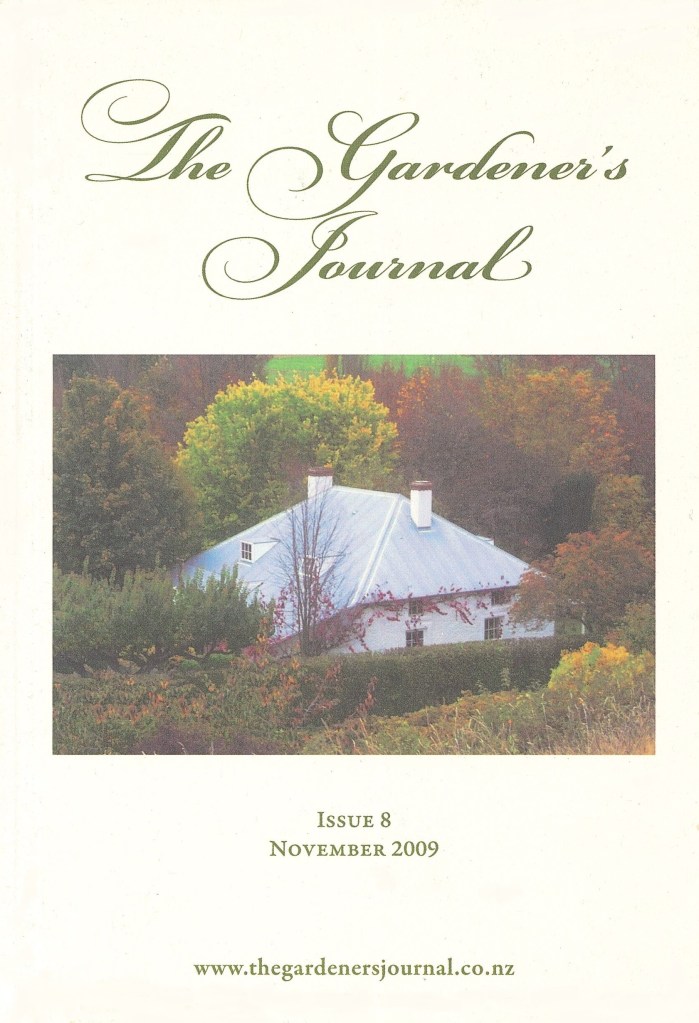
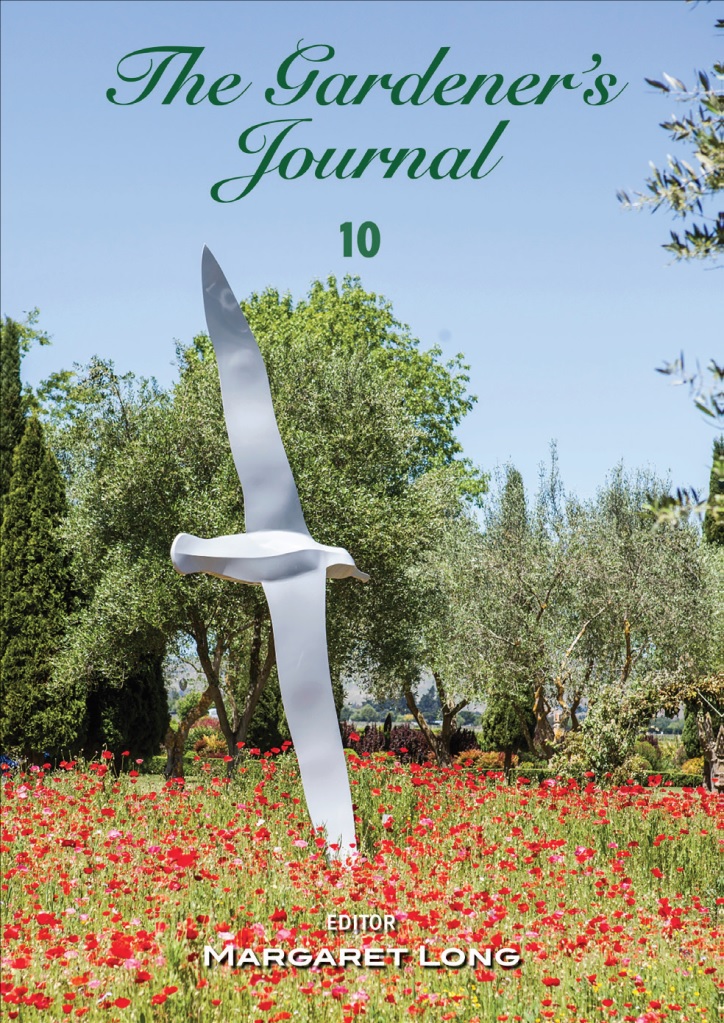
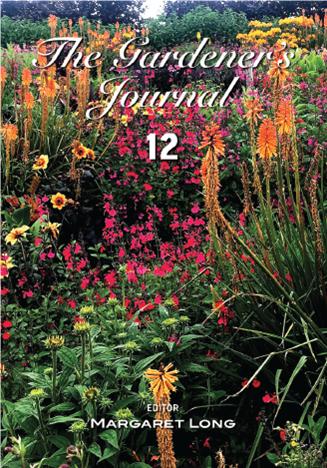


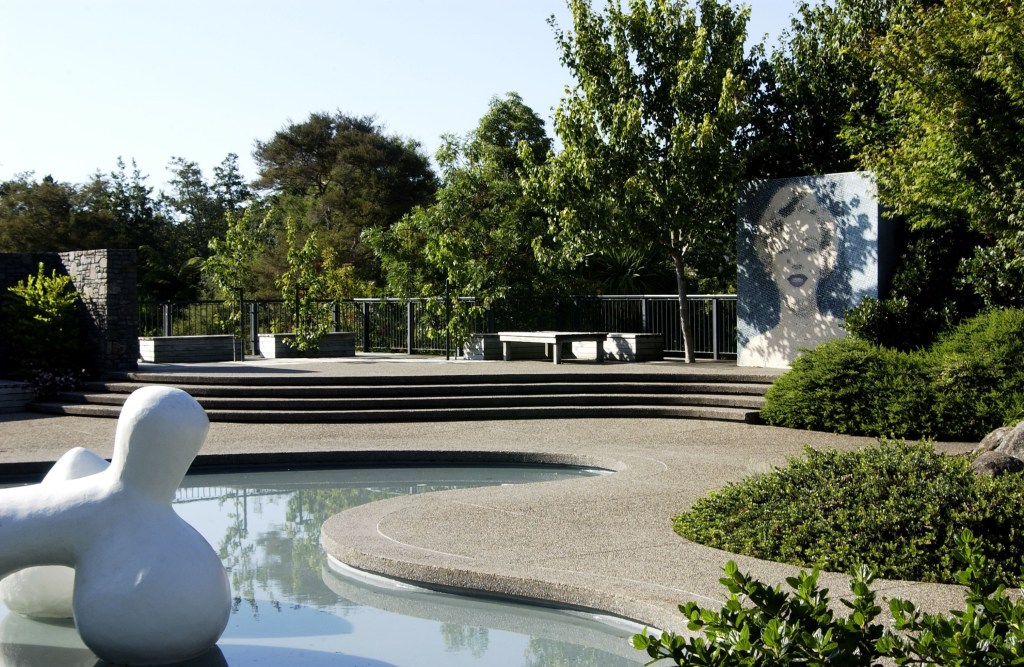
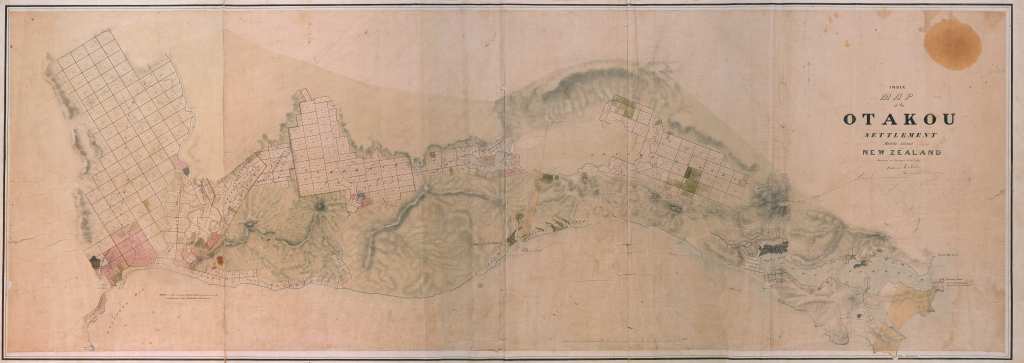
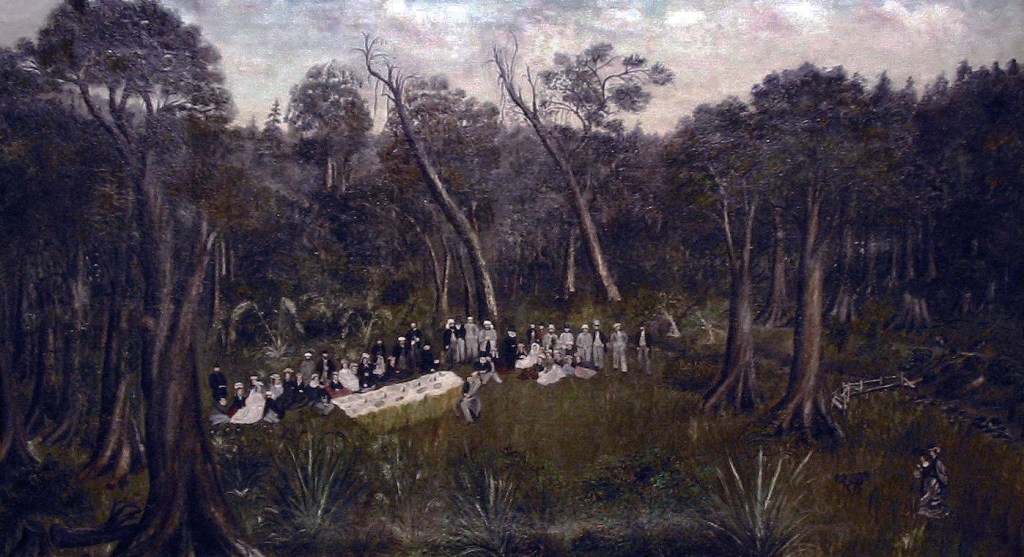
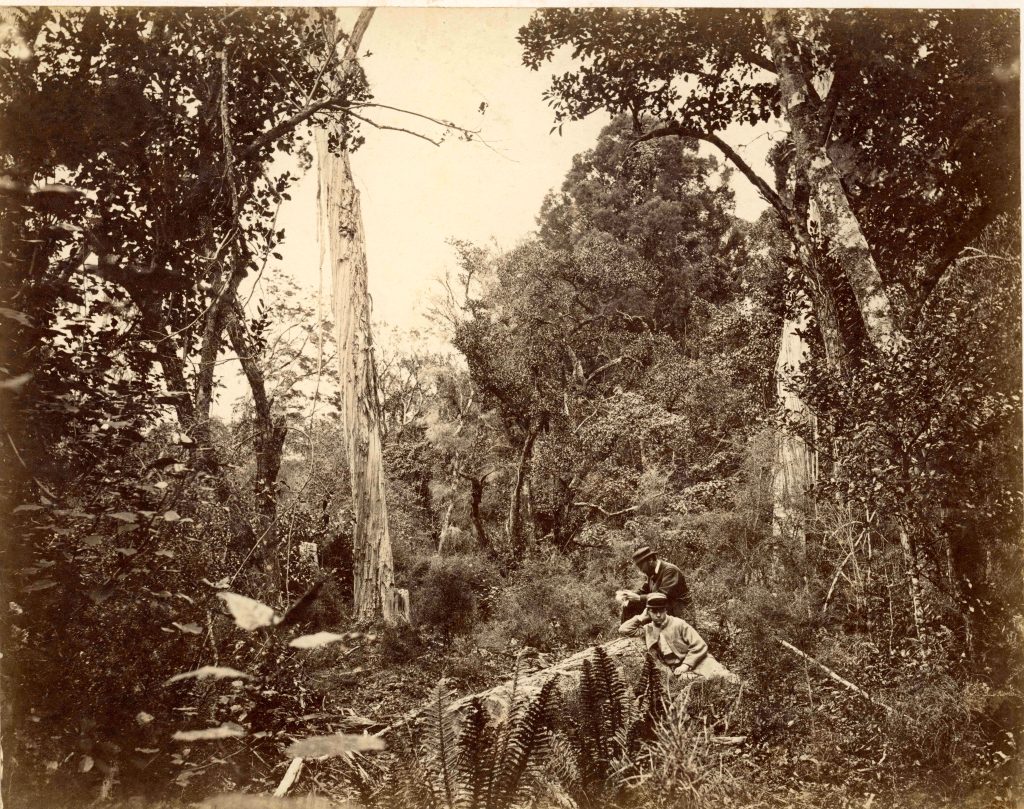
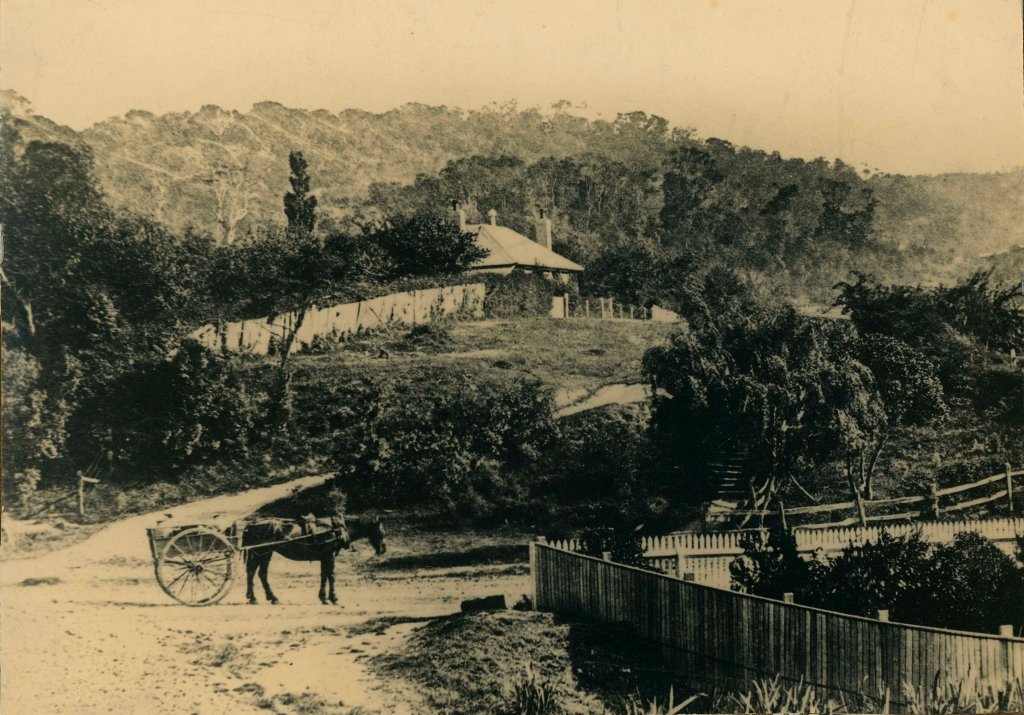
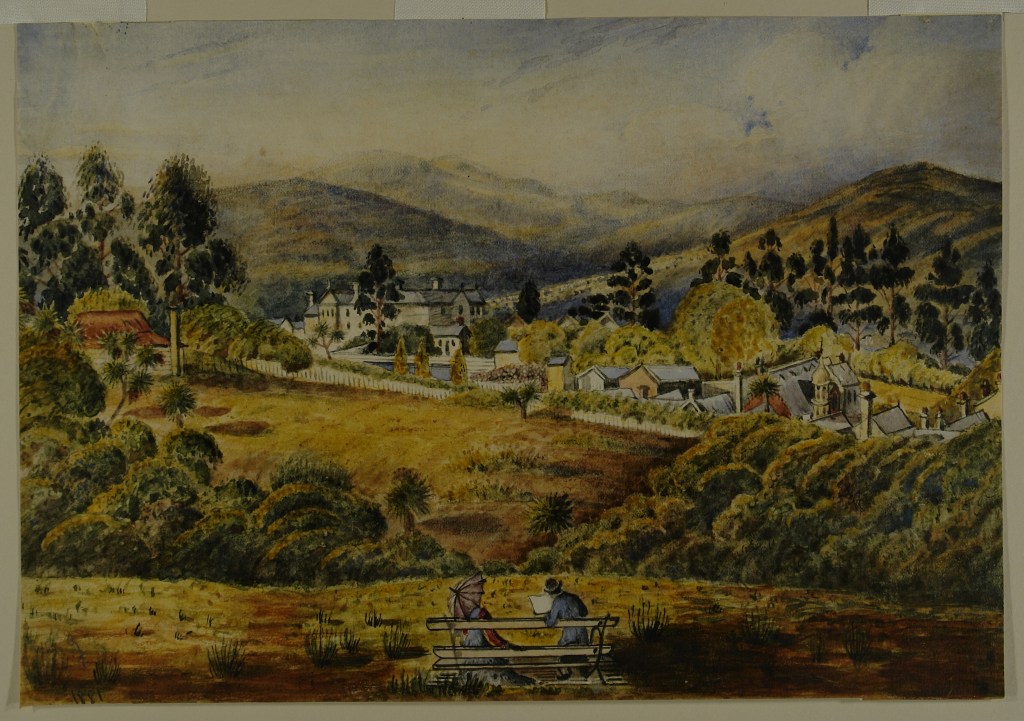
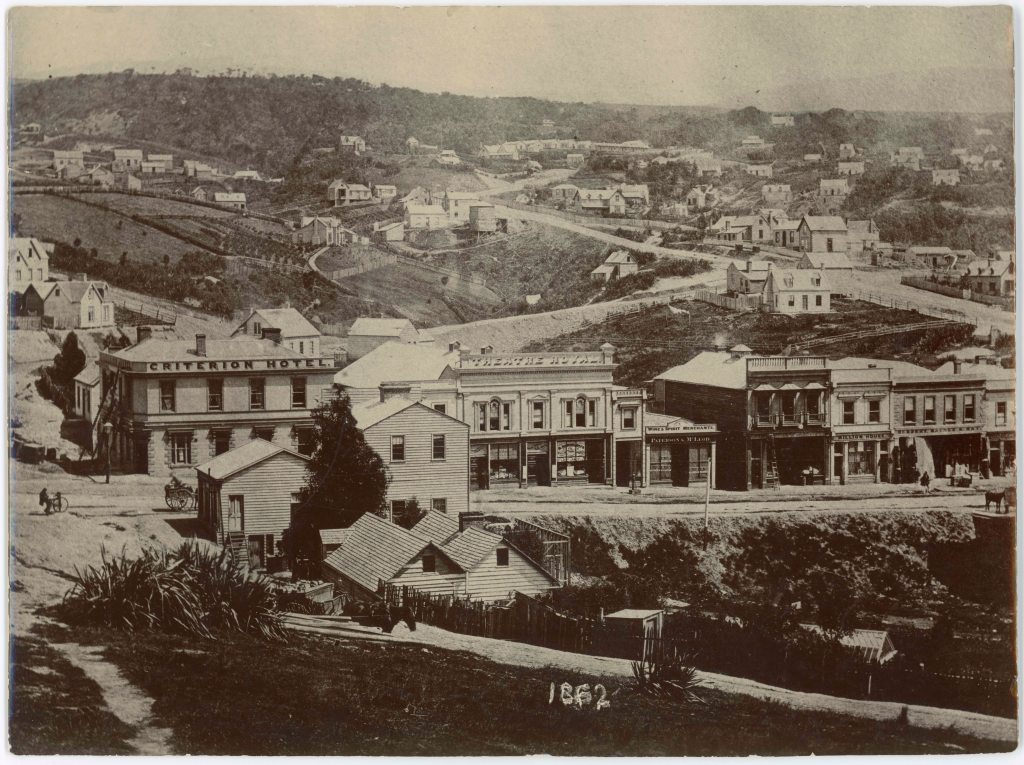
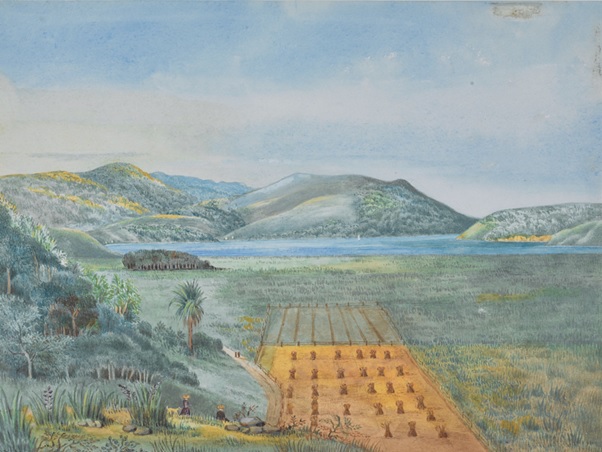
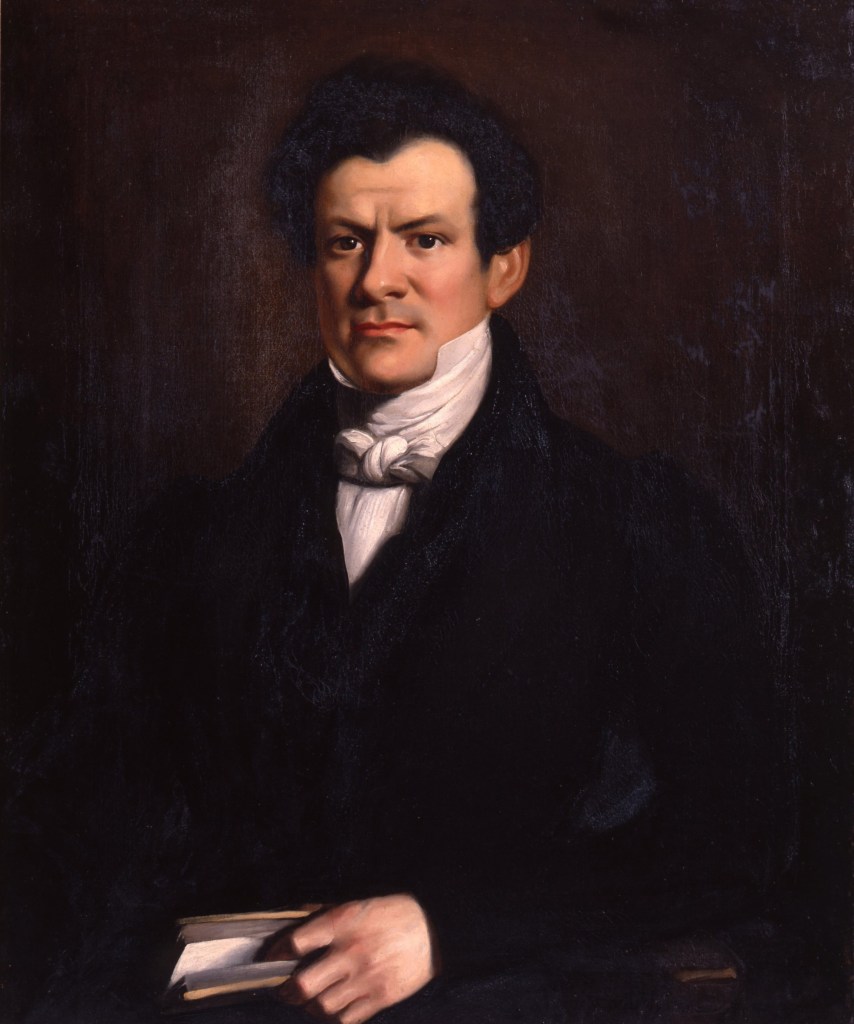
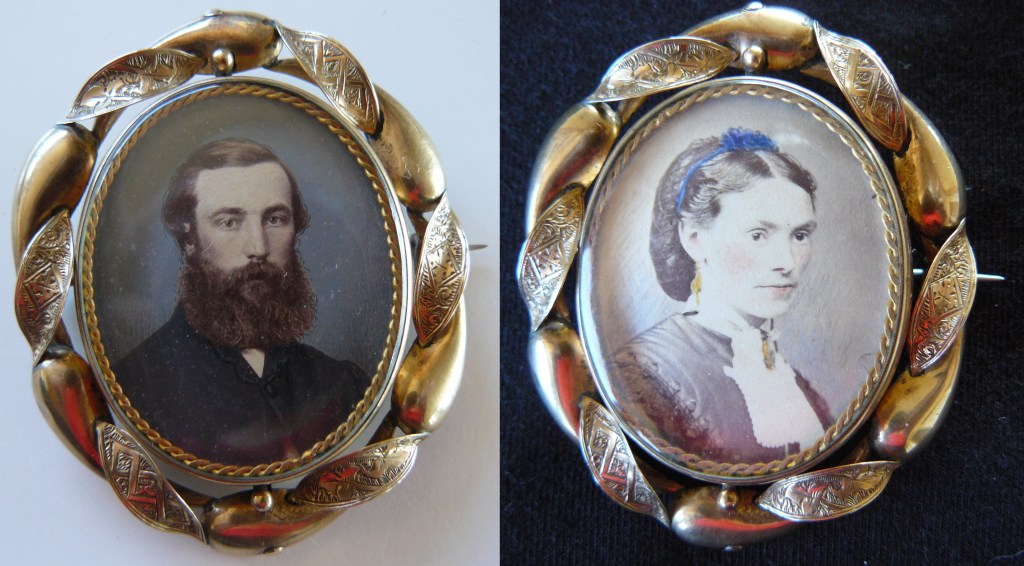
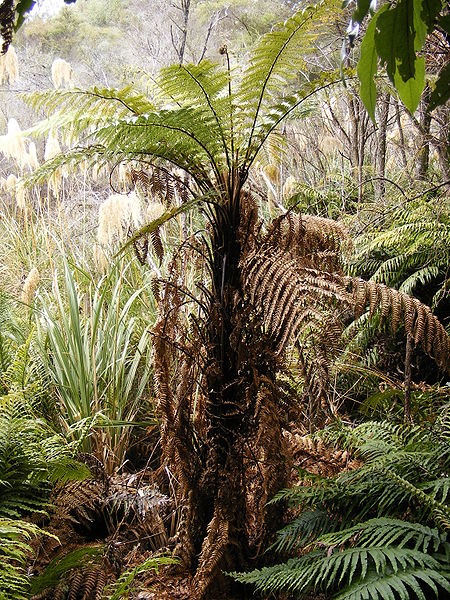


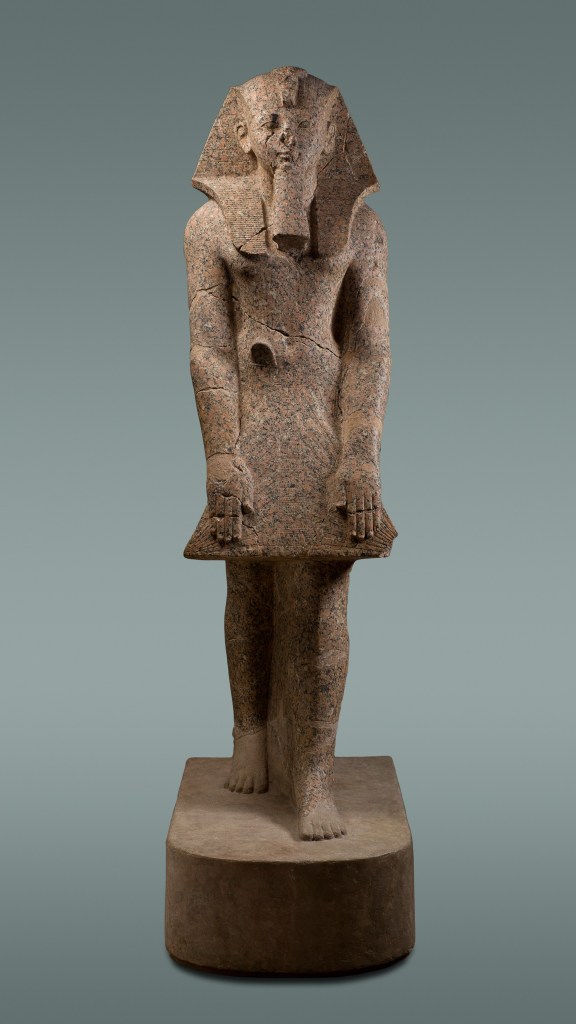
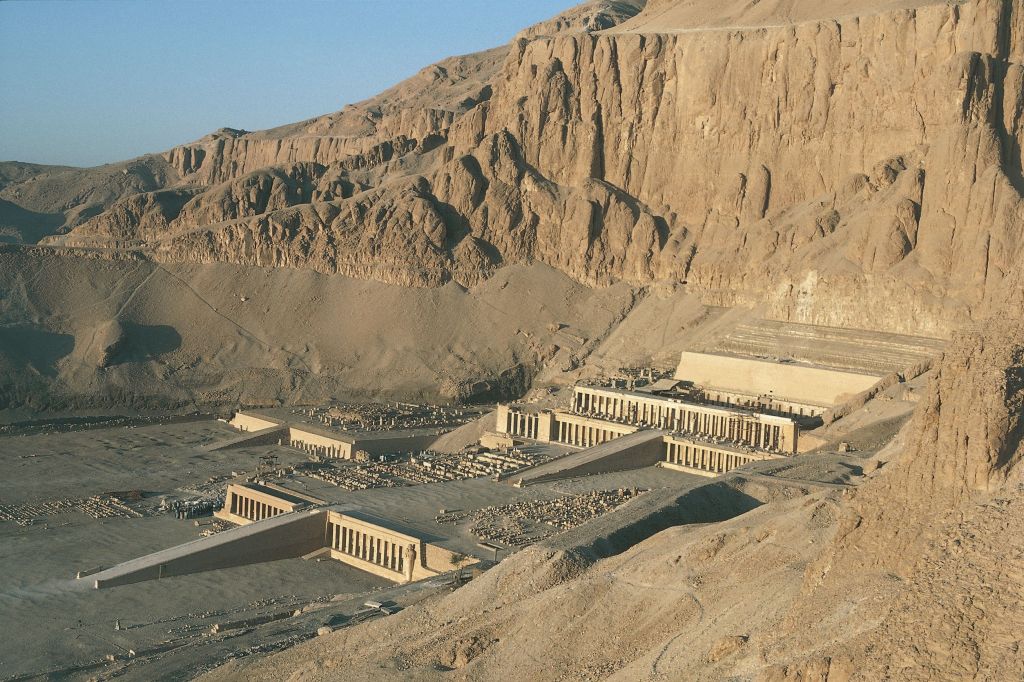
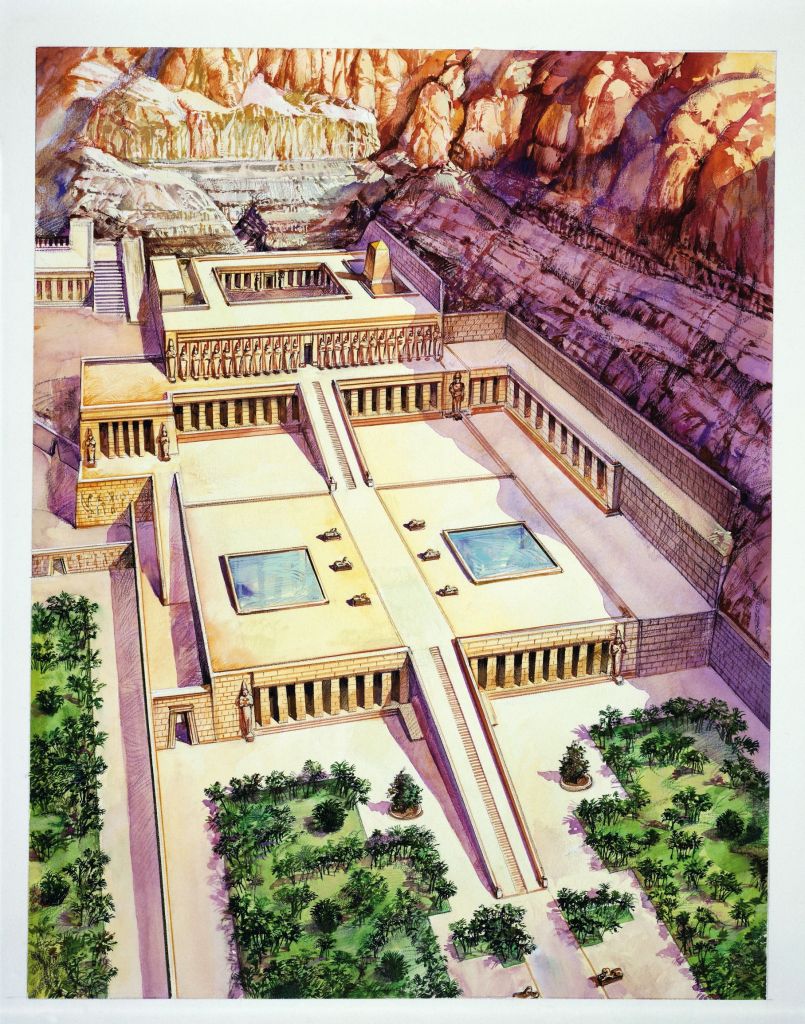

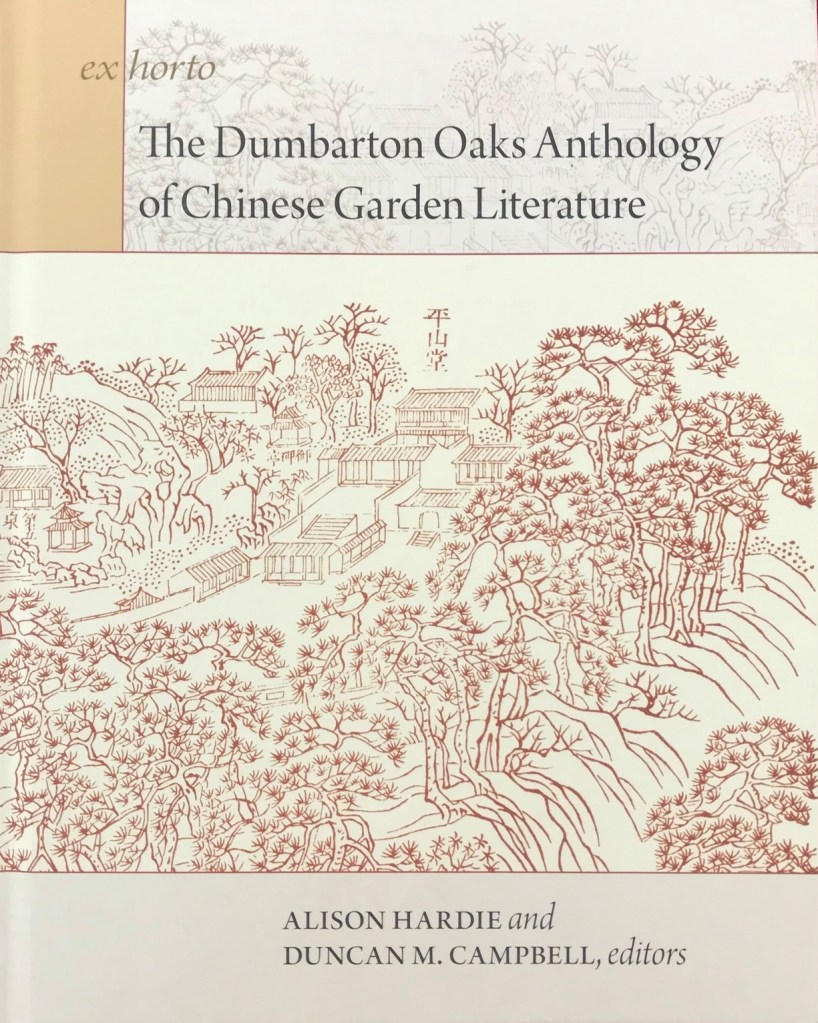
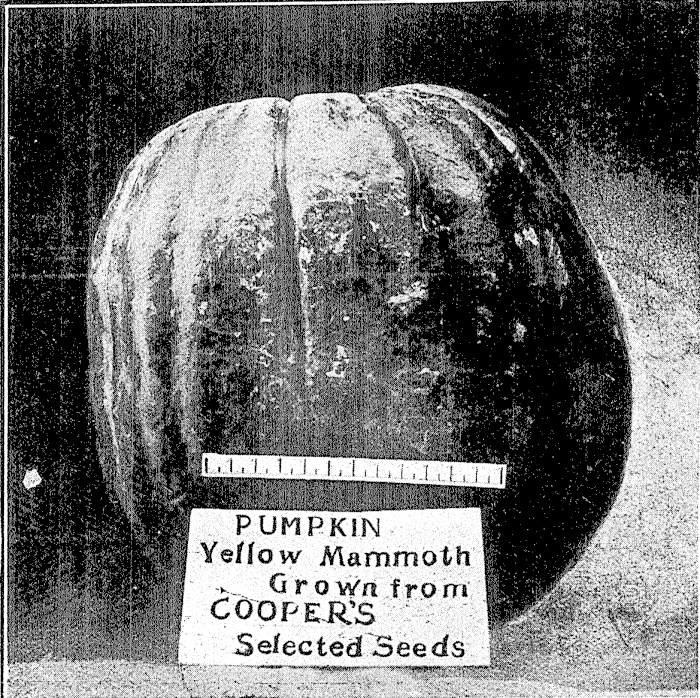
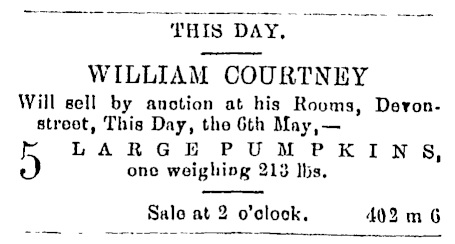


 The Garden History Research Foundation
.jpg)
