
Clare Gleeson, author of The Fairer Side of Buxton: Alfred Buxton’s Gardens and the Women Who Loved Them (The Cuba Press)
As a historian, my interest in New Zealand’s gardening history developed alongside my interest in gardening. Having read of well-known garden designers elsewhere, such as England’s William Robinson and Australia’s Edna Walling, I was pleased to find that New Zealand did have a ‘great’ in her garden history, Alfred Buxton. It is now over 120 years since Alfred Buxton, New Zealand’s most prominent garden designer during the first half of the twentieth century and the father of landscape design in New Zealand, created the earliest of his magnificent gardens and my research showed that it was the so-called ‘fairer sex’ that was responsible for many of Buxton’s 350 plus commissions and played a large part in ensuring Buxton’s legacy.

Alfred Buxton was firstly, and most famously a designer of rural gardens and although it was the farmer signing the contract and cheques, it was probably the farmer’s wife who was the driving force behind the garden’s commission. As well as this group there was a cohort of women, both farmers and businesswomen, who commissioned a garden from Buxton in their own right. Whether farmers or businesswomen, all of the women in this group were independent and successful; Buxton’s gardens were not cheap.

Although the relationship between Buxton and women can be viewed as simply that of a garden designer creating a beautiful garden for a customer, the connection between them is more nuanced than this.
Social interaction between a garden owner and others in their family or community often led to additional commissions for Buxton’s business. The cluster of Buxton gardens in localities or within families demonstrates the importance of word-of-mouth advertising, and women were essential to these interchanges. They also contributed to Buxton’s success in other ways. His elaborate plans often required months of work by a team of employees on a remote garden site, and the largely thankless task of accommodating and feeding these men invariably fell on the shoulders of the woman of the house.

Buxton provided women with something they were eager to have. When single businesswoman and lime kiln operator Sophia McDonald commissioned a Buxton garden she was advertising her success in a man’s world. Eliza White’s garden at Sumner, her weekend home, was a clear indication that her business was thriving. Women pastoralists elected to spend money on their garden as well as their farms, and headmistresses developed attractive school grounds for ‘their girls’ to enjoy.
A beautiful garden was an extension of the home and helped fulfil women’s desire to create a treasured living environment for their families. The garden was somewhere a woman could relax with her family, and for children to play, and was the perfect place to entertain. It was also physical evidence of the family’s financial and social success. To have a Buxton garden was to have ‘arrived’.

For farmers’ and their gardens enabled them to interact with a wider community. Tennis clubs used the grass and asphalt courts, the local hunt met in the garden before following the hounds, and community groups and horticultural societies were frequent visitors. In remote rural areas the garden was pivotal to bringing people, in particular women, together.
There is no doubt Buxton’s beautiful gardens brought joy to the families who lived in them. The many exotic trees changed through the seasons as they turned from green to gold and then back to green. Rustic bridges spanning waterlily-filled ponds, plantings of bamboo and delicate Japanese lanterns evoked an exotic world far from the farm gate. Summer houses were perfect for escaping the drudgery of daily farm life, and ferneries and grottos provided a cool refuge on a hot summer’s day.
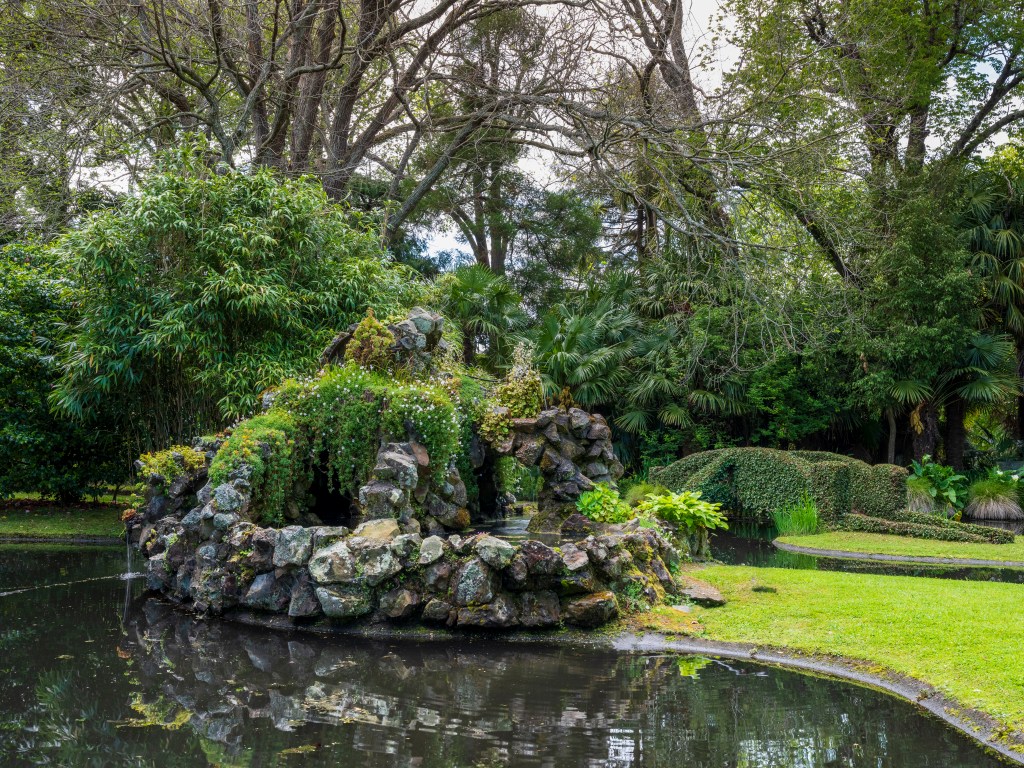
Buxton’s gardens often acted as the catalyst for a new and fascinating hobby. As plantings matured and changed, the garden was somewhere the owner could add their personal touch while working within Buxton’s overall concept. The flower beds allowed the gardener to use her imagination and skill as she filled them with the blooms of her choice.
Roses were a favourite of both Buxton and the women he worked for, and the rose garden was always a special part of a Buxton design. Planting plans show that although the location of roses was always indicated, the choice of which varieties to plant was not. This enabled the owner to choose her favourites and make it her rose garden. Once established the roses and other flowers could be picked for the house, included in a bridal bouquet or entered into local horticultural competitions.

Women were proud of their gardens and loved to share them with family, neighbours, the wider community and even with royalty – in 1958 Gladys Hudson of Greenhill hosted the Queen Mother for a weekend. In the 1940s, renowned New Zealand artist Rita Angus found that painting her parents’ garden at Waikanae helped her recover from a breakdown. Barbara Matthews wrote about the same garden for New Zealand Gardener some years later.
Photographs of women in Buxton gardens depict families in their Sunday best, sisters pausing to smile for the camera, daughters on their wedding day and mothers nursing babies. The subjects are captured under trees, beside flower beds, sitting on benches and posed on a Buxton bridge. Shots of eager young tennis players, beautifully outfitted members of the hunt and exquisitely dressed locals attending garden fêtes, fundraisers and parties in Buxton gardens all feature women.

Women who grew up in a Buxton garden often have special memories. Details of glorious plantings of daffodils, trees to climb and orchards to snack in are still vivid decades later. Robin McConachy whose children grew up in her old family garden, watched it grow and develop. The garden Annie Brown remembers was already mature when she and her sisters knew it and they were able to enjoy it at its best.
In times of sadness Buxton gardens offered solace and hope to the women who lived in them; indeed, some gardens were created as a means of alleviating overwhelming grief. The Buxton-designed plantings around war memorials softened the starkness of the concrete monuments and gave women a place to sit or wander while remembering their loved one.

Alfred Buxton’s success owed much to the women who commissioned his designs, and he repaid them by creating wonderful spaces for them and their families, with many still there today. By enjoying and cherishing their gardens, and sharing the memories they created, these women have ensured that Buxton’s legacy endures.


 The Garden History Research Foundation
my great, great grandfather alfred 🌹
LikeLiked by 1 person