
By Alice Lloyd-Fitt, Dunedin Botanic Garden
The Dunedin Botanic Garden is dissected by the Lindsay Creek, dividing the garden into two distinct areas; the more formal, level Lower Garden and the steeper Upper Garden. The Water of the Leith / Ōwheo provides a boundary along the south side of the Lower Garden. This gives the Botanic Garden the luxury of a wide range of landscape areas in which to display the plant and bird collections. The creek itself offers a lot to the garden, both in landscape possibilities and wildlife habitat.
Connecting the Upper and Lower Garden for visitors has always been a challenge. To cross the creek there has been a range of bridges constructed, both practical and ornamental.
The Dunedin Botanic Garden was relocated from its original site of the corner of Castle and Albany streets (the present site of the University of Otago in Dunedin) to its current site in 1869, after the first garden was destroyed by flooding. This site had been occupied by the Otago Acclimatisation Society since 1864. The Acclimatisation Society manager CP Clifford made one of the first bridges across the Lindsay. Clifford’s bridge was a simple structure with what looks like abutments made from branches. The plantings of flax would have been very good at helping to control erosion and flood damage.
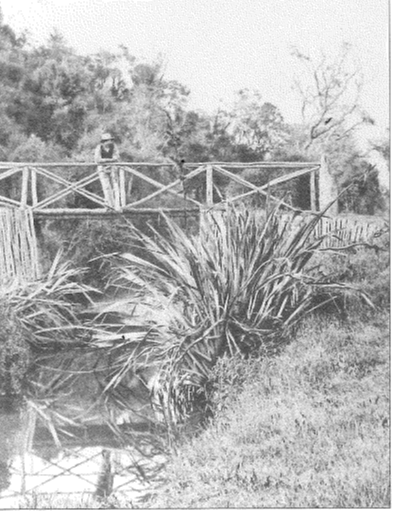
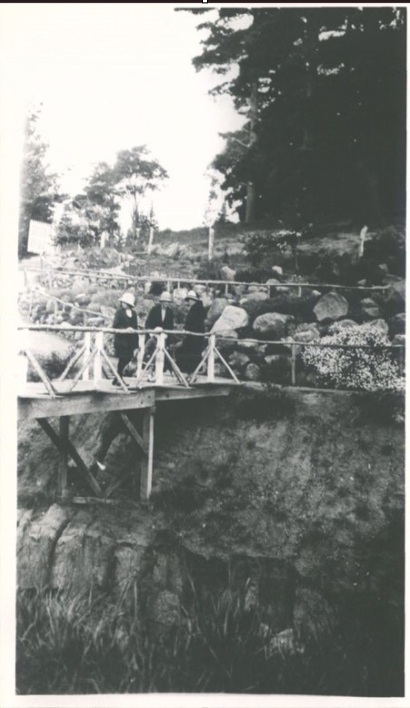
The early bridges were rustic structures made of timber, often very ornamental in their arts and crafts style. Rough sawn timber crisscrossed for strength made attractive patterns. Mānuka or Kānuka was often used. Basically, whatever was at hand was put to use.
These initial bridges were only able to take foot traffic, which limited the amount of access for maintenance vehicles. These were originally horse and cart and later small tractors. Anything large or heavy would have to take the public road around the botanic garden. Or, in some cases, they never crossed the creek.
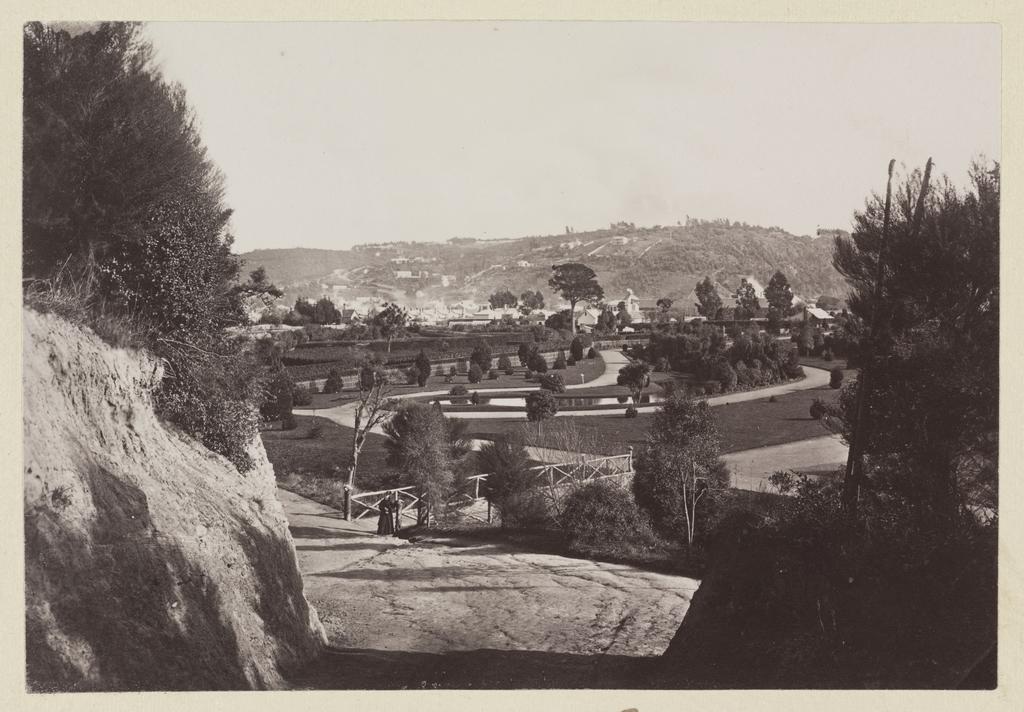
This bridge, not as ornate as some of the others, looked strong enough and wide enough to take a small cart.
In March 1870 the Water of the Leith was widened and a new channel cut to prevent flooding of the new garden and nursery. The banks were lined sloping stone walls. A new central bridge across Lindsay creek was able to take a small dray.
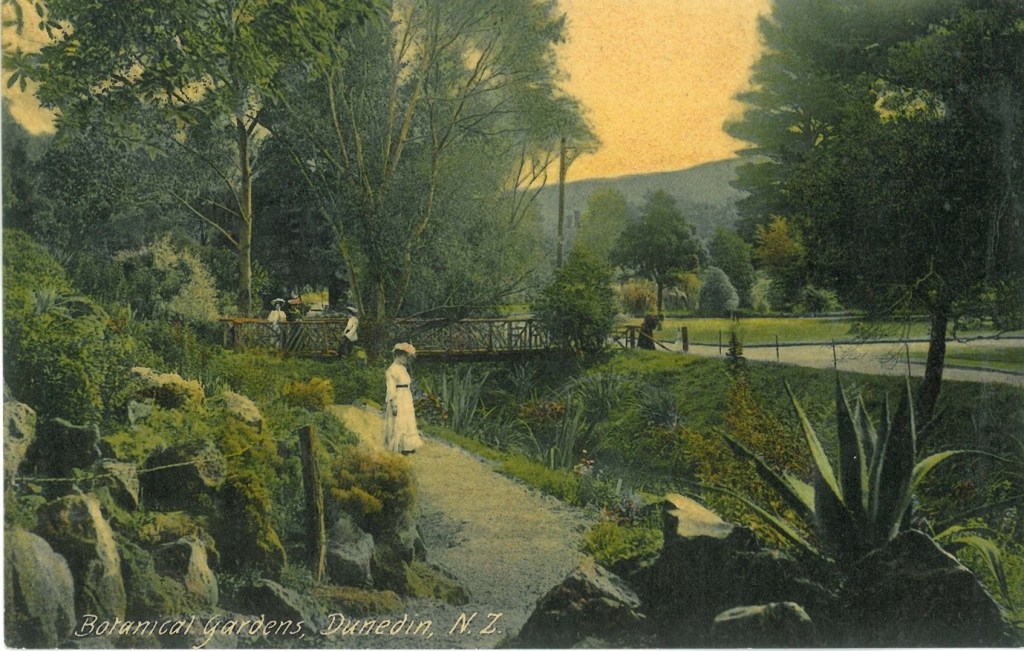
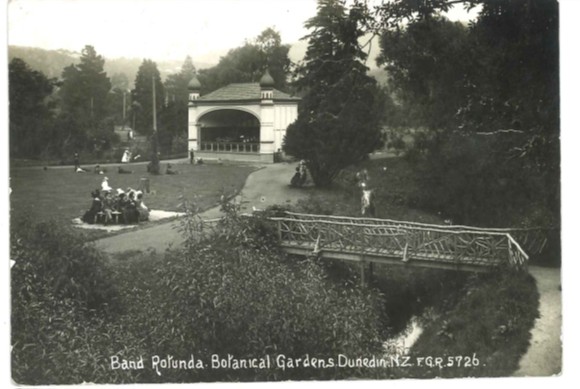
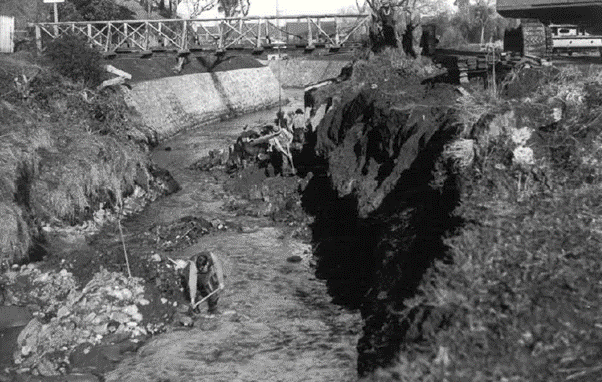
Lindsay Creek has undergone several changes, such as being straightened in the late 1920s to accommodate the tram and road changes. Before the straightening of Lindsay Creek there was an extremely attractive rustic bridge leading to the bandstand. There was more digging out and retaining in the 1930s, with the bridges rebuilt each time.
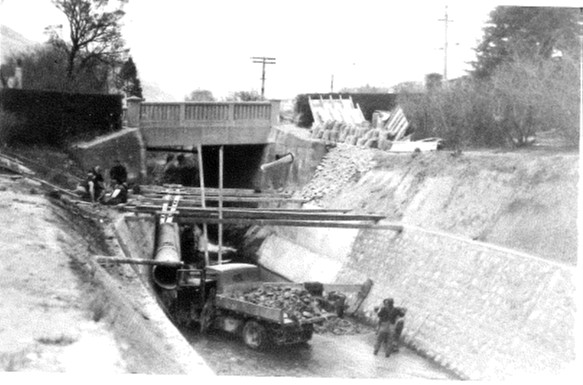
In 1936/37 Lindsay creek was widened and deepened again and two new bridges were constructed with braced steel beams, completed in 1938. Excavated out and retained with stone walls, David Tannock, the Botanic Garden Curator, hoped to alleviate the severely formal appearance of the walls by planting rambler roses, which would hang down over the stone walls. Even now in heavy rain, water can lap the bottom of the bridges.
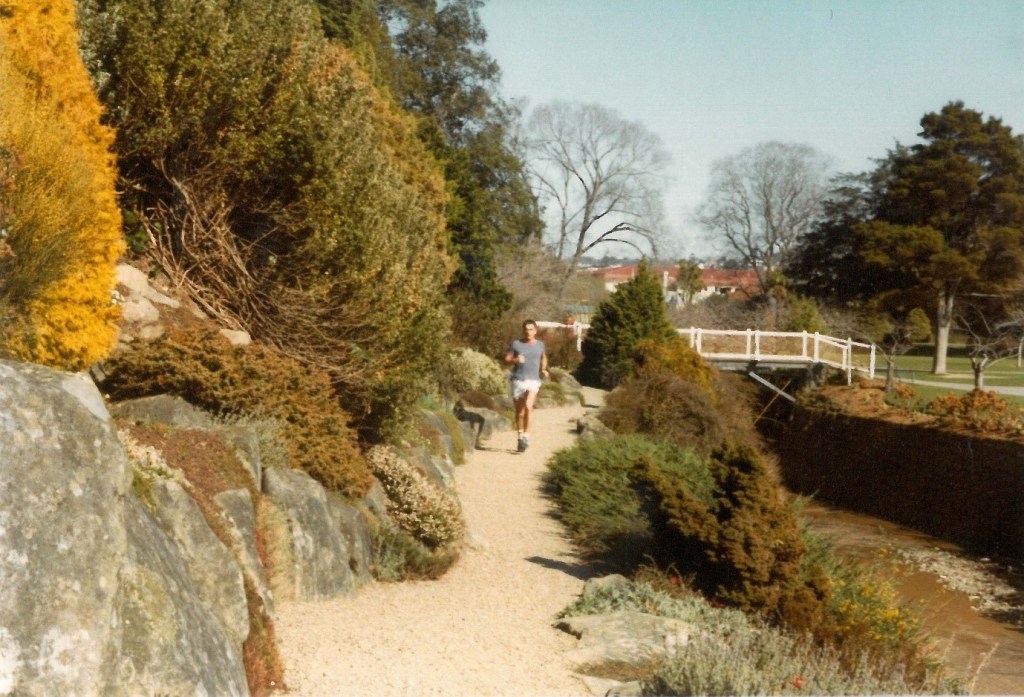
By the 1960s, the Lindsay Creek bridges were replaced with far less attractive timber and hurricane wire constructions and painted an unsympathetic white. These bridges were mainly for foot traffic, but if you approached it at the right angle, you could just squeeze a small tractor and trailer across. Get it slightly wrong, however, and the trailer would get stuck, which would necessitate unhitching the trailer and turning it on its side to carry off the bridge. Very embarrassing.
There are now three bridges connecting the Lower Garden to the Upper Garden. The central one replaced in 1998 was designed to be more in keeping with the garden and can carry the Botanic Garden maintenance vehicles. The bridge with its heritage style railings was possible by a $24,000 grant from the Edward Theomin Trust and is greatly appreciated by staff and visitors.


