
by Mike Lloyd
In Part 2 of the blogposts on monkey puzzle trees in New Zealand (see More on the ‘interesting curio’) I noted that the tree seemed very popular in Southland. A number of examples were provided, but the notion of popularity was based more on surface impressions as opposed to in-depth research. Of course, the popularity of a tree is difficult to quantify, however, helping us move to more confident assertions is the discovery of examples of recently planted monkey puzzles. Three cases are presented below, and the third in particular does help substantiate the strong and continued presence of the tree in Southland. We will traverse from Owaka to Riverton/Aparima, and then to Invercargill, which as I suggested in the previous post was probably the epicentre of monkey puzzle plantings in Southland.
- By the playground in Owaka
Technically the example below from Owaka is in South Otago, but a Google Map shows why many people from this area feel a part of Southland:
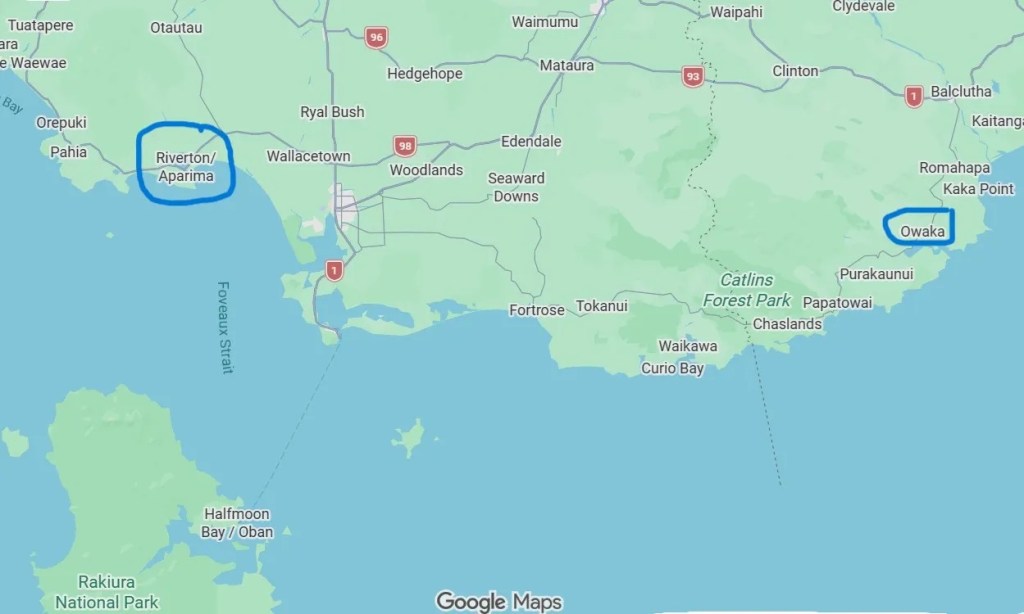
Owaka is indicated in the right circle, and Riverton/Aparima the left, both being very close to the bottom of the South Island.
Recently a friend told me he was in Papatowai, and I semi-jokingly said to keep an eye out for monkey puzzle trees. I was pleasantly surprised to receive an email a day later saying he had indeed spotted one in Owaka. Being a small town I figured I might be able to find the tree on Google Maps Street View, and after a little searching this proved to be the case:
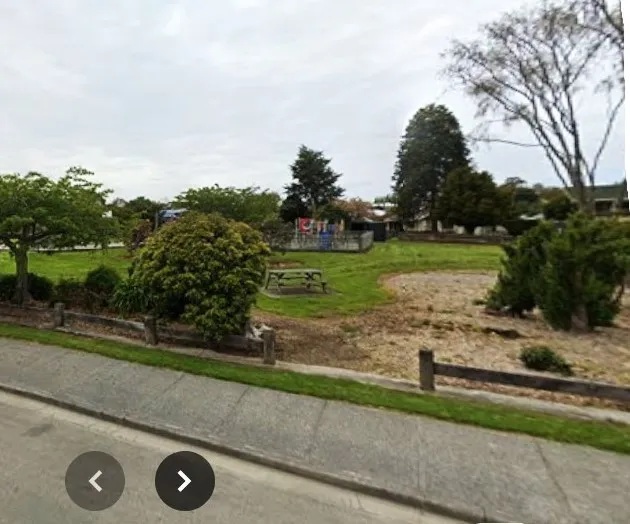
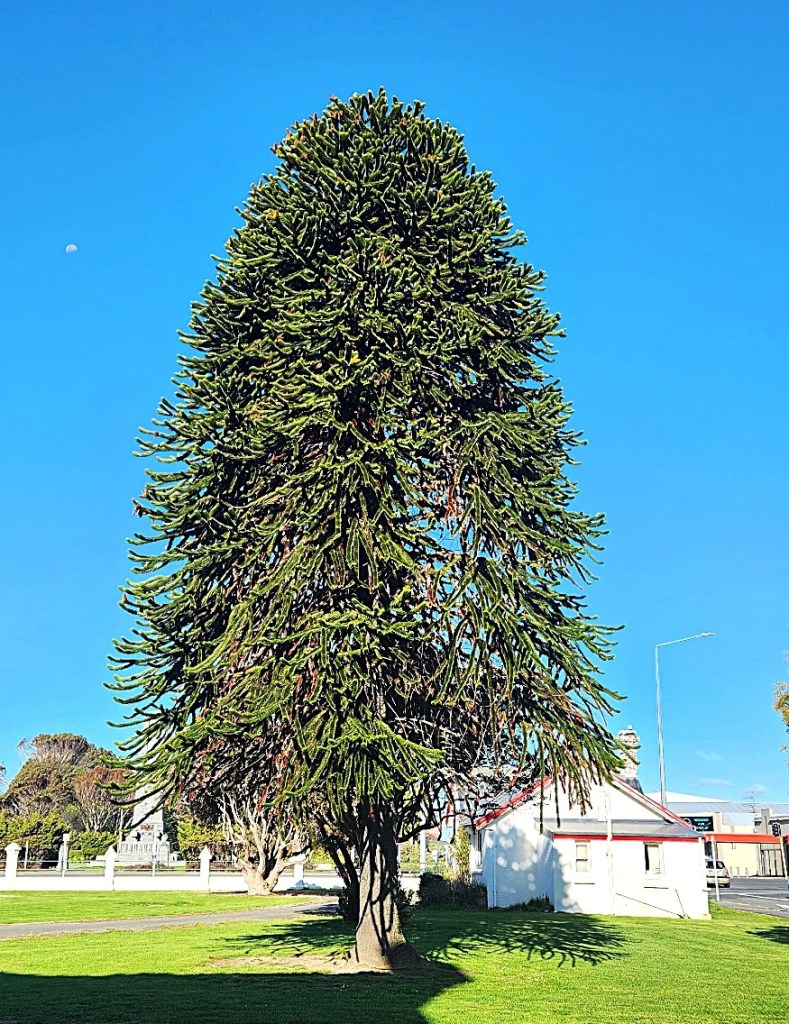
There in the Owaka Lions Club playground on the Southern Scenic Route is the unmistakable form of a monkey puzzle. The tree is some distance from the road, so I was very pleased when my friend sent me some photos from closer up:
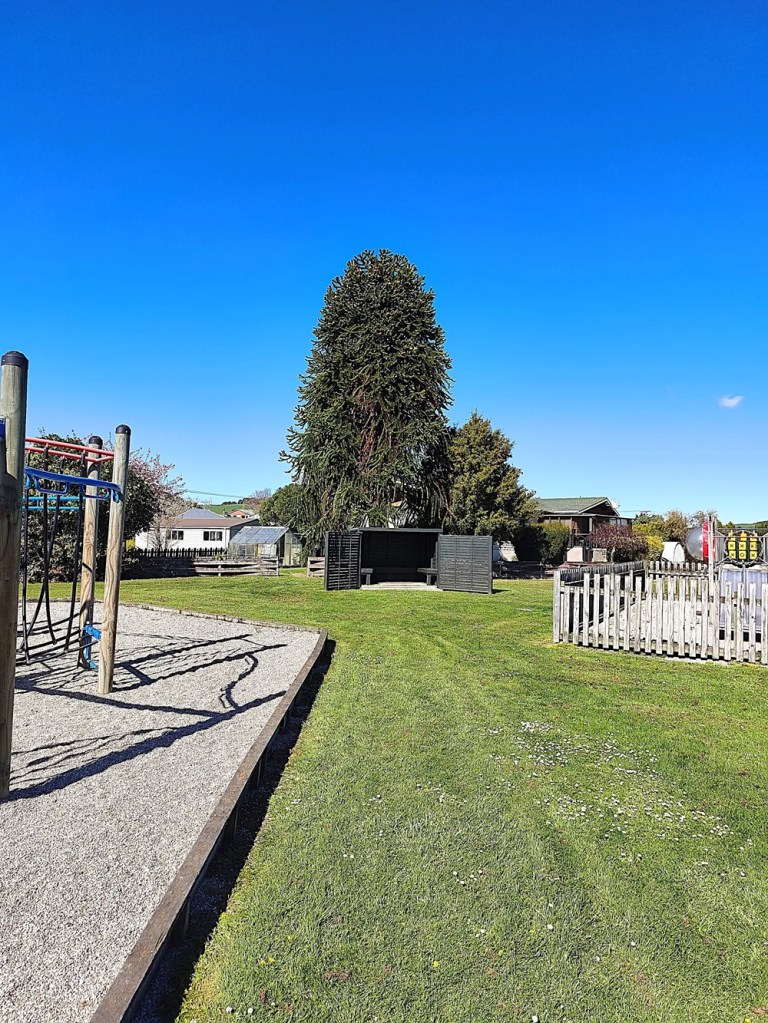
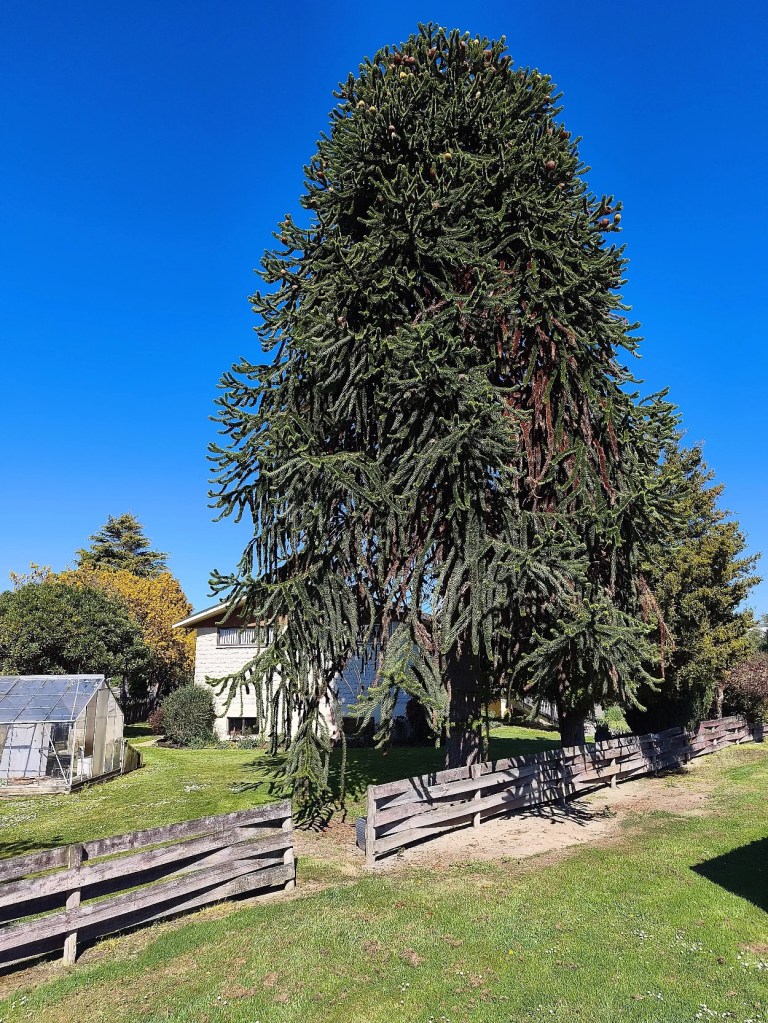
The photo shows that the tree is growing in a private property, not actually in the playground. It is clearly very healthy, and a close examination also shows it is bearing cones at the top. It is not possible to date the planting of the tree, but aerial photos of Owaka certainly suggest it was not growing in 1955. Given its size it could well have been planted not long after though, perhaps being in the order of 40 to 50 years old.
2. The Trotter house in Riverton/Aparima
Moving through Google Maps Street View for Riverton/Aparima I chanced upon two specimens much more recently planted. They can be found in the garden of a property on the corner of Delhi and Palmerston Streets. The earliest views available are from 2008, but both trees do not show up well at this date so the second, and larger tree, is shown from the January 2010 shot:
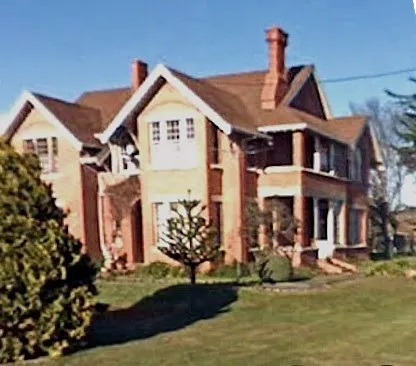
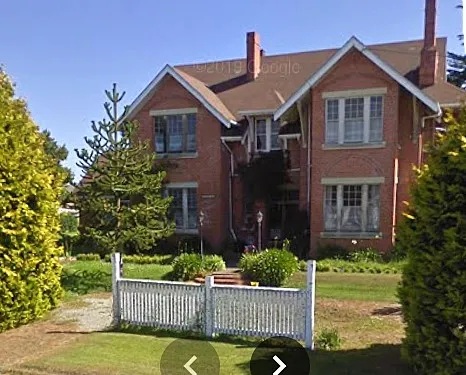
Moving forward to 2026 we can view both trees in one image, from two different angles:
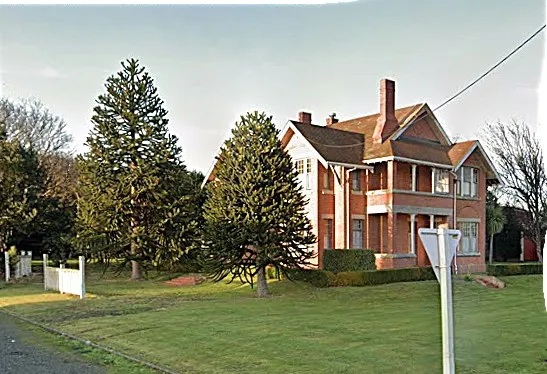
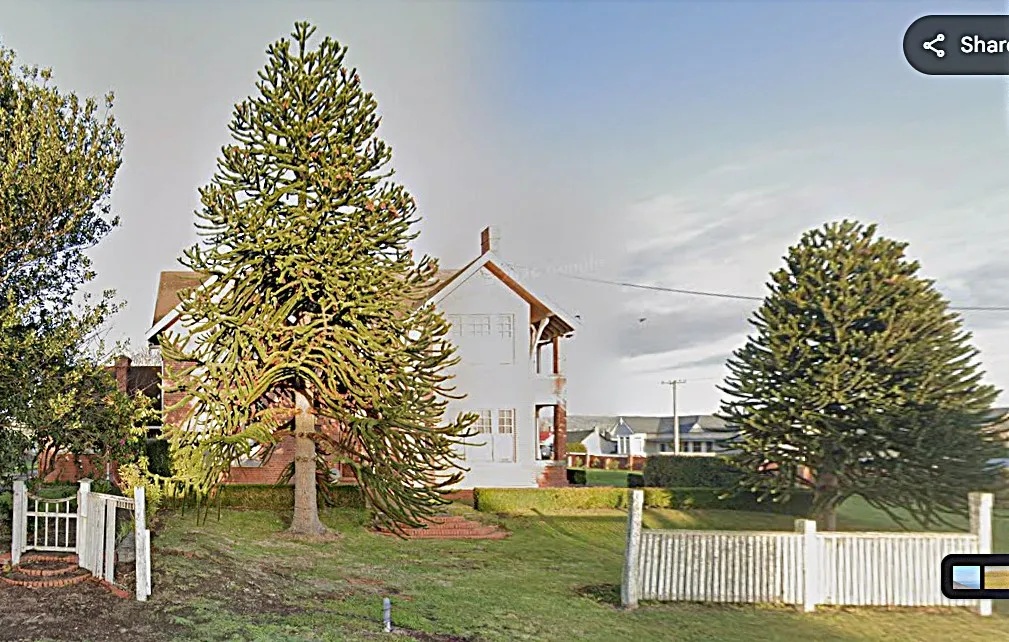
Clearly the difference in size between the two trees suggests they were planted at different dates. The smaller of the two was perhaps planted about 2005, and the other perhaps about 2000. The 2026 Street Views give a useful indication of the height they can reach after growing for 20 to 25 years.
If you look closely at the Street Views across the years you will also see that some other trees on the property have been removed: a large macrocarpa on the north side, and two of the yellow conifers that were in front of the two monkey puzzles, which remain. There could of course be many reasons for the removal of these other trees, but the retention of the monkey puzzles does suggest they were more highly valued.
Further information on the house helps to firm up inferences about the highly valued status of the monkey puzzle tree in Southland. The property where the trees are sited is a well-known house in Riverton/Aparima. The grand two-storey brick house was built for Dr Ninian Trotter, his wife and family of 10, in 1902.1 By the 1980s the house was in a ruinous state, but was gradually restored by a number of owners, the latest of whom presumably planted the two monkey puzzles. Thus, locals will know of the house as the ‘Trotter House’, and the presence of two monkey puzzle trees in a significant place in its grounds will not go without notice. Furthermore, historical photographs of other well-known Riverton/Aparima founders can also be sourced showing the iconic monkey puzzle tree in their homesteads.2 But in terms of building up a presence in the lives of many residents of Riverton/Aparima the following photo is perhaps more interesting:
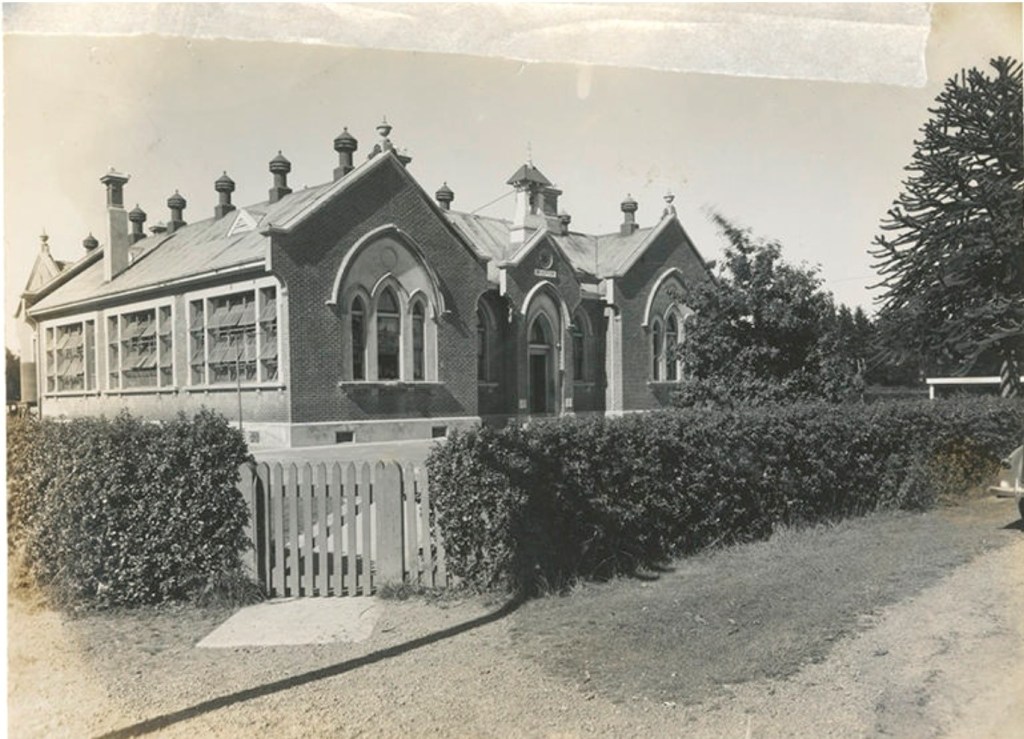
Neither the school nor the monkey puzzle are still extant in Riverton/Aparima. Nevertheless, given its size in 1940, we have to think that the tree had sufficient presence over several decades to have left an impression on hundreds of Riverton/Aparima schoolchildren. In this way, the planting of two monkey puzzle trees in the Trotter House grounds from about 2000 does not seem a strange thing, rather it is connectable to a long tradition.
3, Invercargill: Googling on Gala Street
Finding the Riverton/Aparima School monkey puzzle via the historic photos of Te Hikoi Museum led me to further search their resources, particularly with a focus on Invercargill. This was because, as discussed in the previous post, Southland’s main city can be considered the epicentre of monkey puzzle planting in the province. I quickly came across the following photo of Gala Street, Invercargill, taken circa 1905:
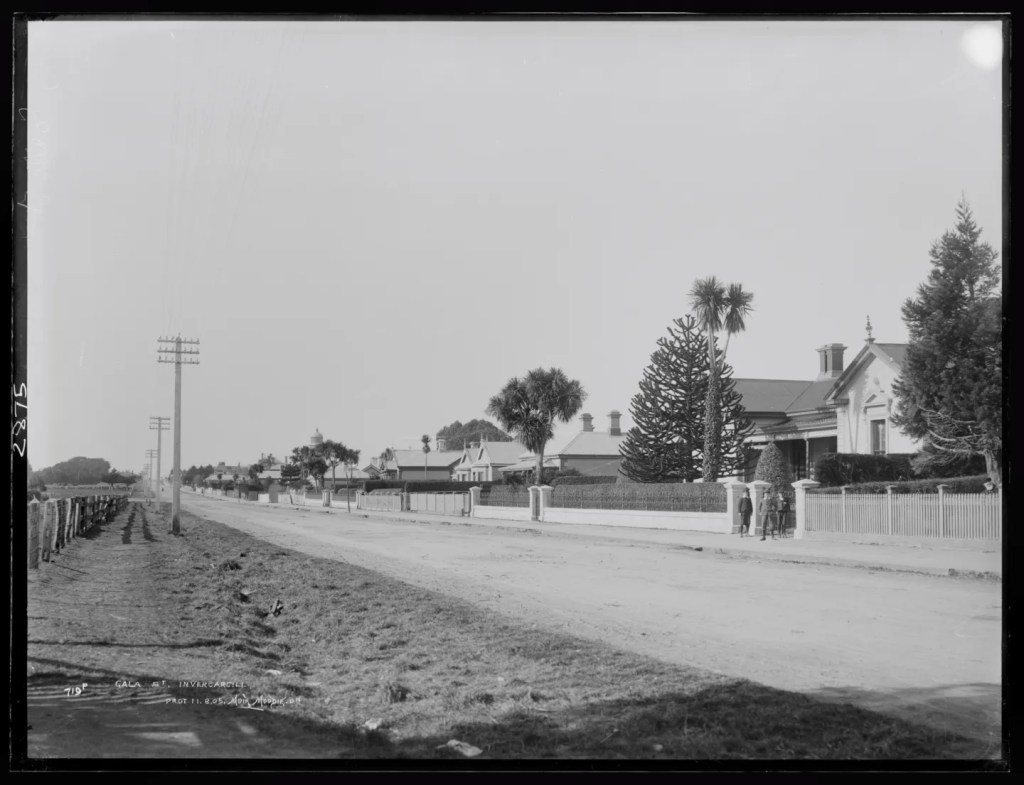
The photo has a lot of sky and road, but it was simple enough to magnify the photo to show more clearly the good-sized monkey puzzle in the front garden of the well-to-do house:
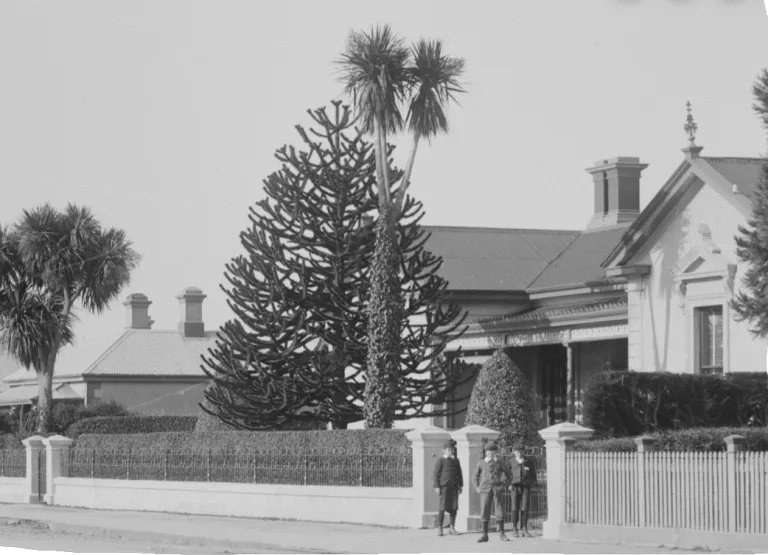
In the process of magnification something else of interest turned up:
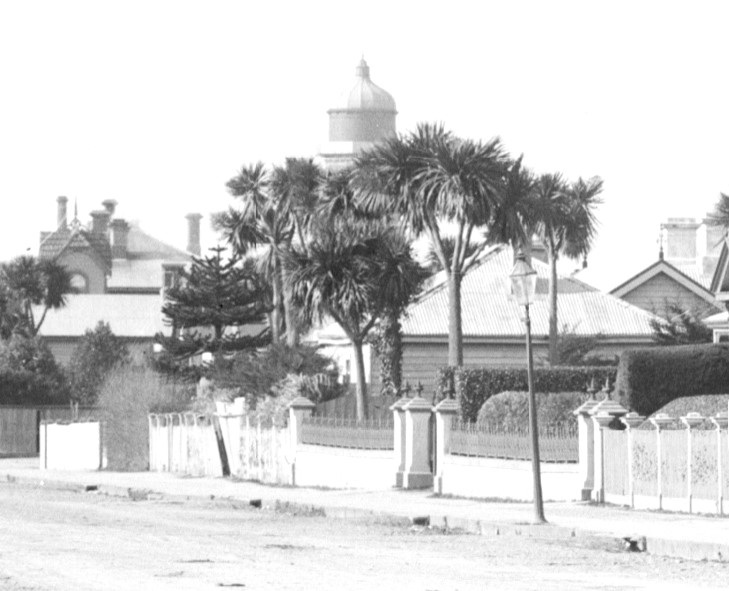
Just three doors along (eastward) there is another front-garden monkey puzzle tree. This helps confirm how popular the tree was in Invercargill from the 1880s on, but another useful feature of the photo is the presence of a landmark in the background of the house and garden. This is clearly identified from other historic photographs as the Invercargill Water Tower:
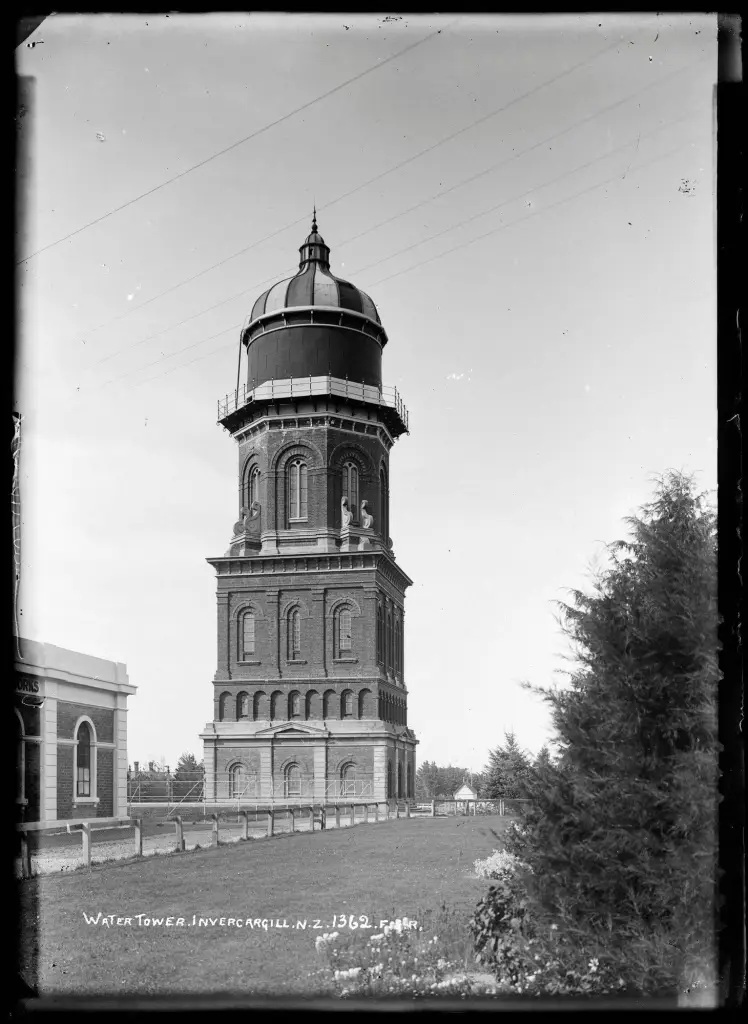
The certainty of this identification meant that I could then work to position the location of the two monkey puzzle trees on Gala Street, with the obvious aim of seeing if they still grew. Given I do not live in Invercargill the easiest way to do this was to consult Google Maps:
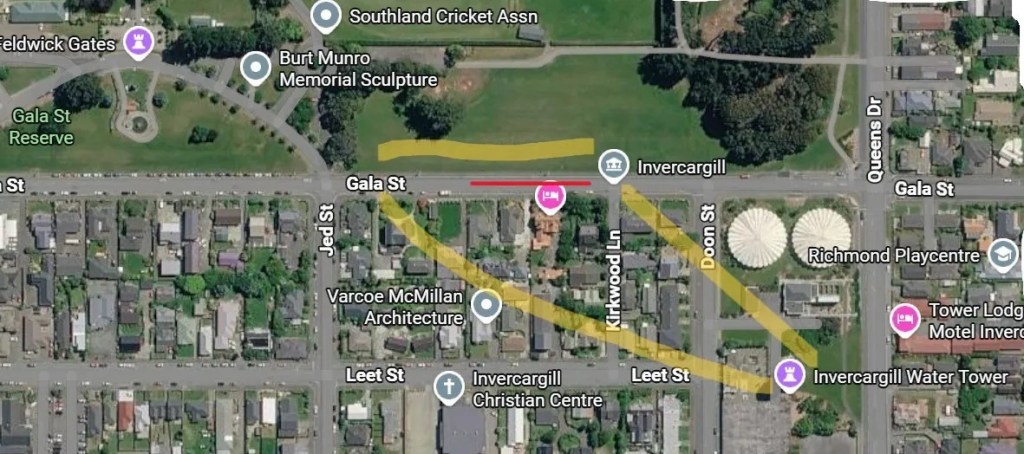
The red mark-up uses the features of the photograph and the position of the water tower to suggest where the two monkey puzzles were in Gala Street. Switching to Google Maps Street View confirmed what could already be seen through the map view: by 2026 the area had changed significantly, with hardly any of the houses on view in 1905 remaining. Nor were there any 140-year-old monkey puzzle trees dominating the Gala Street skyline. But by chance while in the Street View mode I also looked at the other side of the street, where in the 1905 photo we can see what looks like a farm’s wire fence. This led to what I think of as the ‘good news on Gala Street’.
Good news on Gala Street
Initially via Google Maps, but then supplemented by further information, I discovered the existence of eleven recently planted monkey puzzles on Gala Street. It was always a faint hope that I could discover a hitherto unheralded 140-year-old monkey puzzle tree in central Invercargill, but the discovery of eleven recent plantings was the next best thing. Through Google Maps Street View and other photos we can get a good feel for what these younger Gala Street monkey puzzles look like. The Google Map below shows the location of these plantings, which begin just west of the Gala Street Reserve semi-circle seen in the first map above:
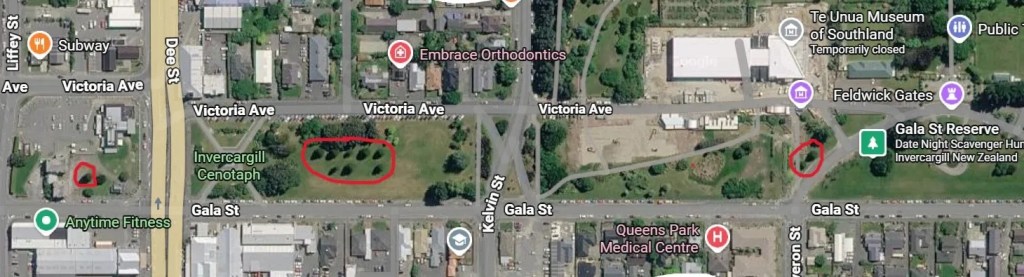
The distance between the three red-marked locations is just over 500 metres. Starting at the most eastward location, which is an entry to the Southland Museum, we find two monkey puzzles:
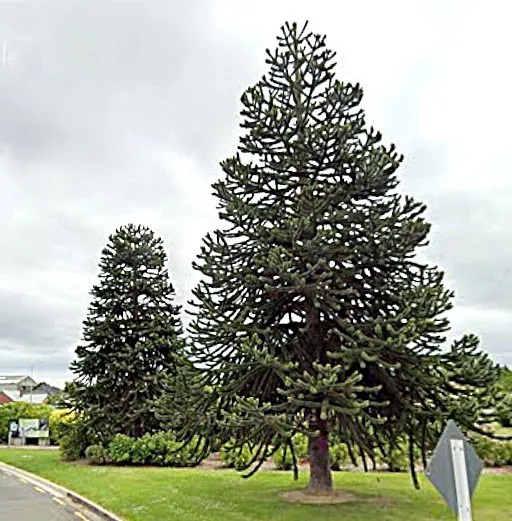
In the Street View from December 2025 both trees appear very healthy. Proceeding westward another 300 metres, using Street View from the same date, a group of trees are visible at a greater distance from the road:
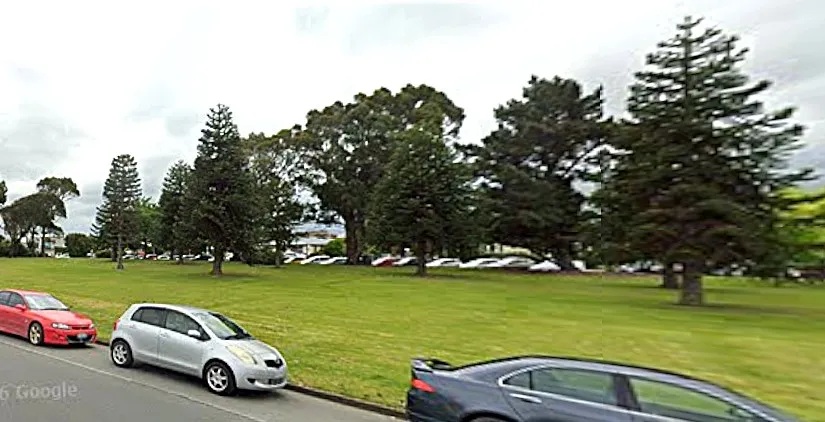
Fortunately, through inquiries at Invercargill City Council (ICC)3 I was able to gain both closer photos and significant information on the trees. First, the photos:
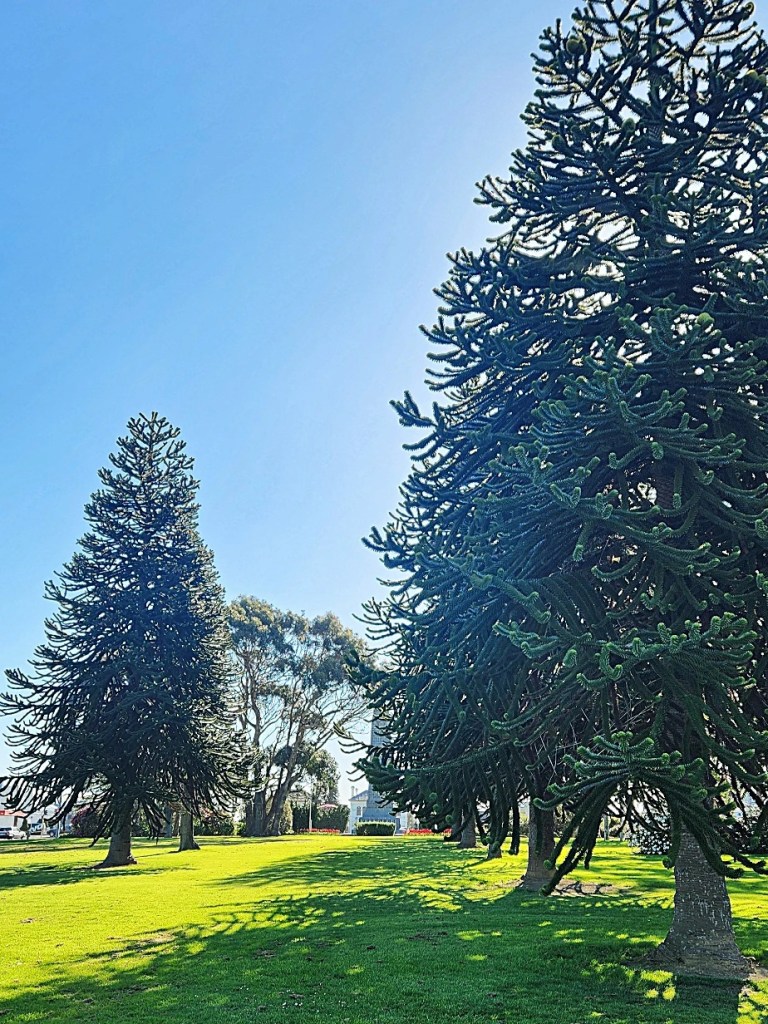
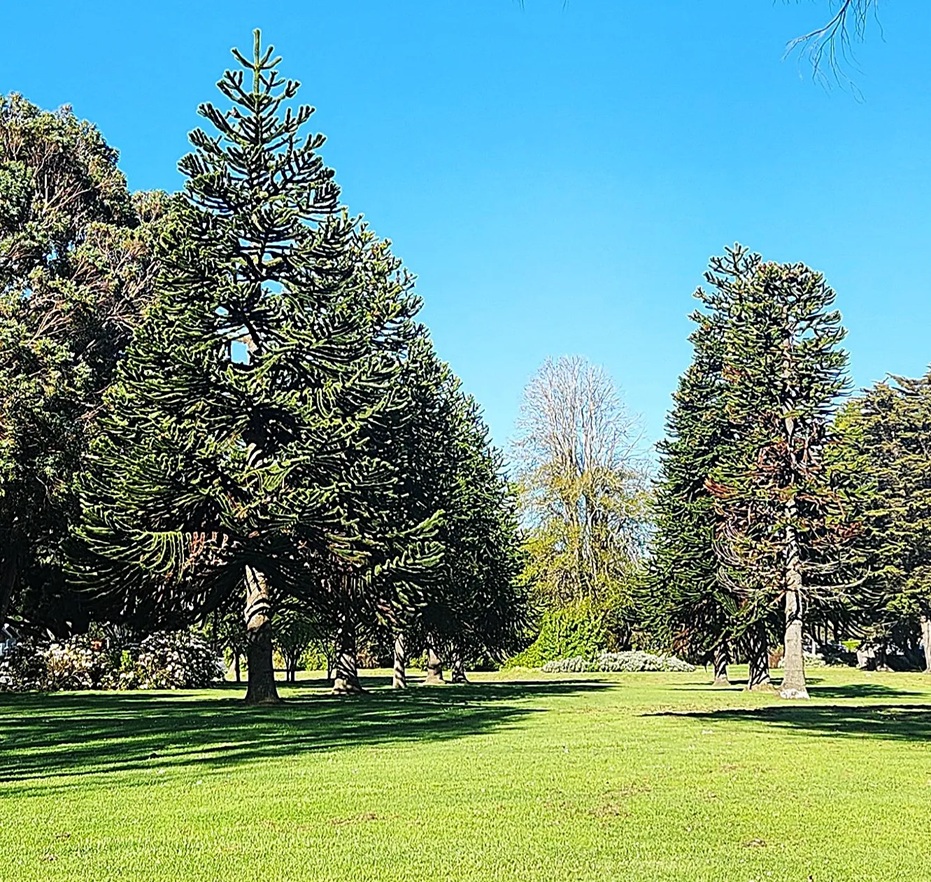
The eight trees are in two rows, with five in the row the furthest distance from the road, and three in front. This is consistent with further information provided by Graydon Hayes, ICC, worth quoting:
I have some further information about the monkey puzzle trees, sourced from a Parks staff member who worked at Council’s nursery at the time and helped grow and plant them.
The eight trees in the Gala St Reserve near the Cenotaph are all Araucaria araucana. They were planted in the late 1990s or very early 2000s. The Parks Manager at the time, Robin Pagan, apparently wanted to create an avenue of monkey puzzle trees leading towards the Cenotaph, inspired by those found in Victorian-style gardens such as Woodstock Gardens in Ireland and Castle Kennedy Gardens in Scotland.
The trees were already available in the Council nursery at the time, and their hardiness and ability to withstand wind made them particularly suitable for the Gala St location. It appears the trees were imported as small plants from Italy. They were approximately six feet tall when planted out. There are some differences between individual tree forms, including one that produces particularly large cones.
The Gala Street ‘avenue’ is nowhere near the length of the two United Kingdom examples4, nevertheless, it is is most probably the largest number of monkey puzzles planted in a group in New Zealand. The fact that it is in Invercargill does not seem surprising; as we have seen, Invercargill had a strong local tradition of planting and appreciating the tree. These recent plantings constitute a clear revival of this tradition.5
A Replanting in the Hospital Precinct
Just over 150 metres west of the group of eight there is a single monkey puzzle tree in an historic area of Invercargill known as the Dee Street Hospital Precinct. Rather than view the tree at the present moment it is best here to consider several historical photographs, beginning with one from the 1880s:
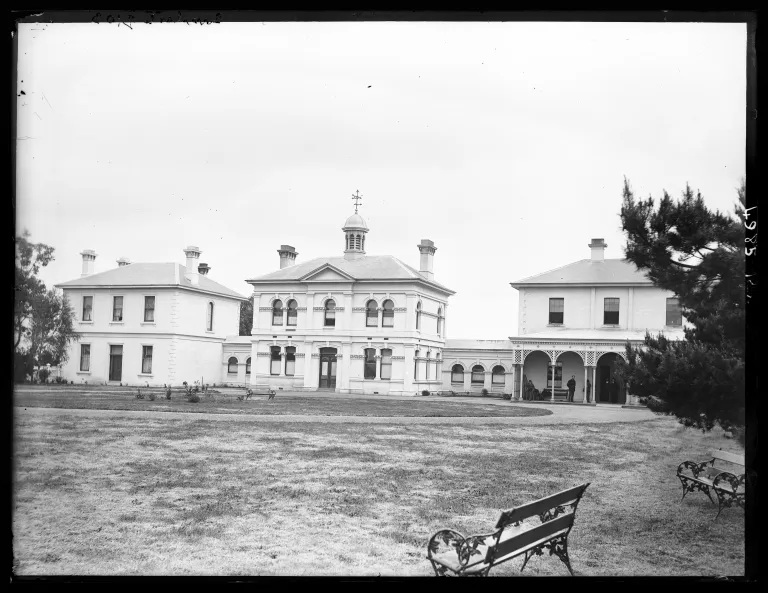
Here we see what was known as the Central Block and South Wing of the Dee Street Hospital,6 but to see the interest here we need to magnify the area in front of the buildings:
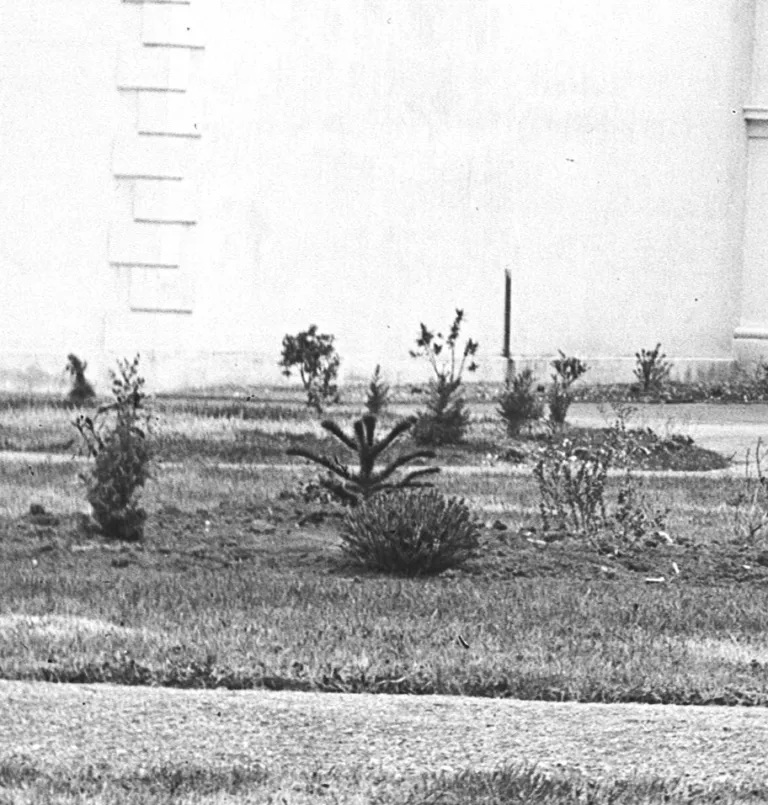
The plant in centre is clearly a freshly planted monkey puzzle. Other historic photos suggest that a second tree was planted about the same date only 30 metres away:
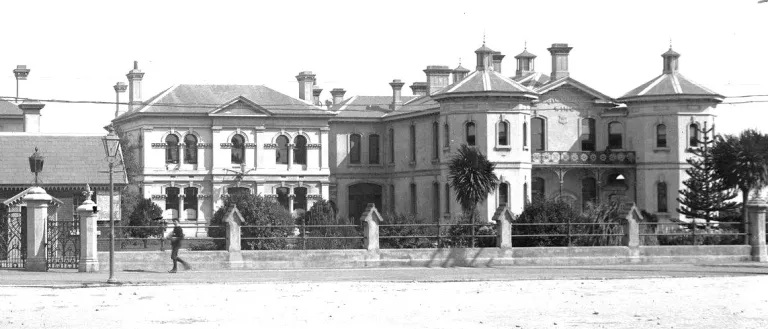
An approximately six metre tall monkey puzzle can be seen at the far right of the frame. Close attention to the photo shows that the building to the right in the 1880s photo has undergone some alterations. This was an ongoing feature of the Dee Street Hospital, as we can clearly see from a 1956 aerial photo:
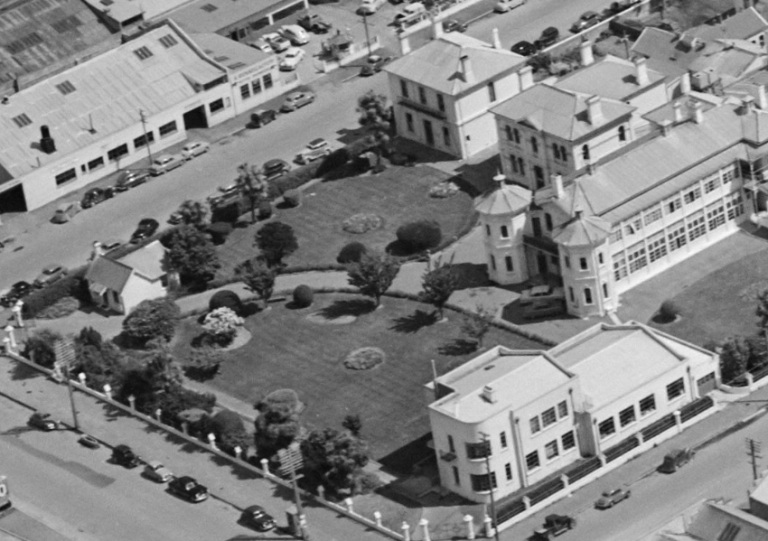
As well as showing a new building in the bottom right corner, the photo also shows that by 1956 there were no longer two monkey puzzle trees in the grounds of the Dee Street Hospital. No information could be sourced as to exactly when or why the trees disappeared, but they may well have gone many years before 1956. But if we now switch to current-day sources, this is where the story gets interesting. Consider this Google Maps Street View from Gala Street:
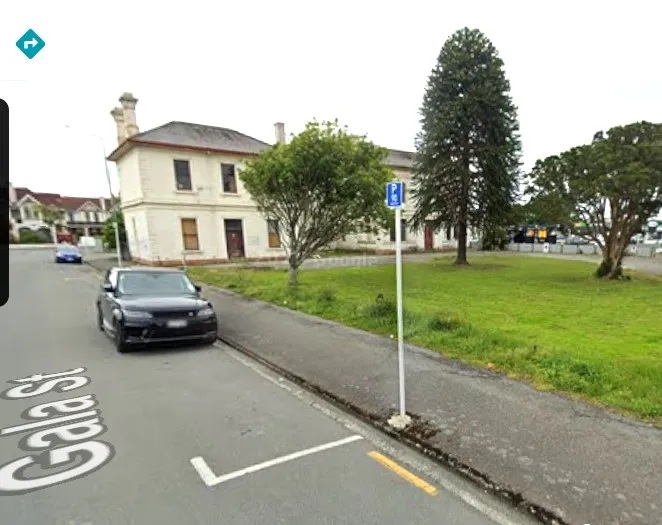
We see a good-sized monkey puzzle in place exactly in the mid-front of the Central Block and South Wing. Here is another view looking back to Dee Street, with the Invercargill Cenotaph also visible:
Unlike the land stretching from the Gala Street Reserve to the Cenotaph, this area is not owned by the Invercargill City Council, so they could provide no information on the planting of the single monkey puzzle tree. However, some fascinating information was obtained from Heritage New Zealand. It is worth quoting from the ‘Grounds Improvement Project Report’ written by Troopers Memorial Corner Charitable Trust who are restoring the remaining buildings:

Astrid Raats from Heritage NZ who provided me with this report, said it was not known why or by whom the tree was ‘reinstated’. Nevertheless, it seems significant that the tree on view was placed where several historical photos show a monkey puzzle in the 1880s and 90s. It seems fair to interpret ‘reinstated’ as meaning reproducing the original planting with a new tree. But as Astrid stated, the actual details of this reinstatement remain a mystery. This often seems the way with historical sites: information on buildings is far more readily available than that on the trees which surround them, even though the two elements may have coexisted for a considerable time.
The final piece of ‘good news from Gala Street’ is that the Troopers Memorial Corner Charitable Trust are working with Diack’s Nursery – a local Invercargill nursery – on the Grounds Improvement Project, and Diack’s currently stock Araucaria araucana.7 At $49.99 for a 70cm plant, it would be a small price to pay to ‘reinstate’ a second monkey puzzle in the former Dee Street Hospital grounds. Regardless of whether this happens or not, the recent plantings in Invercargill’s Gala Street area, supplemented by those in Owaka and Riverton/Aparima, do suggest the Southland revival of monkey puzzle plantings is an ongoing, real phenomenon.
Notes:
- Details from G. Weaver, 2015, ‘Memories of Riverton’s Trotter House. Dr Trotter served Western Southland as a doctor, and was very active in local government and clubs, which may have added to his house being well-known (see Photograph, Dr Trotter and passenger). ↩︎
- See: The Carmichael Homestead, Thornbury and Captain Stevens Home, South Grove ↩︎
- Information and photos (taken 27 October 2026) were provided by Graydon Hayes, Invercargill City Council Communications. ↩︎
- The length of the Monkey Puzzle Walk in Woodstock Gardens, Ireland is not given, but a large number of trees were planted circa 1855. The Castle Kennedy monkey puzzle avenue is about 400 metres long, with the garden website giving 1849 as the planting date. ↩︎
- In the second blogpost I quoted a newspaper article from 1921 which noted that many of Invercargill’s monkey puzzle trees had succumbed to ‘root canker’. Not all would have died, but the heavy planting from the 1880s on did seem to level off from the 1930s on. ↩︎
- Land for the Hospital was set aside in 1863. It went through several changes of name in its history, including Queen Victoria Hospital and Invercargill Maternity Hospital. It closed in 1979 and is now a Category 1 Historic Place being restored by the Troopers Memorial Corner Charitable Trust. See the Heritage South site for more information including photographs. ↩︎
- It is the only Araucaria species the nursery stocks. ↩︎
Acknowledgement:
Thanks to James Beattie for his tree-spotting, and for sending me photos from South Otago/Southland. Thanks also to Caroline Pilbrow for alerting me to the Stuff article on the Trotter house in Riverton, and to Astrid Raats from Heritage New Zealand for information, and to Graydon Hayes, ICC Communications, for information and photos.

